noun
embolism
EM-buh-liz-um/ˈembəlɪzəm/
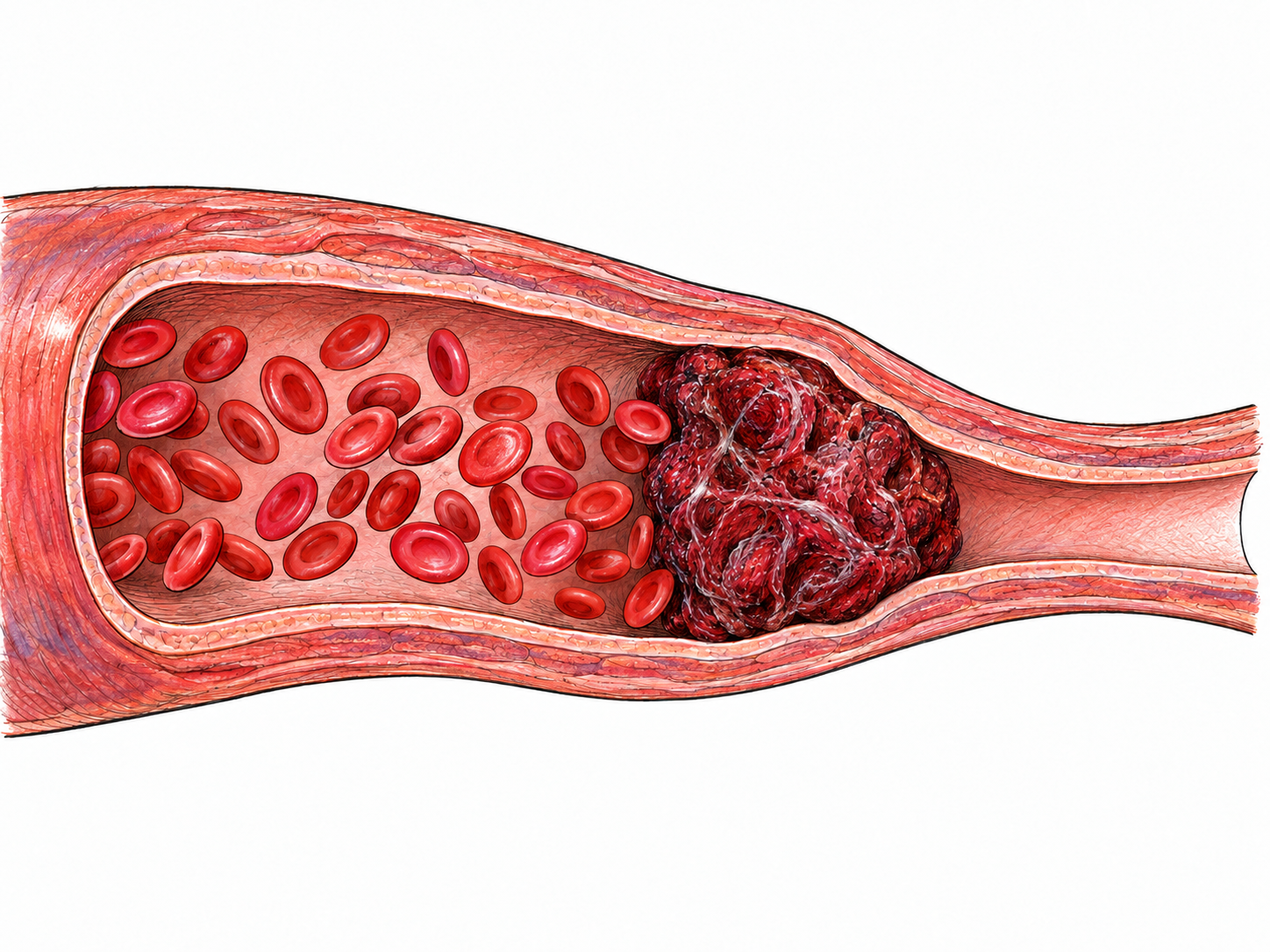
Blockage of a blood vessel by a clot or other material carried through the bloodstream.
A pulmonary embolism blocks blood flow to the lungs.
Etymology
The pieces suggest “throwing in,” behind a Greek word for a peg or stopper thrust into something. The medical meaning applies that stopper image to material blocking a blood vessel.
In context
Complications occur when a clot breaks off and travels through the circulation system. When it reaches a blood vessel it cannot flow through, a blockage occurs. This is called an embolism.
More examples
- Air bubbles entering the bloodstream can cause an embolism.
- Doctors check for an embolism when sudden chest pain develops.
- Blood thinners help prevent embolisms caused by blood clots.
Forms
embolism · embolisms
embolus noun — Traveling material that blocks a blood vessel.
embolic adjective — Relating to or caused by an embolism.
Similar words
- occlusion
- Means closure or blockage, not necessarily by traveling material.
- obstruction
- Covers blockages generally, not just those in blood vessels.