noun
entropy
EN-truh-pee/ˈentrəpi/
A measure of the dispersal of energy within a physical system.
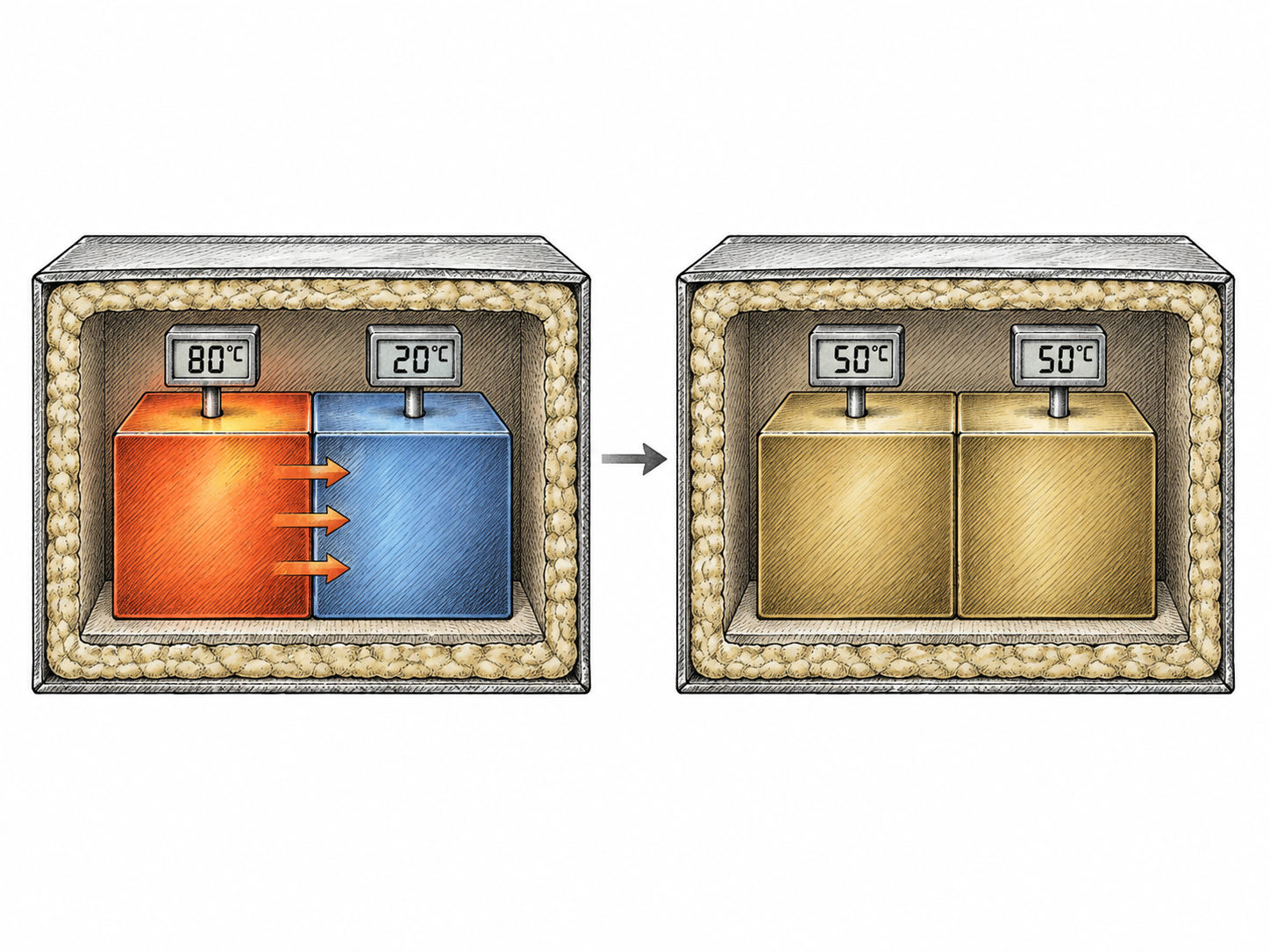
The system’s entropy increases as heat spreads from the hot block to the cold block.
Etymology
The 'in' and 'turning' pieces underlie Greek 'a turning toward.' The intended idea is thought to have been 'transformation contents,' used in naming a measure of disorder in a system.
In context
In physics, this is described by the Second Law of Thermodynamics, which says that systems will gain disorder, or entropy, over time.
More examples
- Melting ice absorbs heat and gains entropy.
- The gas gains entropy as it expands freely into a vacuum.
- The total entropy of an isolated system never decreases.
Forms
entropy · entropies
entropic adjective — Relating to entropy in a physical system.