noun
conjugation
kahn-juh-GAY-shun/ˌkɑːndʒuˈɡeɪʃn/
The changing of verb forms to express grammatical information.
Verb conjugation shows who performs an action and when it happens.
Etymology
The pieces express an act of joining together; the Latin noun literally meant “a combining” or “connecting.” In grammar, this became the term for a verb’s inflection through its different forms.
In context
So we paid attention to a particular grammatical rule, past-tense conjugation. So you just add "ed" to a verb at the end to signify the past.
More examples
- We practice Spanish verb conjugation before each quiz.
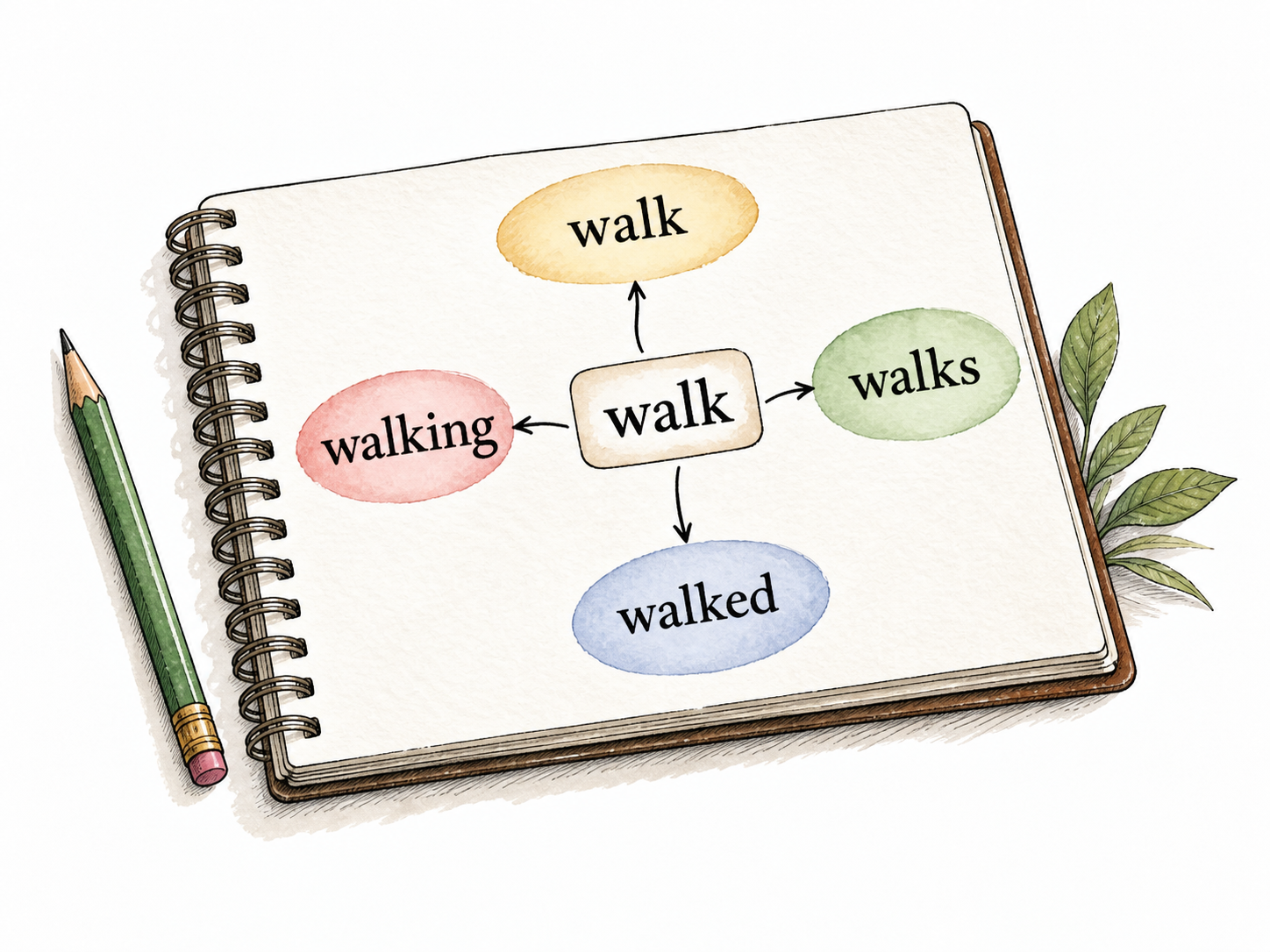
- Changing “walk” to “walked” is an example of conjugation.
- This chart lists the present-tense conjugations of several irregular verbs.
Forms
conjugation · conjugations
conjugate verb — Change verb forms to show grammatical information.
Similar words
- inflection
- Covers grammatical changes to verbs, nouns, and other word classes.