noun
predicate
PRED-ih-kut/ˈpredɪkət/
A property or relation asserted about a subject or argument.
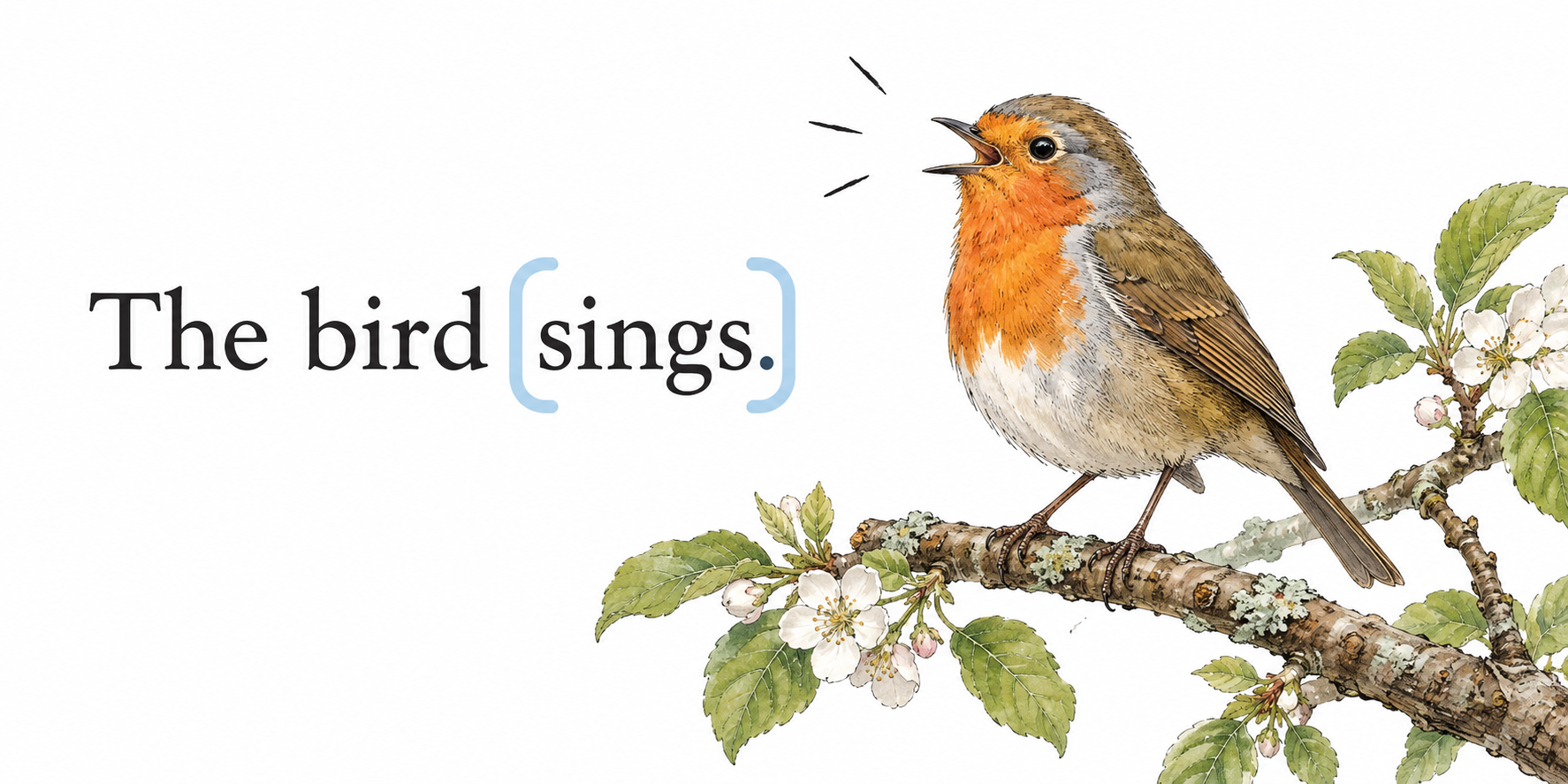
In The bird sings, the predicate attributes singing to the bird.
Etymology
The pieces convey “proclaim forth.” In logic, the resulting noun meant what is asserted of a subject; grammar applies it to the sentence part that makes that assertion.
In context
a noun or pronoun part, which we call the subject, and it has to have a verb and all its baggage part, which is what we call the predicate.
More examples
- The predicate “is taller than” expresses a relation between two people.
- The predicate “is even” holds for the number four.
- These predicates describe properties shared by every member of the group.
Forms
predicate · predicates
predication noun — The act of attributing a property.