DictionaryRoot: ex-
Latin

ex-

out, away; also thoroughly

Forms

  • ex-
  • e- — Shortened in Latin before certain consonants.
  • ef- — Used before f in Latin.
  • es- — Developed from ex- in French.
  • s- — In some French borrowings, es- lost its initial e.

Origin

Reconstructed Proto-Indo-European *eghs, ‘out.’

Note

The outward sense could extend to carrying an action through completely.

231 / 239
noun / verb

scald

SKAWLD/skɔːld/

A burn caused by hot liquid or steam, or to cause such a burn.

The spilling hot water scalds his wrist.
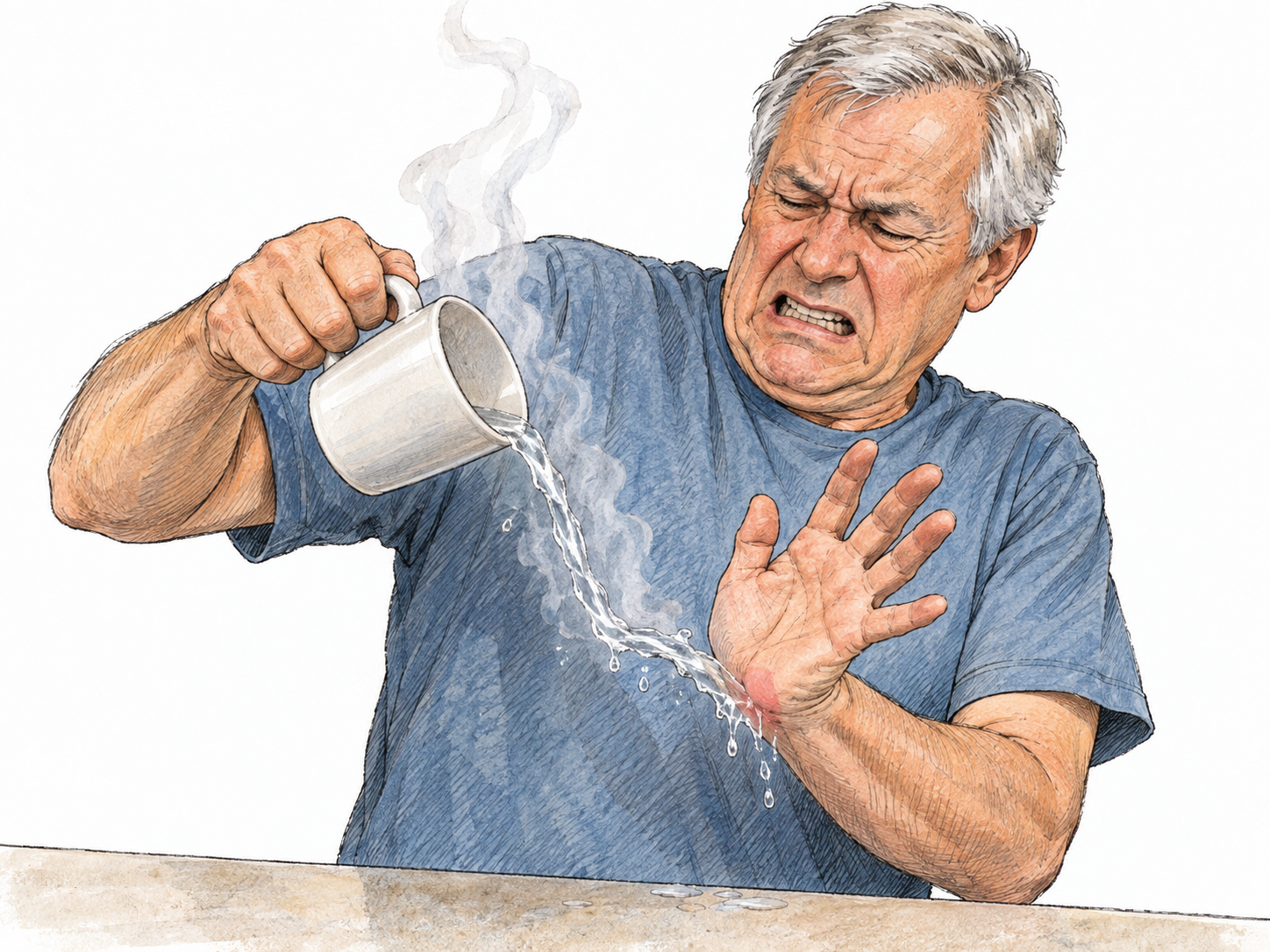
An older man recoils as steaming water from a tipped mug spills onto his bare wrist, leaving a small reddened patch.
Etymology

“Hot” is the core image: the ancestral verb meant “bathe in hot water.” English uses it for the painful injury hot liquid or steam can cause.

In context

StardustTV33:35
Once it's boiled, it becomes scalding hot. Pour it down from the city walls. It will scald the enemies
【ENG DUB】Useless noble? He drained a kingdom's treasury with one scam.

More examples

  • Steam scalded his hand.
  • She was careful not to scald herself with the hot liquid.
  • The report described a scald from boiling water.

Forms

scald · scalds · scalded · scalding

Similar words

burn
Burn is the broader injury category; a scald specifically comes from hot liquid or steam.
blister
A blister is one possible result of a scald; scald names the injury or its cause.