DictionaryRoot: facere
Latin

facere

do, make

Forms

  • fac-
  • fact- — Latin stem of the form meaning ‘done’ or ‘made.’
  • -fic- — Used in Latin compounds.
  • -fect- — Stem of the form meaning ‘done’ or ‘made’ in Latin compounds.
  • -fy — English ending developed from Latin -ficare, a formation based on this verb.

Origin

Reconstructed Proto-Indo-European *dheh₁-, ‘put; set; do.’

Note

Especially productive in formations meaning ‘cause to become.’

5 / 119
noun

artifact

AHR-tih-fakt/ˈɑːrtɪfækt/

An object made or modified by humans, especially one from the past.

The ancient clay artifact rests beside an archaeologist's soft brush.
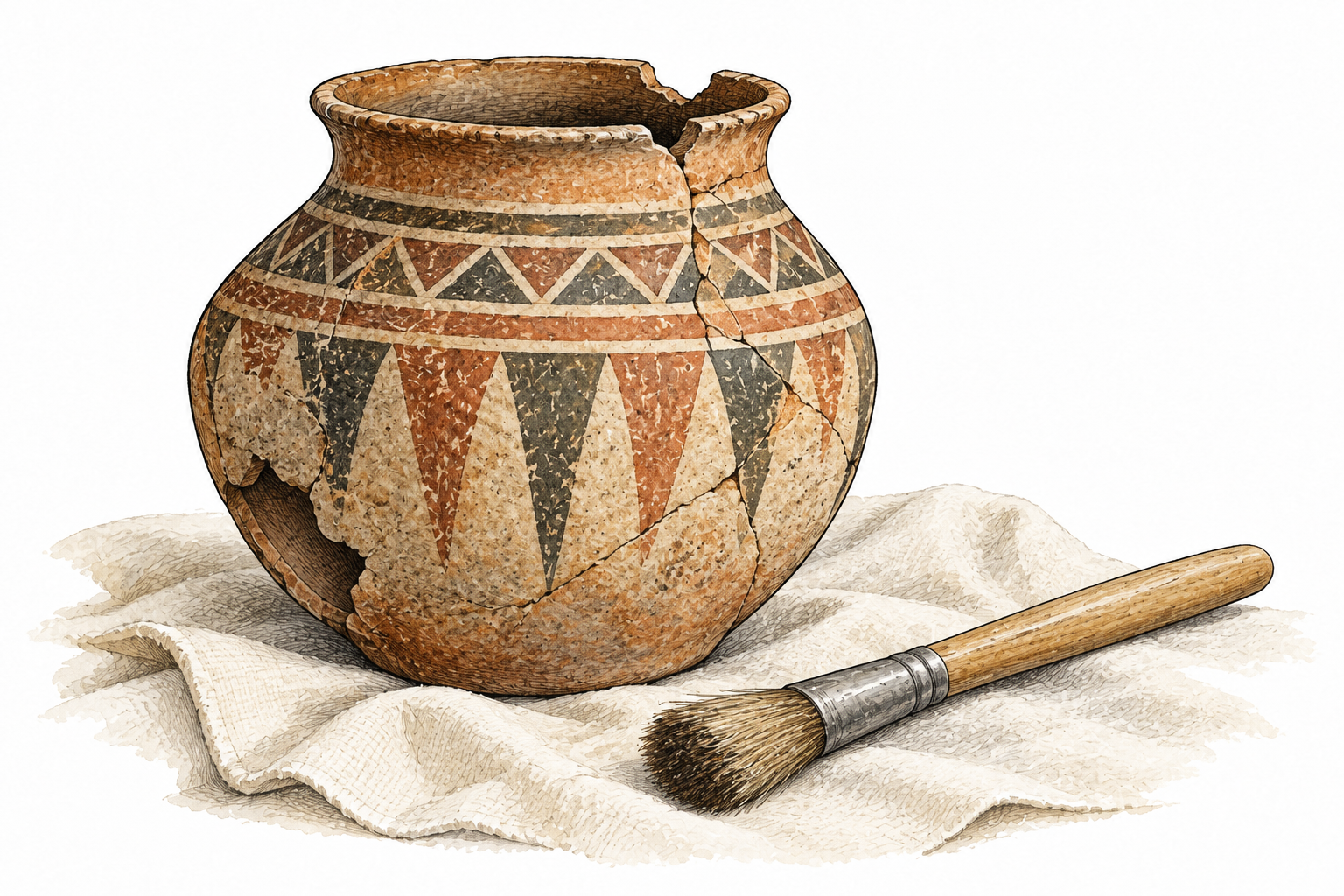
An ancient chipped decorated clay vessel displayed on plain cloth beside an archaeologist's soft brush, clearly human-made object from the past.
Etymology

An artifact is literally something made by skill: art here means human workmanship, not just fine art. Its archaeological use applies that idea to objects made or modified by people in the past.

In context

UC Berkeley Events25:44
they made an artifact. This is a picture right here of the stone artifact that was made in ancient Egypt to represent the length of the Pharaoh's forearm.
A New Measure: The Revolutionary, Quantum Reform of the Modern Metric System

More examples

  • The museum displays artifacts recovered from the settlement.
  • Each artifact is photographed before cleaning.
  • A handmade tool is an artifact of human activity.

Forms

artifact · artifacts

Similar words

relic
An object surviving from the past, often especially revered.
antiquity
An ancient object rather than any human-made item.