adjective / verb
perfect
PUR-fikt/ˈpɜːrfɪkt/
Having no shortcomings for a particular purpose, or making something so.
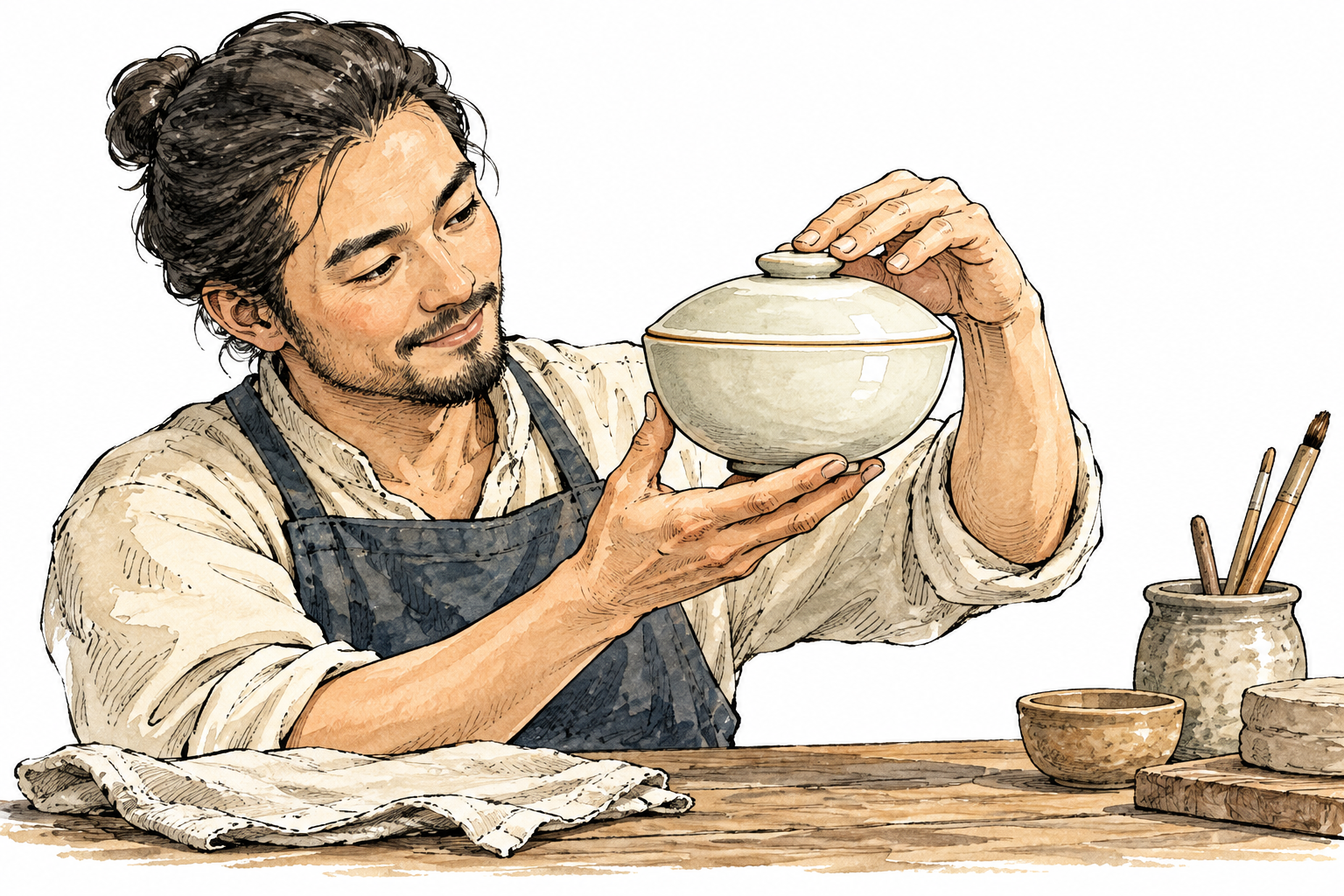
The craftsperson checks the bowl's perfect fit beneath its matching lid.
Etymology
The pieces express something made completely or finished. That idea of completion extends to having nothing lacking—not merely being finished, but being free of faults.
More examples
- This small table is perfect for our kitchen.
- She spent years perfecting her technique.
- The restored vase looks almost perfect.
Forms
perfect · perfects · perfected · perfecting
perfection noun — the state of being without flaws
Similar words
- flawless
- Emphasizes absence of defects rather than suitability.
- ideal
- Emphasizes complete suitability rather than freedom from every flaw.