noun
percussion
per-KUSH-uhn/pərˈkʌʃn/
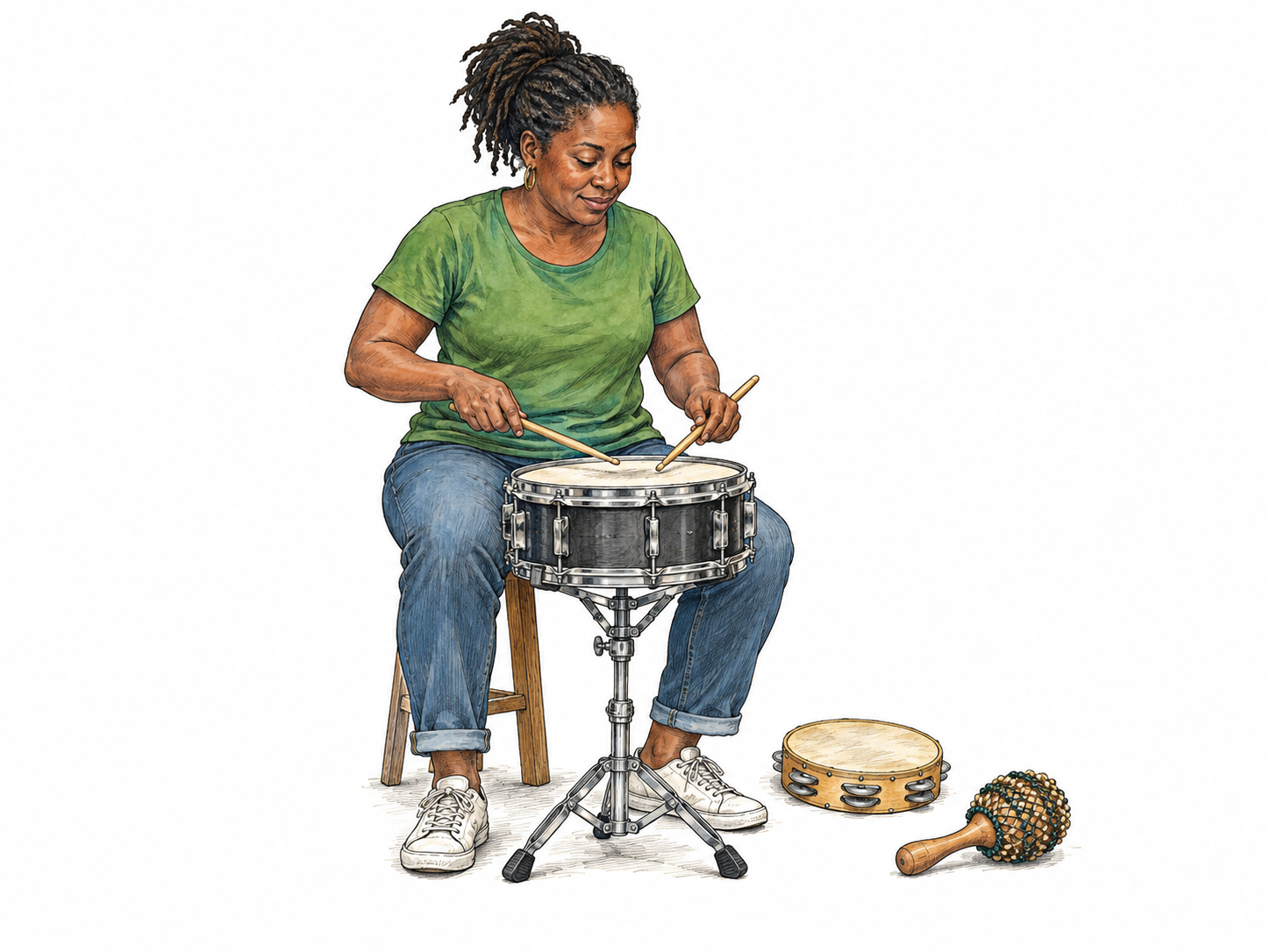
Instrumental sound produced by striking, shaking, or scraping.
Soft percussion gives the song a gentle, steady pulse.
Etymology
The pieces describe striking through and through, or striking hard. The resulting noun meant a blow or beating before it came to name musical instruments sounded by blows.
In context
and a lot of percussion but the percussion all comes from three instruments which are the three sacred drums
More examples
- The recording blends crisp percussion with warm guitar chords.
- Shaken maracas add lively percussion to the chorus.
- Scraping a washboard produces percussion that cuts through the melody.
Forms
percussive adjective — Produced by striking or resembling such sounds.
percussionist noun — A musician who plays percussion instruments.
Similar words
- drumming
- Specifically suggests drum sounds rather than percussion's wider range.