noun / verb
revolt
rih-VOHLT/rɪˈvəʊlt/
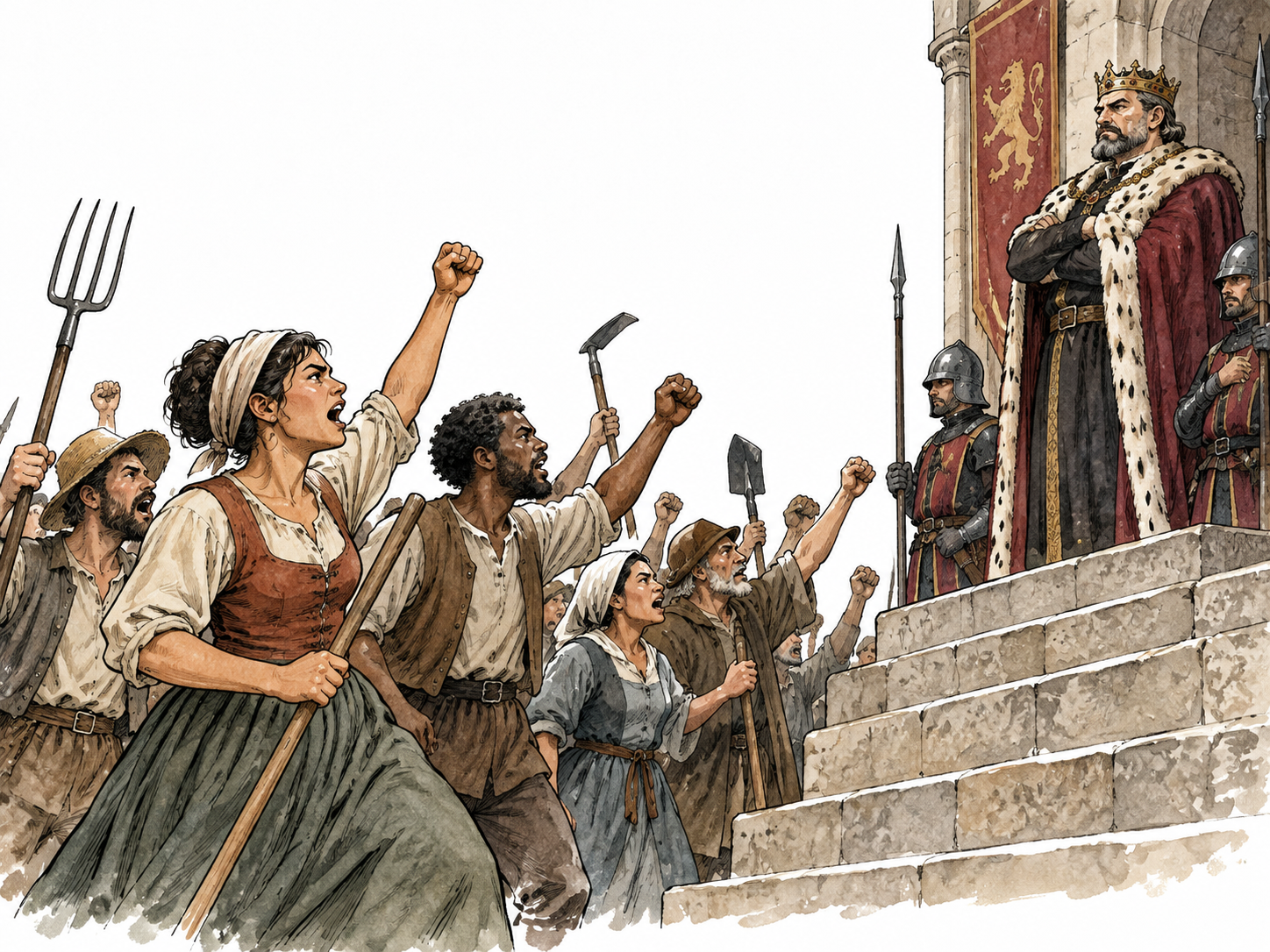
An uprising against authority or taking part in one.
The villagers stage a revolt against the king's harsh rule.
Etymology
The underlying image of rolling or turning back became “overturning” and then casting off allegiance. A revolt applies that reversal to an uprising against established authority.
In context
he's fearful of an uprising he's fearful of a revolt in the city and so wanting to appease the crowd
More examples
- The government sends troops to put down the revolt.
- Farmers revolted against the new taxes.
- The soldiers threaten to revolt unless their commander steps down.
Forms
revolt · revolts · revolted · revolting
Similar words
- rebellion
- Can describe sustained resistance, not just a particular uprising.
- uprising
- Emphasizes a collective outbreak of resistance against those in power.
- mutiny
- Specifically involves soldiers or crew members defying their commanders.