verb
sink
SINGK/sɪŋk/
To descend below a surrounding level.
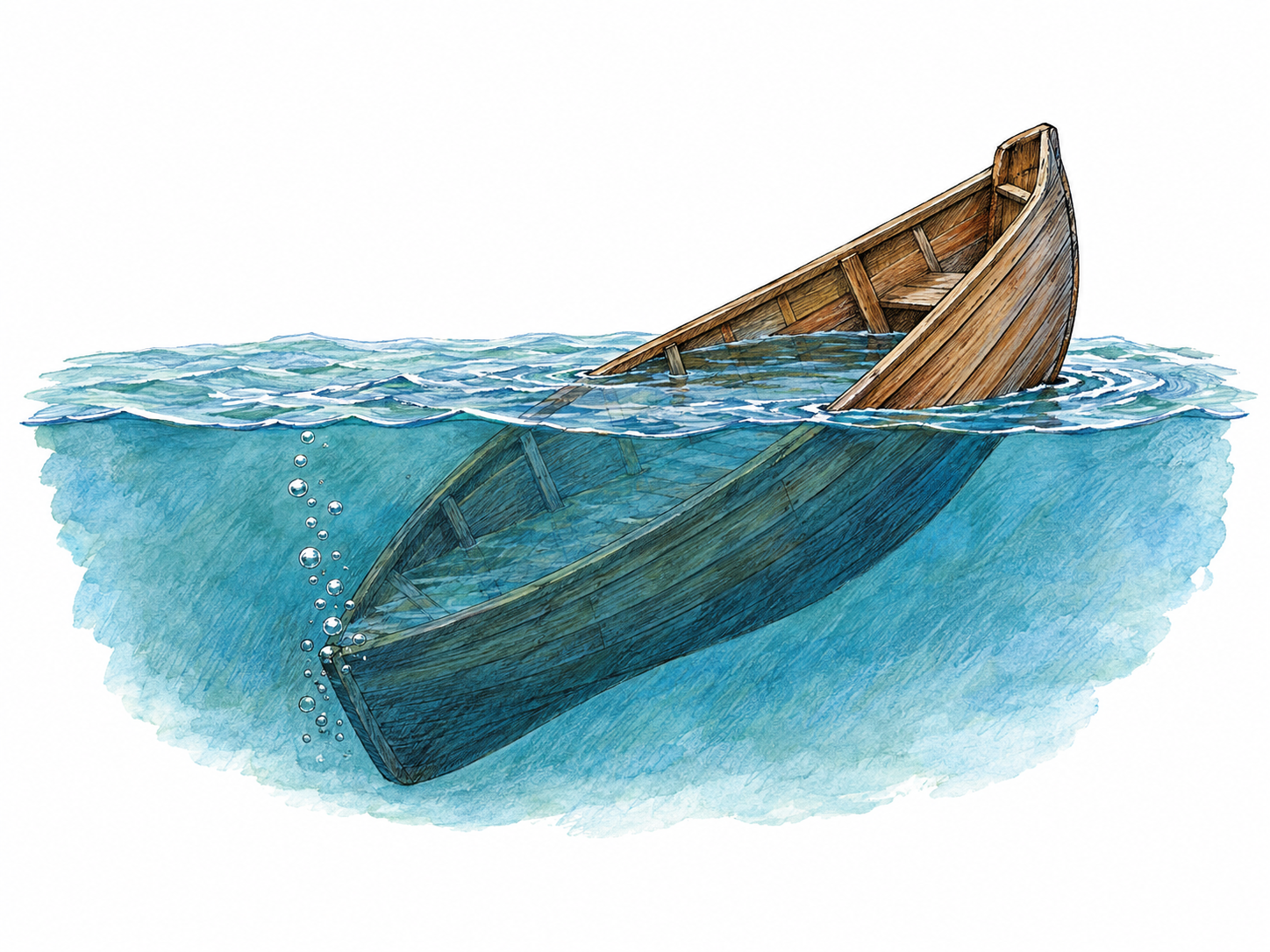
The empty rowboat sinks bow-first while its stern remains above water.
Etymology
Old English sincan already described becoming submerged or going under. The selected meaning preserves that motion of the subject itself; the use meaning “cause something to go down” developed later.
In context
While iron or even lead might bob on the surface of mercury, osmium would sink like a stone in water.
More examples
- My boots sink into the soft mud.
- Rainwater sinks into the dry soil.
- Too much cargo can sink a small boat.
Forms
sink · sinks · sank · sunk · sinking
sinker noun — A weight that pulls fishing line downward.