adverb
aback
uh-BAK/əˈbæk/
Into a state of surprise or shock.
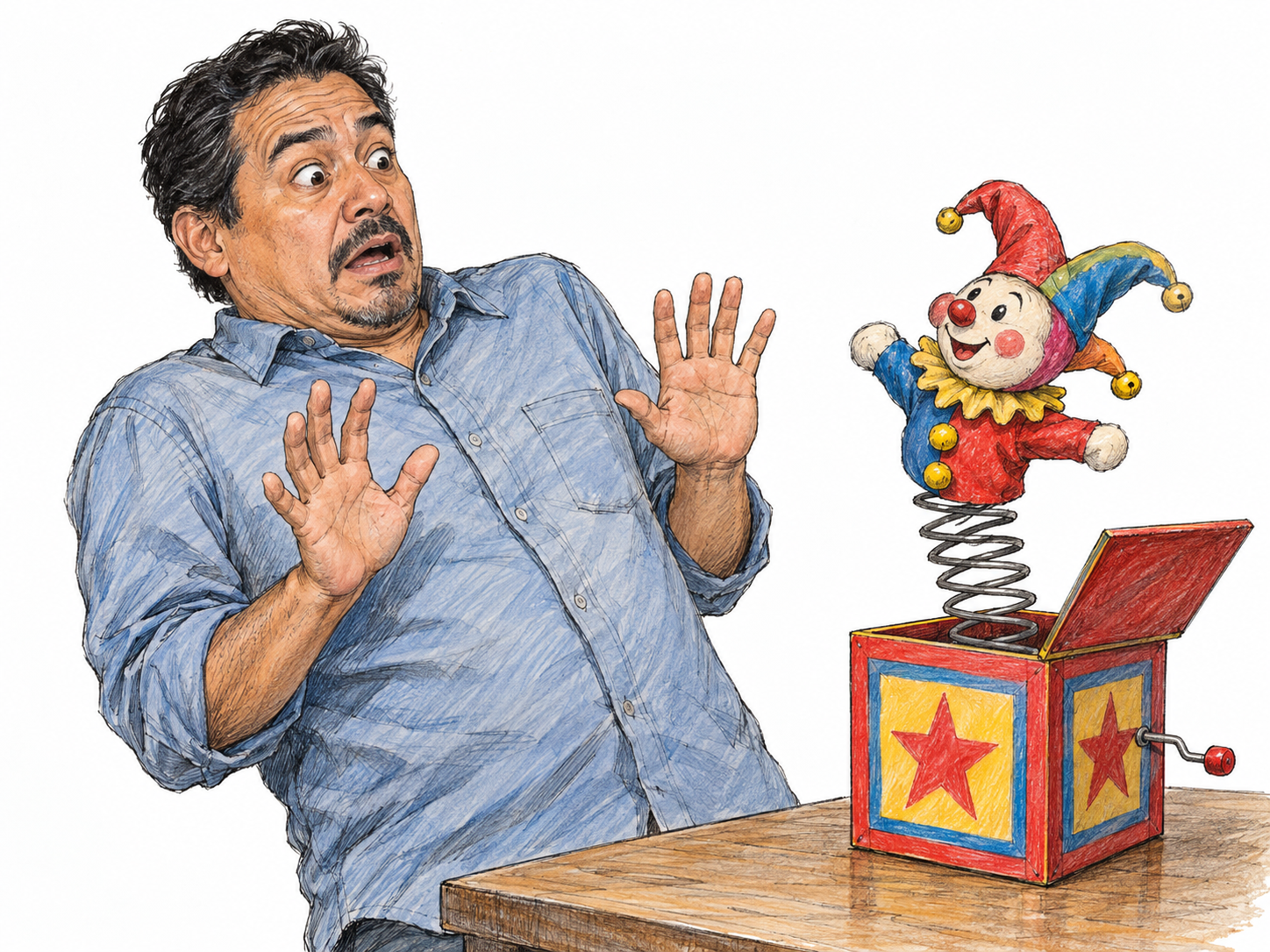
The springing toy takes the man aback.
Etymology
Originally “on the back” or “backward,” aback described sails suddenly pressed against their masts by a wind change, stopping a ship. Being “taken aback” transferred that unexpected check to a person’s surprise or shock.
In context
there were others with a variety of costumes and faces. All this, unexpectedly encountered, took Don Quixote somewhat aback, and struck terror into the heart of Sancho
More examples
- He was taken aback by the sudden applause.
- The price took us aback.
- She seemed taken aback when I remembered her name.
Forms
aback
Similar words
- startled
- Startled names the surprised state; aback is usually used in the phrase taken aback.
- astonished
- Astonished suggests strong surprise; taken aback can also imply being momentarily disconcerted.