verb
abandon
uh-BAN-duhn/əˈbændən/
To leave something behind and cease supporting or pursuing it.
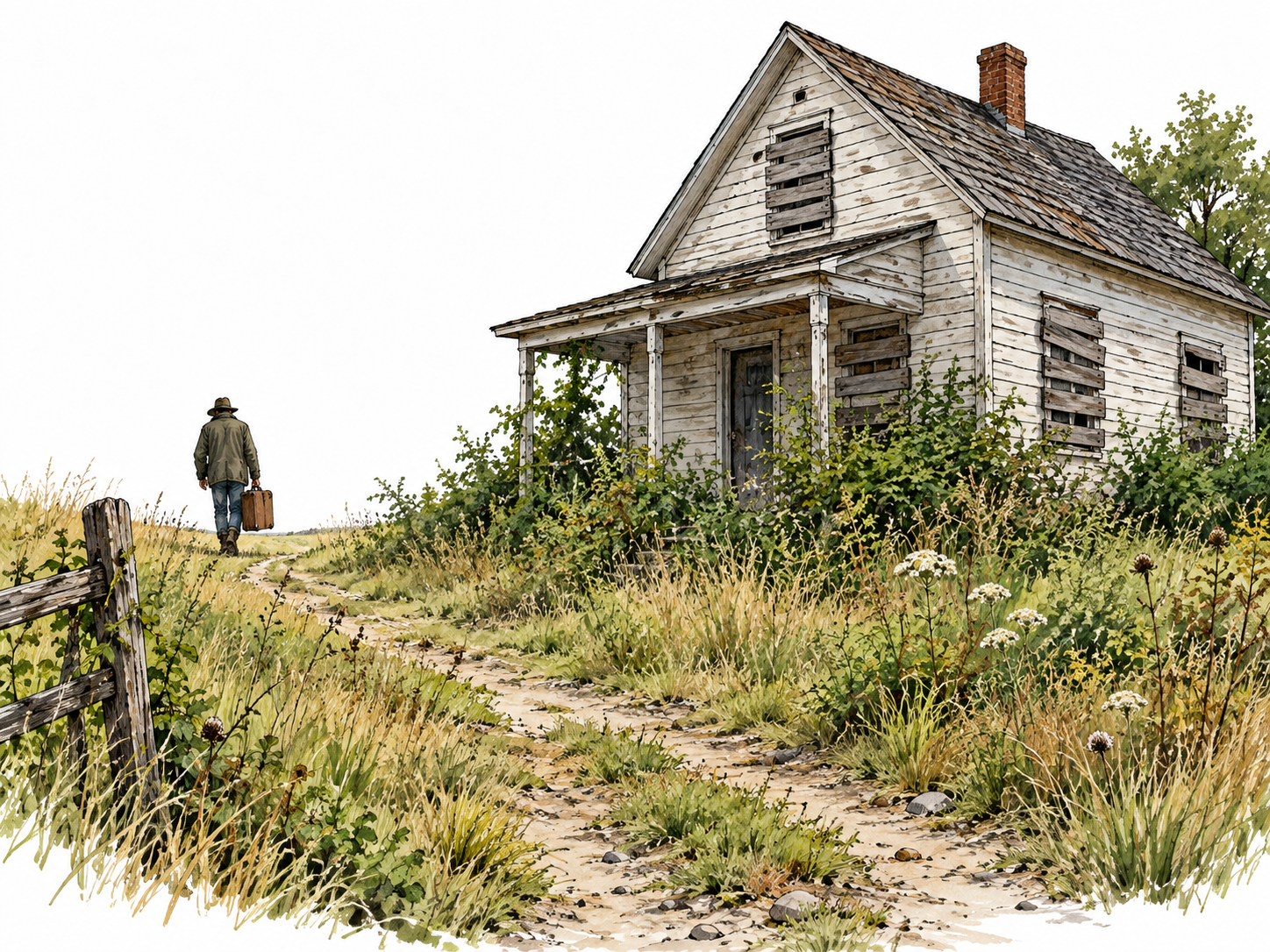
The last resident abandons the farmhouse, carrying a suitcase down the overgrown path.
Etymology
Old French à bandon meant “at will” or “at discretion,” carrying the idea of putting something under another’s control. Giving up control developed into relinquishing something entirely, then leaving or forsaking it.
In context
working behind the scenes to persuade at least four other people close to anthony to abandon him and to follow rollo's lead instead
More examples
- They abandoned the project when funding ran out.
- Please do not abandon animals along the road.
- She refuses to abandon her search for the missing diary.
Forms
abandon · abandons · abandoned · abandoning
Similar words
- desert
- Often stresses disloyal departure from someone needing support.
- relinquish
- Emphasizes giving up possession or control rather than leaving.