noun
abolition
ab-uh-LISH-un/ˌæbəˈlɪʃn/
The ending of an established institution or practice.
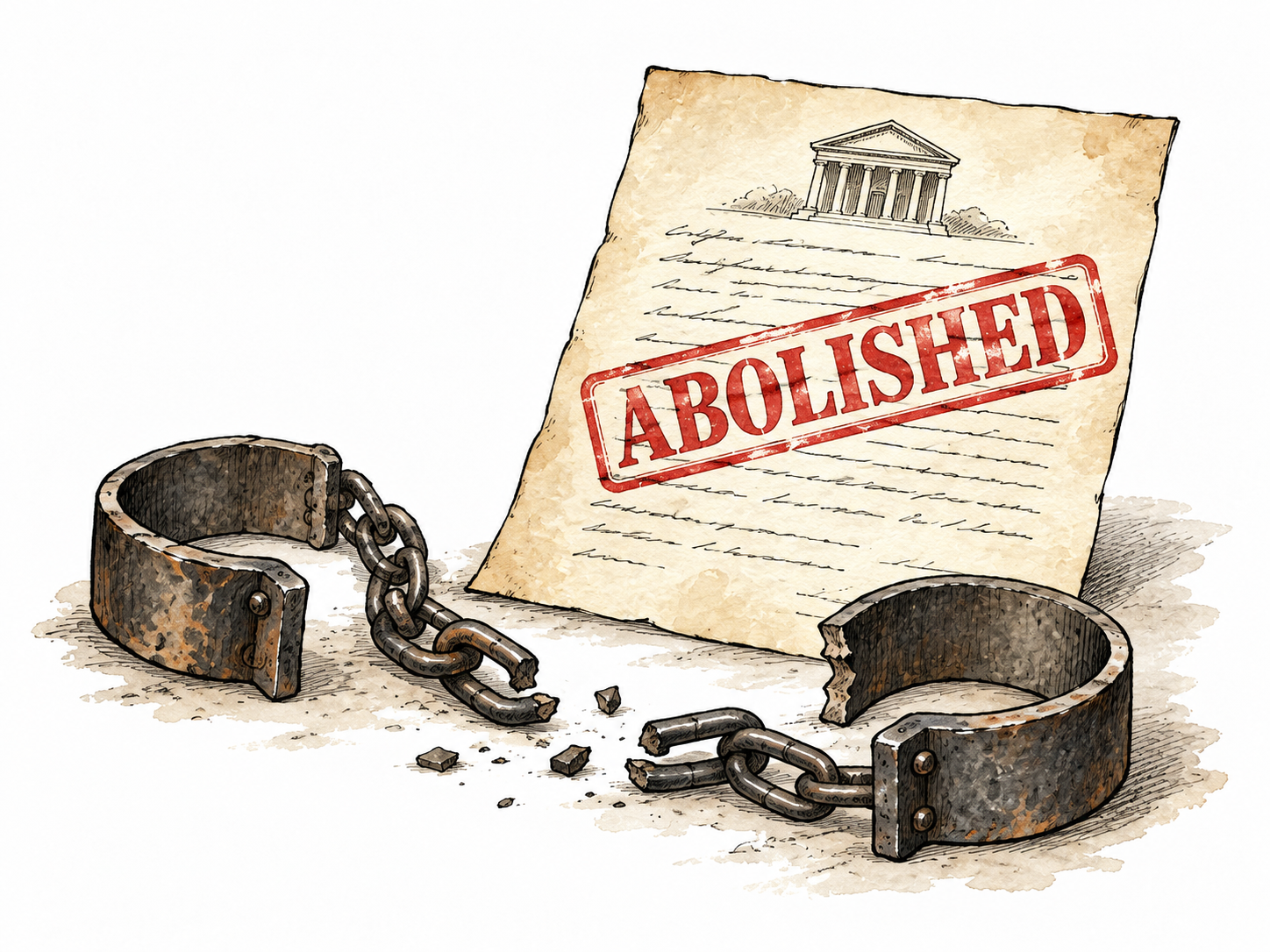
The broken shackles symbolize the abolition of slavery by law.
Etymology
Built on abolere, “destroy,” abolition names an act of ending or annulling something. The broad idea of destruction becomes the formal ending of a system, practice, or institution.
In context
"We do not use the knout in the Russian prisons nowadays," he said briefly. "His Majesty has decreed its abolition."
More examples
- The abolition of slavery transformed the country's laws.
- Students welcomed the abolition of mandatory evening classes.
- The proposal seeks abolition rather than minor reform.
Similar words
- repeal
- Specifically reverses an existing law or legislative provision.
- eradication
- Stresses complete removal, often of disease or harmful conditions.