noun
ambiguity
am-bih-GYOO-uh-tee/ˌæmbɪˈɡjuːəti/
The quality of having more than one possible interpretation, or an instance of this.
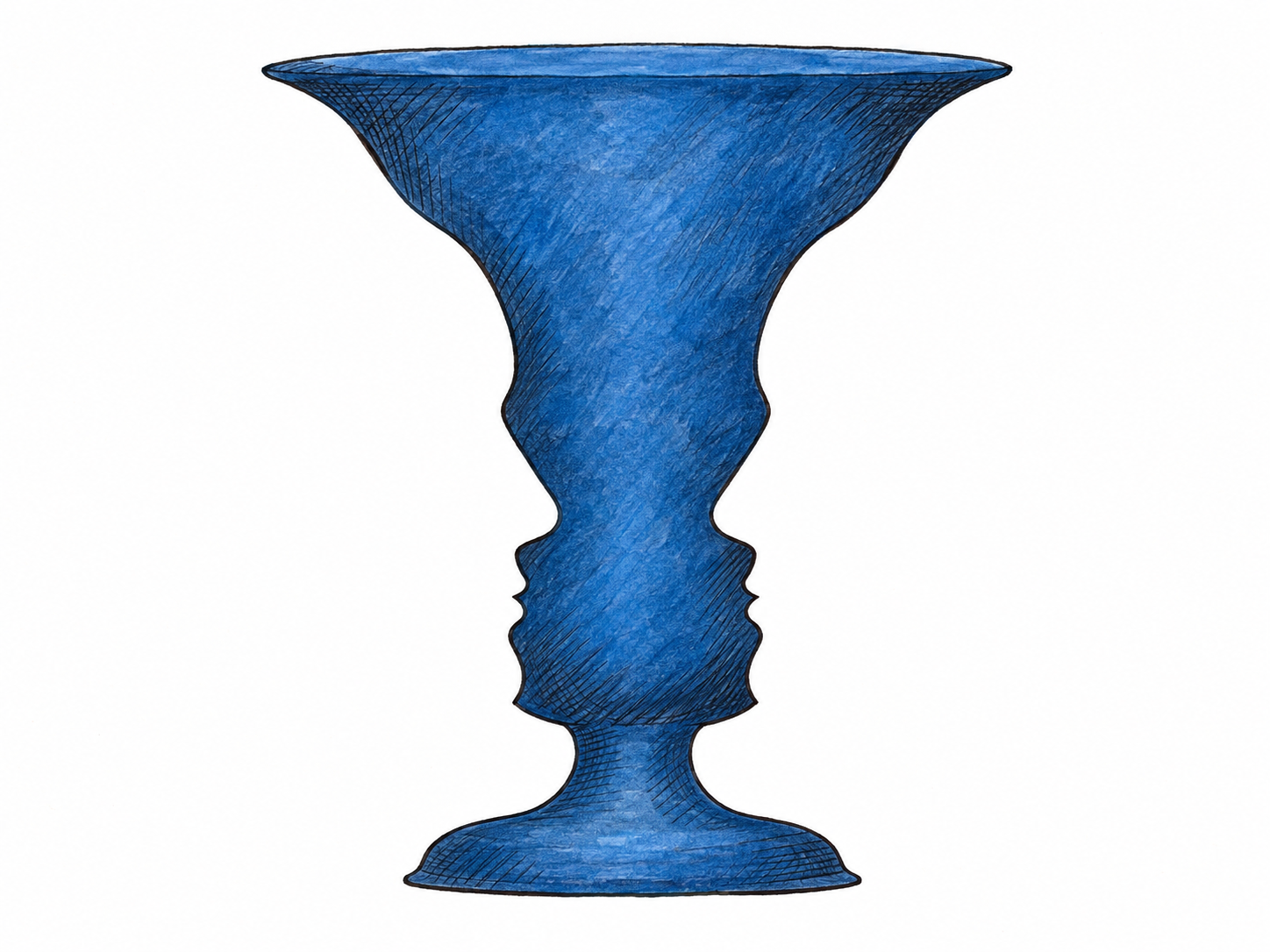
The reversible image creates ambiguity between a vase and two faces.
Etymology
Latin ambiguus described something doubtful or double in meaning and was linked to a verb meaning “go around,” figuratively “waver.” Ambiguity names the unsettled state in which more than one interpretation remains possible.
In context
The imagery itself offers more ambiguity than clarity. The paintings depict humanlike figures, often with outstretched arms, sometimes holding objects interpreted as weapons or ritual items.
More examples
- She revised the contract to remove an ambiguity.
- The ending deliberately preserves ambiguity.
- Several ambiguities remained in the instructions.
Forms
ambiguity · ambiguities
ambiguous adjective — allowing more than one interpretation
Similar words
- vagueness
- Vagueness lacks precision; ambiguity permits more than one distinct interpretation.
- uncertainty
- Uncertainty is lack of knowledge or confidence; ambiguity is a feature allowing multiple readings.