verb
avert
uh-VURT/əˈvɜːrt/
To turn something away from its course.
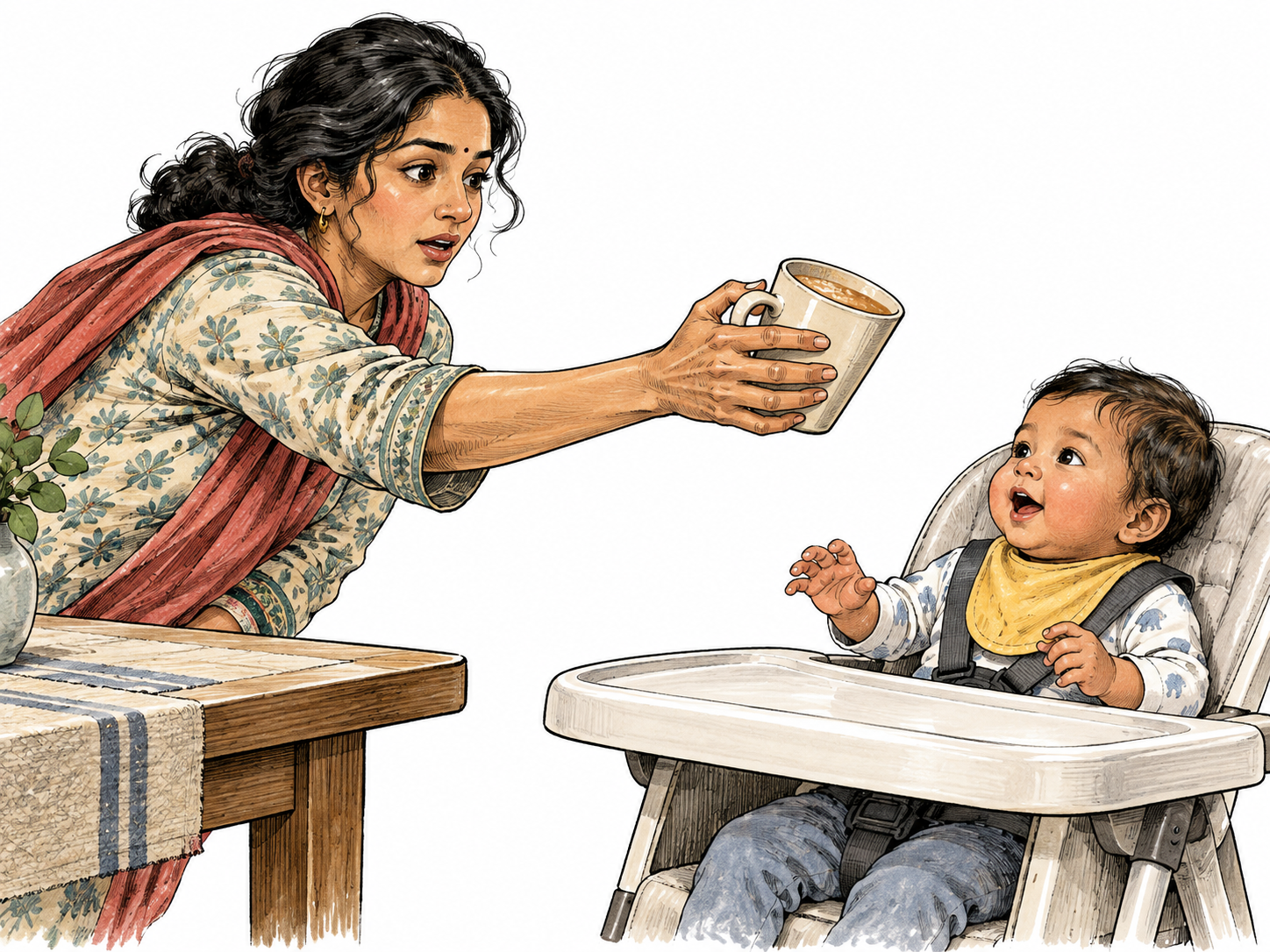
The woman averts a spill by catching the tipping drink above the baby's tray.
Etymology
The pieces mean “turn away,” originally describing causing something to turn aside. Applied to harm or danger, that action became “ward off”: preventing an unwanted event from happening.
In context
no man however wise will be able to avert the consequences that must ensue
More examples
- She averted her eyes from the distressing scene.
- The compromise helped avert a strike.
- He is averting his attention from the real problem.
Forms
avert · averts · averted · averting