verb
bequeath
bih-KWEETH/bɪˈkwiːð/
To pass something on to others as a legacy.
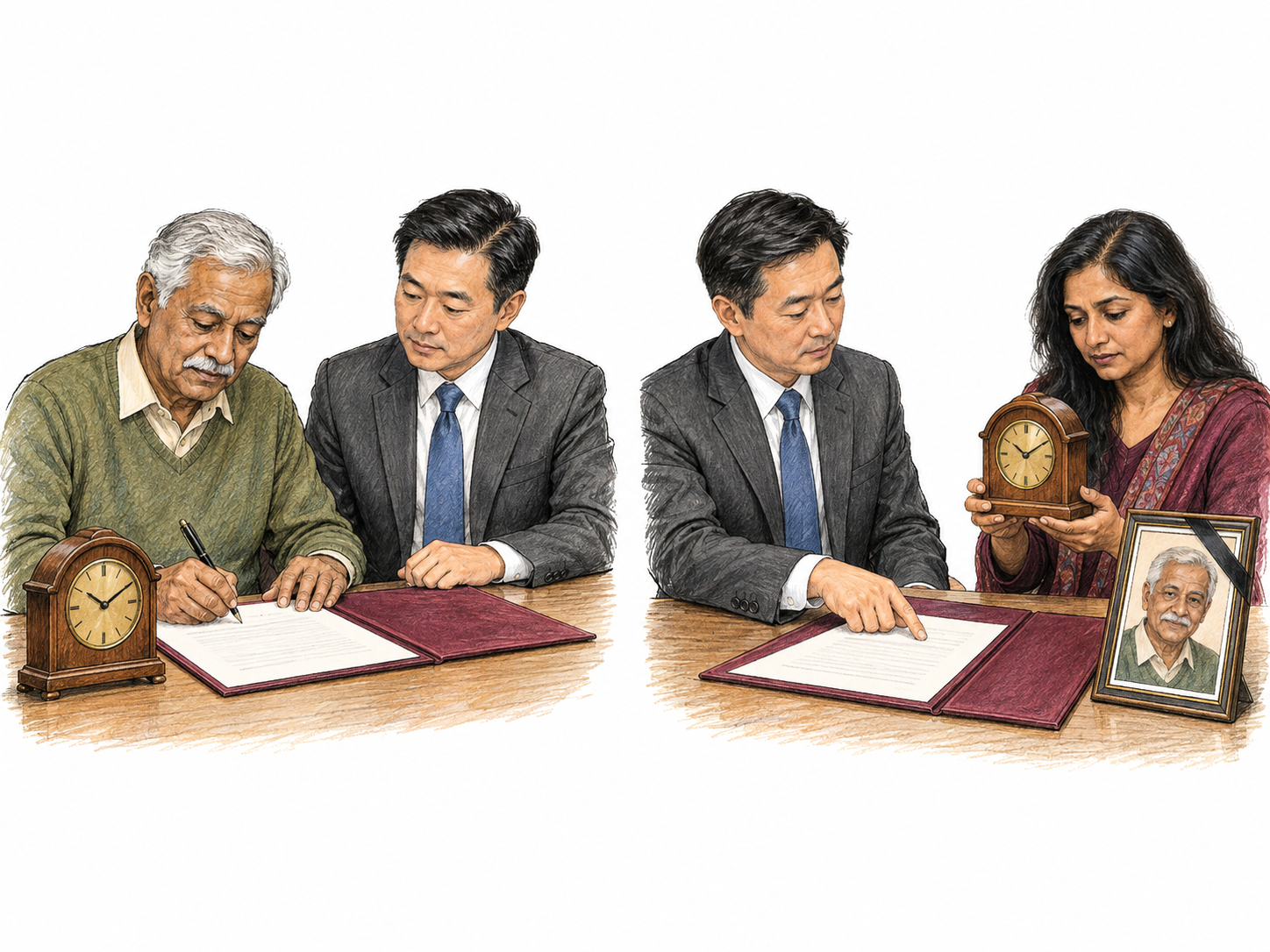
The man bequeaths his distinctive clock to the beneficiary who later receives it.
Etymology
With be-, the verb meaning “say” covered both speaking and leaving property by will. The general speaking sense disappeared, while the specialized legal sense of transferring property by a will survived.
In context
It's a life estate, not fe simple ownership. You can't sell the land, can't mortgage it, can't bequeath it to your children.
More examples
- He bequeathed his books to the town library.
- Earlier generations bequeathed us a rich musical tradition.
- She plans to bequeath her savings to a scholarship fund.
Forms
bequeath · bequeaths · bequeathed · bequeathing
bequest noun — Property given to someone by will.