noun
buccaneer
buk-uh-NEER/ˌbʌkəˈnɪr/
A pirate, especially one active in the Caribbean.
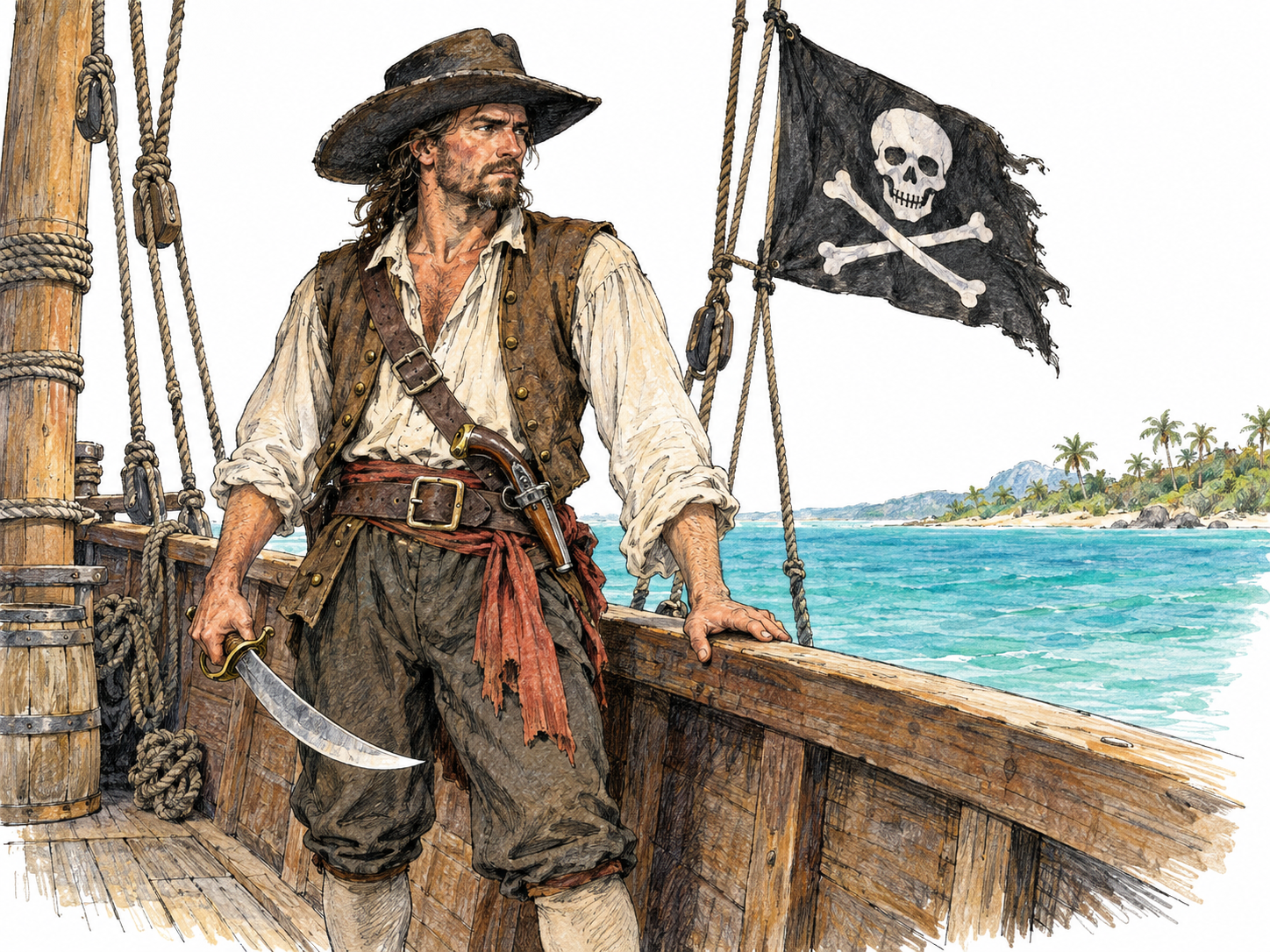
The buccaneer stands armed on a sailing ship near a tropical shore.
Etymology
A boucan was a meat-curing grill, and its users included hunters in the West Indies. Their occupational name came to mean “pirate” after Spanish authorities drove them from their trade and they turned to piracy.
In context
In 1671, British born buccaneer, Captain Henry Morgan, arrives here with a giant fleet of 36 ships, packed with nearly 2,000 pirates.
More examples
- The novel follows a buccaneer searching for a hidden harbor.
- Spanish ships feared attacks by buccaneers.
- A weathered map belonged to the legendary buccaneer.
Forms
buccaneer · buccaneers
Similar words
- pirate
- The broader term, without a particular Caribbean historical association.