noun / verb
bully
BULL-ee/ˈbʊli/
Using power or threats to intimidate or mistreat someone weaker.
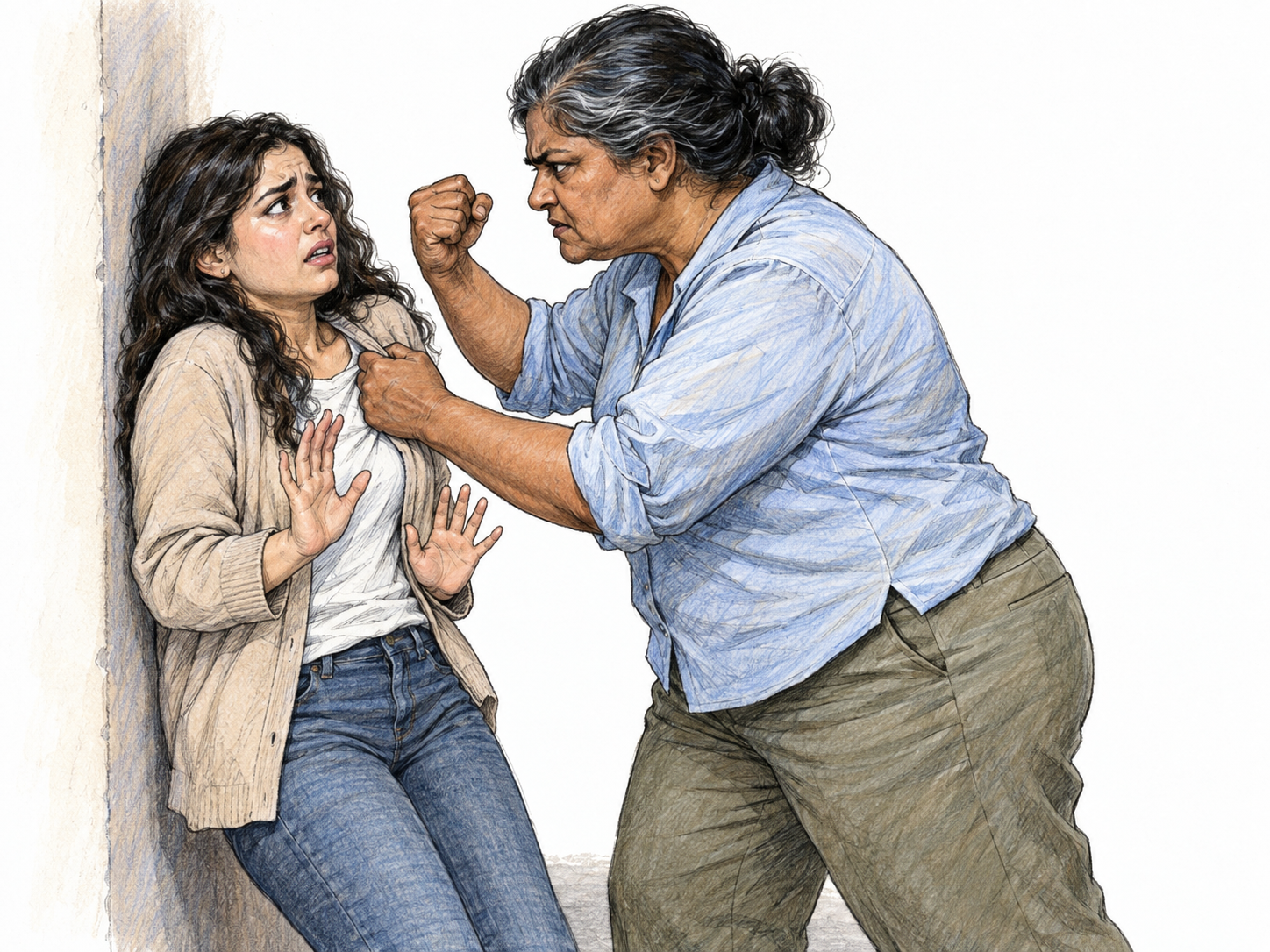
The bully grips the younger woman's cardigan and raises a threatening fist.
Etymology
Bully began as an affectionate word meaning “sweetheart.” Its meaning deteriorated through “fine fellow” and “blusterer” into someone who harasses the weak—a striking reversal from affection to intimidation.
In context
someone who's a bully. Bullies don't have the self-awareness to recognize when they're hurting other people, and it's very hard for them to give up whatever kinds of nasty behavior
More examples
- She refused to be bullied into signing the agreement.
- Several students reported the bullying to a teacher.
- He bullies anyone who questions his authority.
Forms
bully · bullies · bullied · bullying
Similar words
- intimidate
- Can cause fear without the repeated mistreatment often implied by bully.