noun
cantata
kan-TAH-tuh/kænˈtɑːtə/
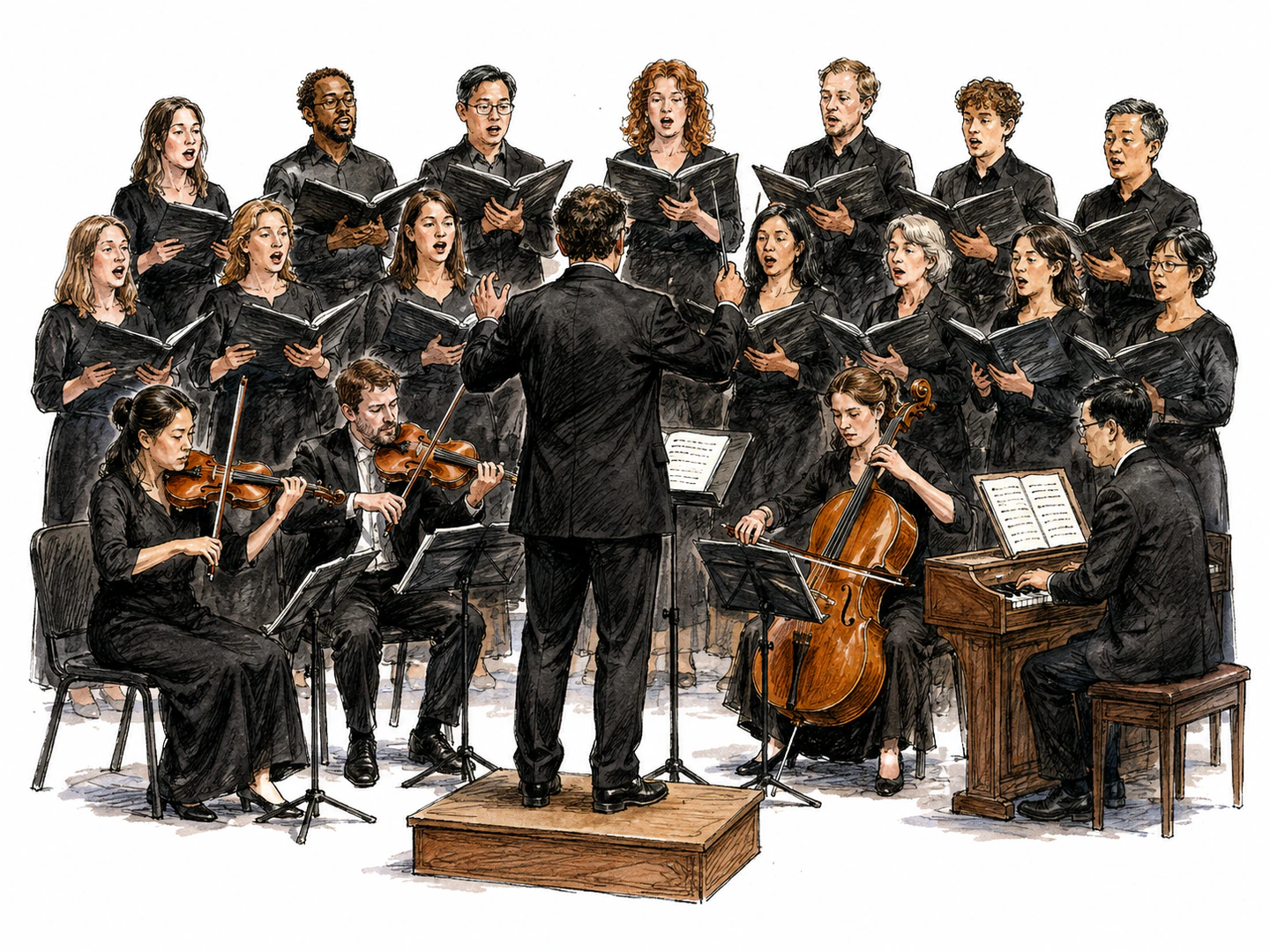
A musical work for voices and instruments, often sacred.
The choir rehearses a cantata with the chamber orchestra.
Etymology
Italian cantata means “that which is sung,” from cantare, “to sing.” Its early sense of a musical recitation of a story connects the name to the work’s vocal focus, even when instruments accompany the voices.
In context
cantata, we've already seen that that's a piece for vocal, plus orchestra.
title of a Bach cantata. A cantata first performed in Weimar
More examples
- A soloist opens the second movement of the cantata.
- The church commissions a new sacred cantata.
- The program pairs two short cantatas.
Forms
cantata · cantatas