adjective
chivalrous
SHIV-ul-rus/ˈʃɪvəlrəs/
Showing or reflecting the courtesy and honor traditionally expected of knights.
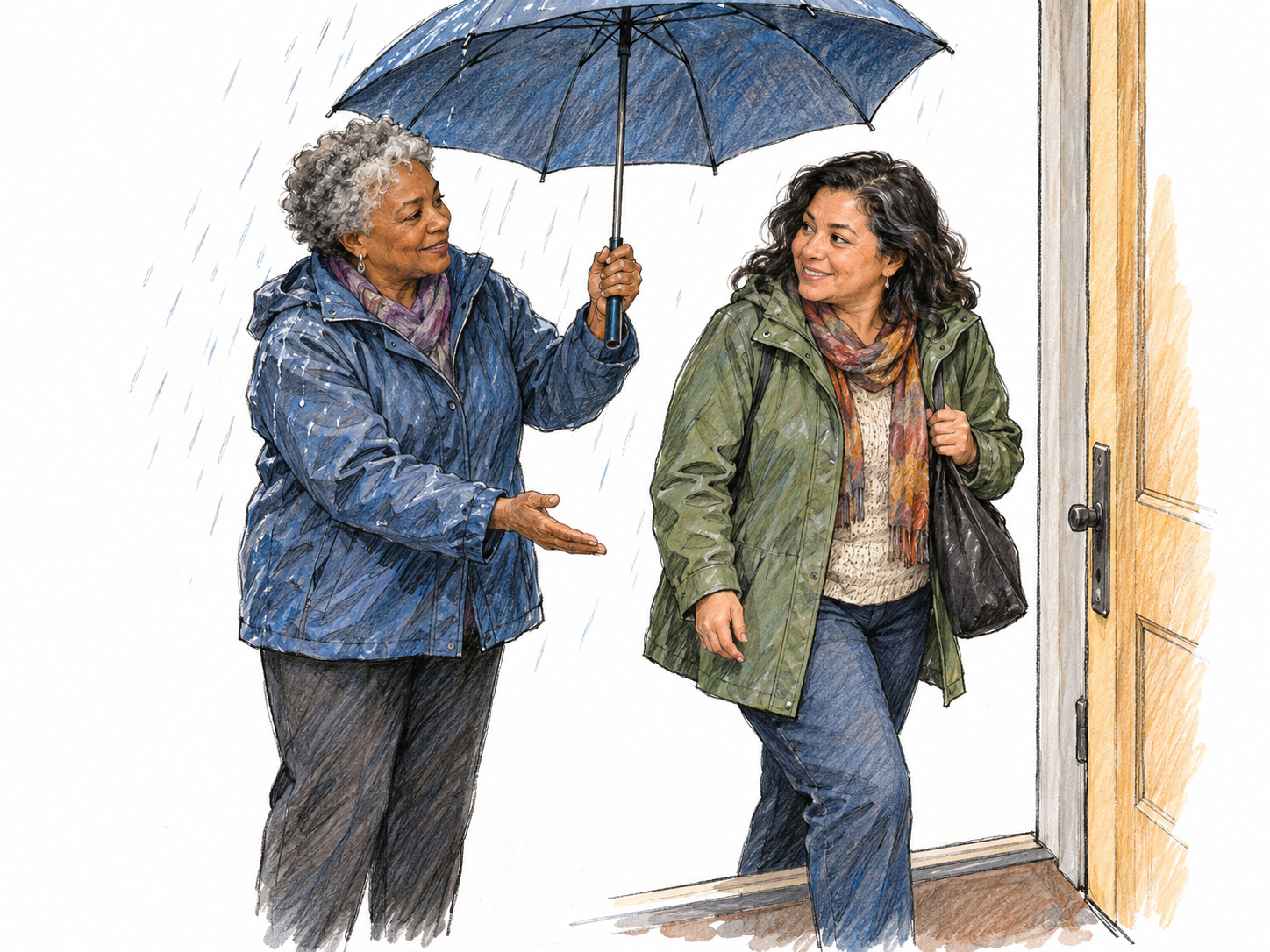
She makes a chivalrous gesture, sheltering the other woman with her umbrella.
Etymology
Originally describing knights, the word came to describe qualities ideally associated with them: courage, generosity, honor, and courtly manners. The selected sense emphasizes that ideal in courteous, protective treatment of women.
In context
chivalrous behavior in front of Nobles and commoners this provided a platform for displaying social status and Prestige for creating and reinforcing the ideals of chivalry such as courage loyalty and honor
More examples
- He considered it chivalrous to defend someone who had been unfairly attacked.
- Her novel questions the limits of the hero’s chivalrous ideals.
- The defeated knight thanked his rival for a chivalrous gesture.
Forms
chivalrous · more chivalrous · most chivalrous
chivalry noun — traditional ideals of knightly honor and courtesy
Similar words
- courteous
- Courteous simply means polite; chivalrous evokes traditional ideals of knightly honor and protection.
- gallant
- Gallant can mean brave or courteously attentive; chivalrous more directly invokes knightly ideals.