noun
circulation
sur-kyuh-LAY-shuhn/ˌsɜːrkjəˈleɪʃn/
Movement around a connected system.
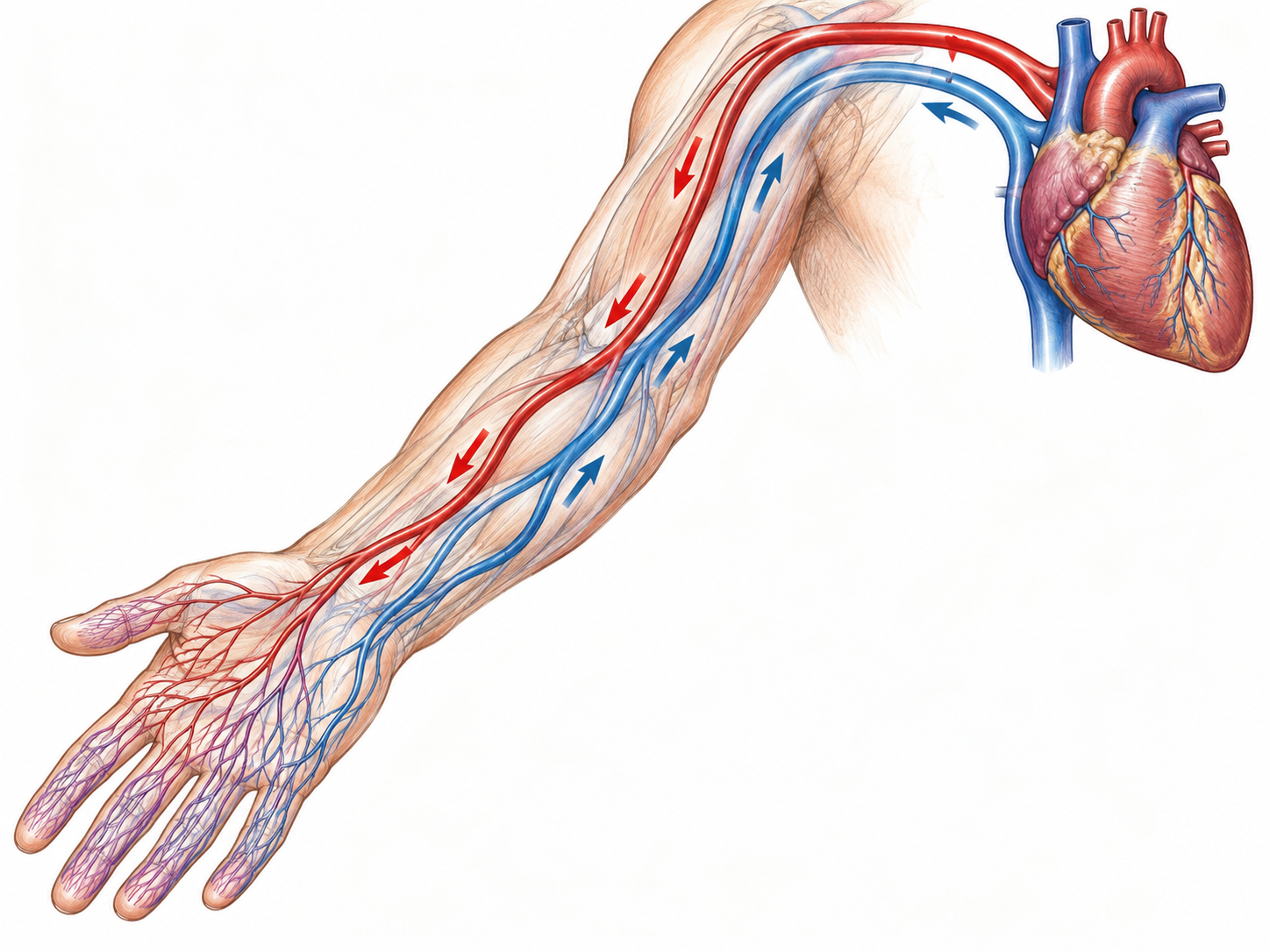
Blood circulation sends blood through an arm's arteries and back through veins.
Etymology
The 'small ring' image explains why circulation means more than blood simply moving: it moves through a circuit, returning and beginning again. The ending names that recurring process.
In context
components that affect effect blood circulation are the cardiac output given by the stroke volume multiplied by heart rate and the systemic vascular resistance
More examples
- The fan improves air circulation throughout the house.
- Damaged bills were taken out of circulation.
- The magazine reports a circulation of fifty thousand copies.
Forms
circulation
circulate verb — To move or pass through a system.
circulatory adjective — Relating to the movement of blood.