verb
cleave
KLEEV/kliːv/
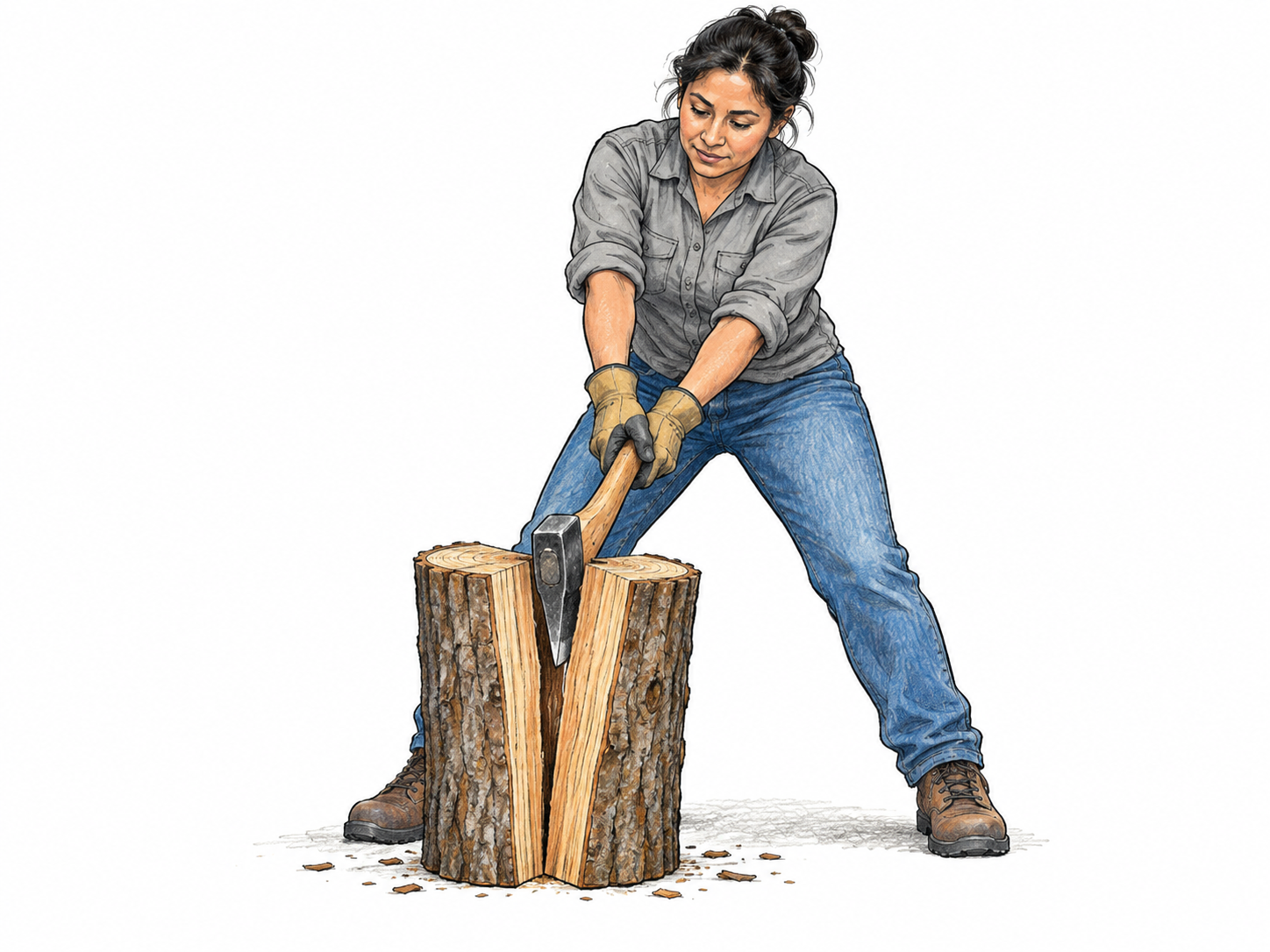
To split or cut something apart with force.
One powerful axe stroke cleaves the log into two pieces.
Etymology
Old English cleofan meant to split or separate, directly matching the action of cutting something apart. The apparently opposite cleave meaning “cling” comes from a different Old English verb.
In context
shift where we cut you can see that in this case that the boxes of the green and the red are shown on the right side of the sulfur to cleave out and make cysteine
More examples
- The blade cleft the thick branch.
- A deep channel had cleaved the rock face.
- The butcher used a heavy knife to cleave the joint.
Forms
cleave · cleaves · cleaved · cleft · cloven · cleaving
cleaver noun — A heavy broad-bladed knife for cutting through meat or bone.
Similar words
- slice
- Usually suggests a smoother or thinner cut, while cleave emphasizes forceful separation.