noun
colon
KOH-lun/ˈkəʊlən/
The mark : used to introduce related information or separate related elements.
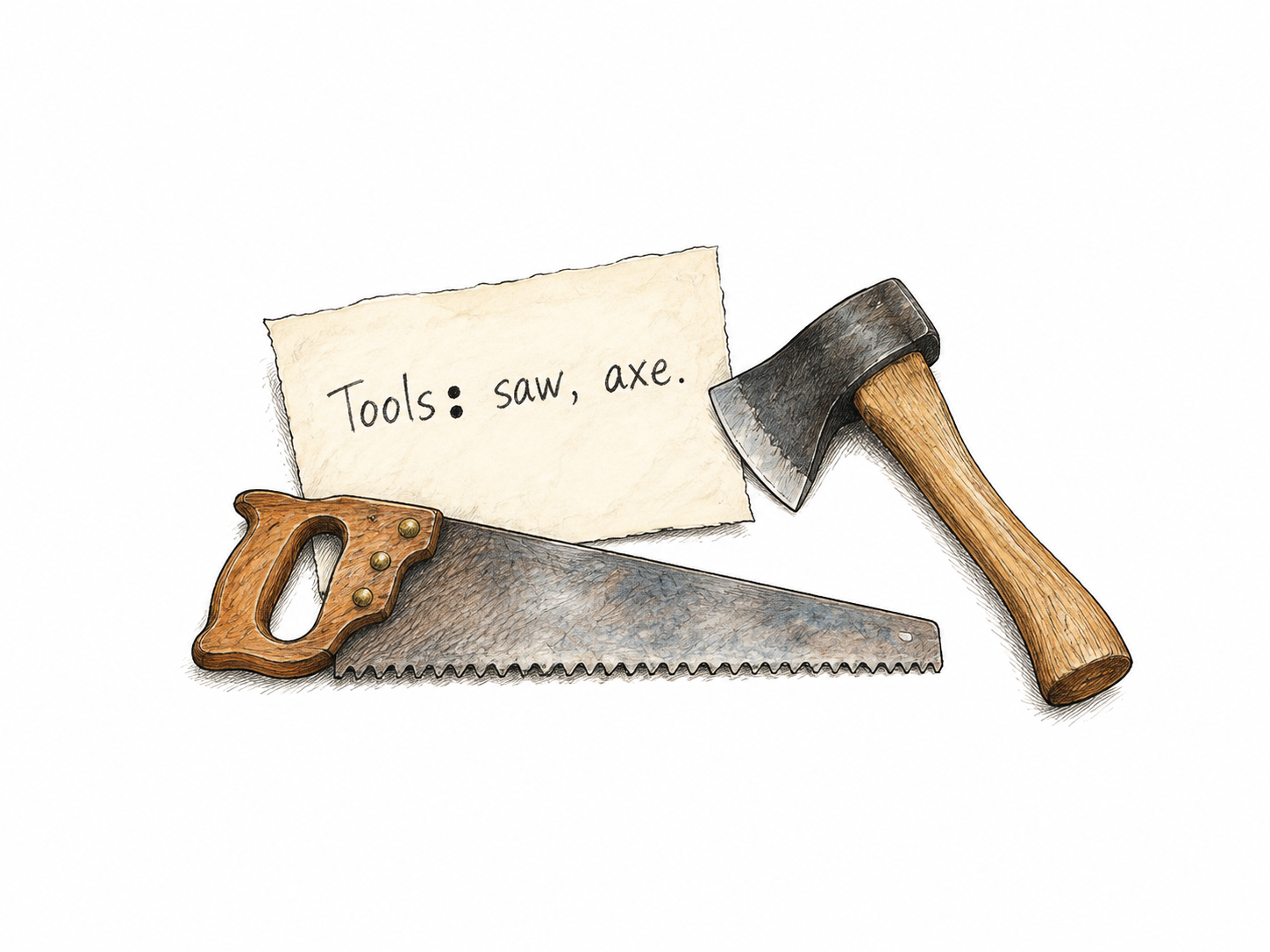
The colon introduces the tools listed on the note.
Etymology
Greek kōlon meant a “limb” and, figuratively, a clause—a member of a sentence. The name shifted from the clause to the punctuation mark that set it off.
In context
The colon is elegant and economical: it allows us to indicate the relationship between ideas with one simple punctuation mark
More examples
- A colon introduces her explanation: the road is closed.
- He uses a colon before the quotation in his essay.
- In the time 9:30, the colon separates hours from minutes.
- The ratio 2:1 has a colon between its numbers.
Forms
colon · colons
punctuation noun — Marks that organize and clarify writing.