adjective
congenital
kun-JEN-ih-tul/kənˈdʒenɪtl/
Present from birth or rooted in the earliest stages of development.
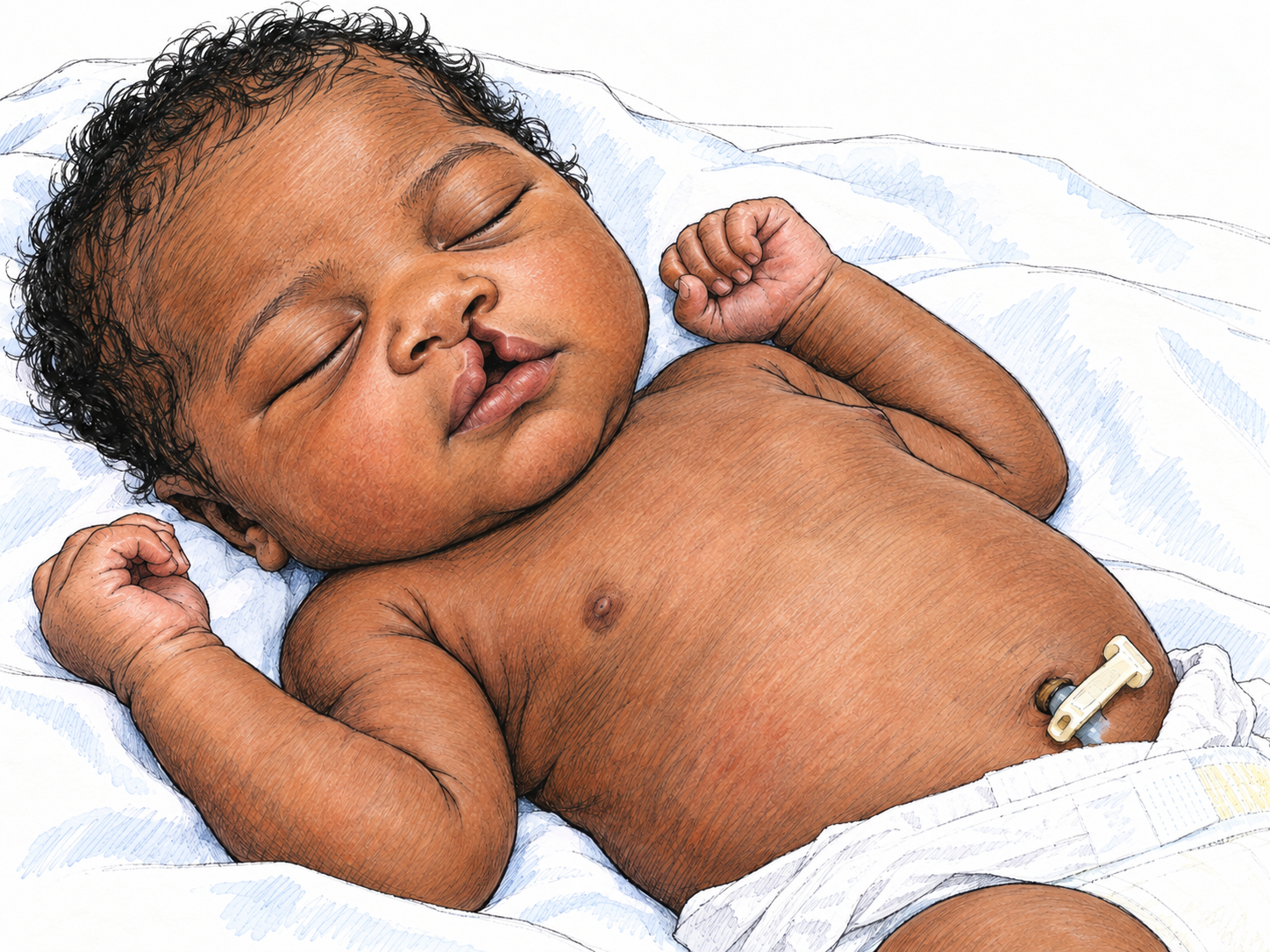
The newborn has a congenital cleft in the upper lip.
Etymology
The pieces express being “born together”: a congenital condition accompanies a person into life. This connects the birth image to something present from birth rather than acquired afterward.
In context
during pregnancy, this virus can cross the placenta and infect the developing baby, leading to a devastating condition called congenital rubella syndrome
More examples
- Her congenital hearing loss is diagnosed soon after birth.
- A congenital condition is not always inherited from a parent.
- His congenital optimism helps him stay cheerful during setbacks.
Forms
congenital
congenitally adverb — From birth or an early developmental stage.
Similar words
- inborn
- Emphasizes being present at birth, often describing personal traits.
- innate
- Often describes natural abilities or qualities rather than medical conditions.
- hereditary
- Specifically passed from parents, rather than merely present at birth.