adjective / noun
corrosive
kuh-ROH-siv/kəˈrəʊsɪv/
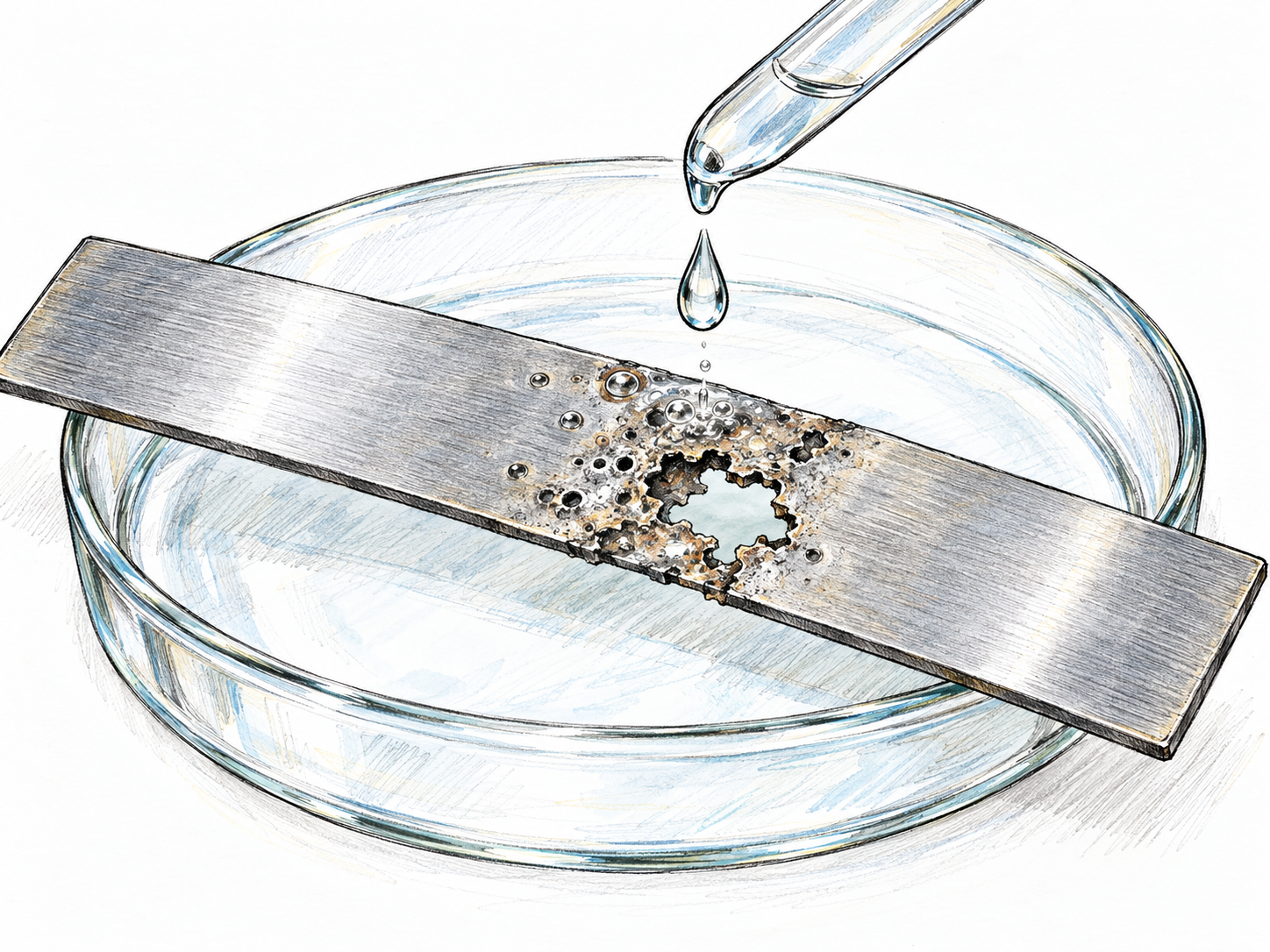
Eating away or destroying material through chemical action.
The corrosive liquid leaves pits in the metal.
Etymology
The 'gnaw' root supplies the image of eating material away, with a prefix that may intensify it. The adjective ending describes a substance capable of causing that damage through chemical action.
In context
As long as the ship's hull is contaminated by this corrosive liquid, it will cause continuous damage to the ship's durability!
More examples
- Workers store corrosives in suitable containers.
- The label warns of the solution's corrosive properties.
- A protective coating shields the part from corrosive chemicals.
Forms
corrosive · corrosives · more corrosive · most corrosive
corrode verb — gradually damage through chemical action
Similar words
- caustic
- Caustic often describes substances that burn tissue; corrosive broadly describes chemical attack on materials.
- erosive
- Erosive wears material away mechanically or naturally; corrosive typically involves chemical attack.