noun / verb
decease
dih-SEESS/dɪˈsiːs/
The end of a person's life.
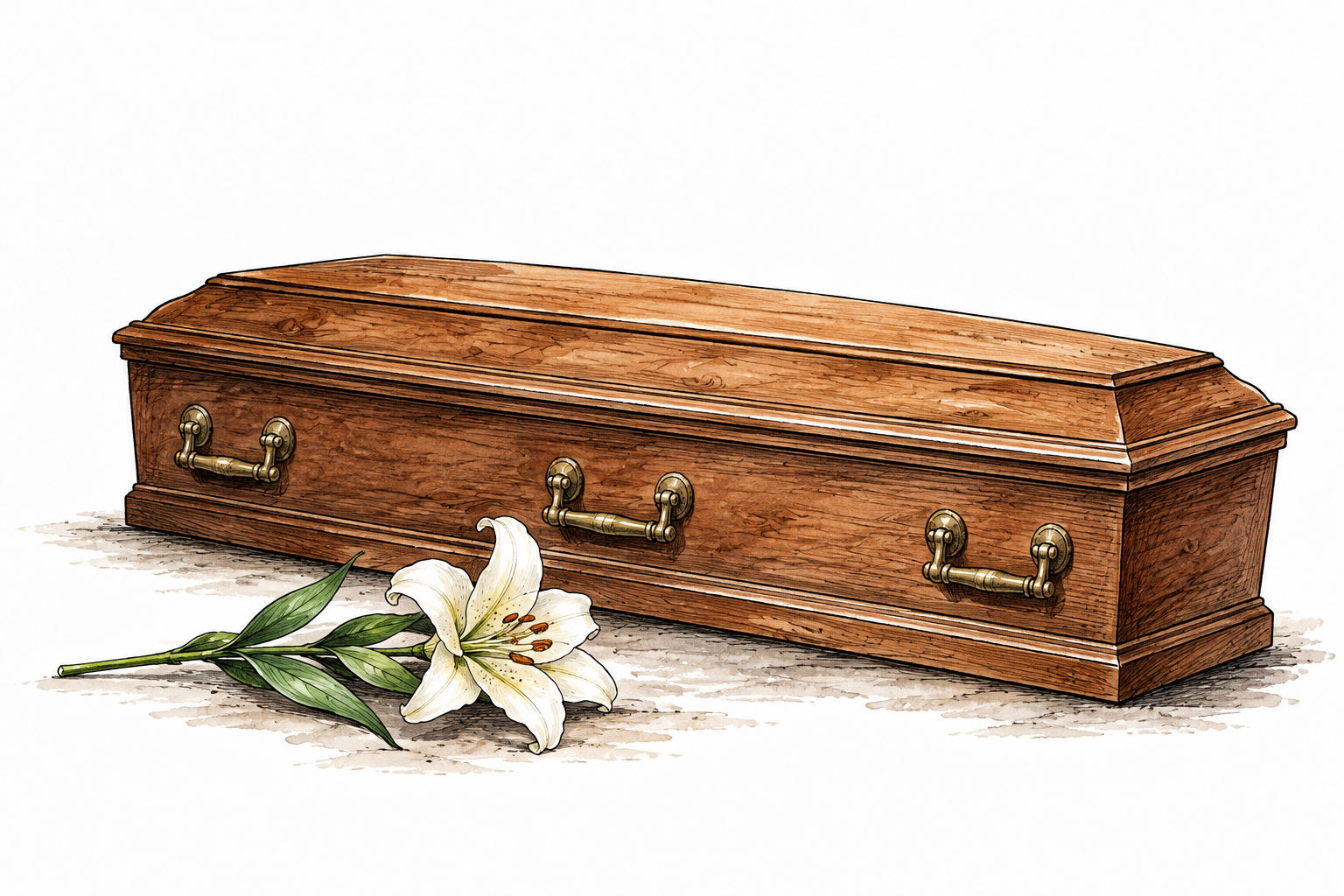
A flower beside the closed coffin marks the solemn occasion of a person's decease.
Etymology
“Away” and “to go” frame death as a departure. Latin already used the resulting noun euphemistically for death, a softened sense that remains in formal English.
In context
More words followed these, providing if my lady was dead, or if Miss Rachel was dead, at the time of the testator’s decease
More examples
- The certificate records the date and place of her decease.
- After his father's decease, he inherits the family home.
- Her deceased husband left the house to their children.
Forms
decease · deceases · deceased · deceasing