noun
denominator
dih-NAH-mih-nay-ter/dɪˈnɑːmɪneɪtər/
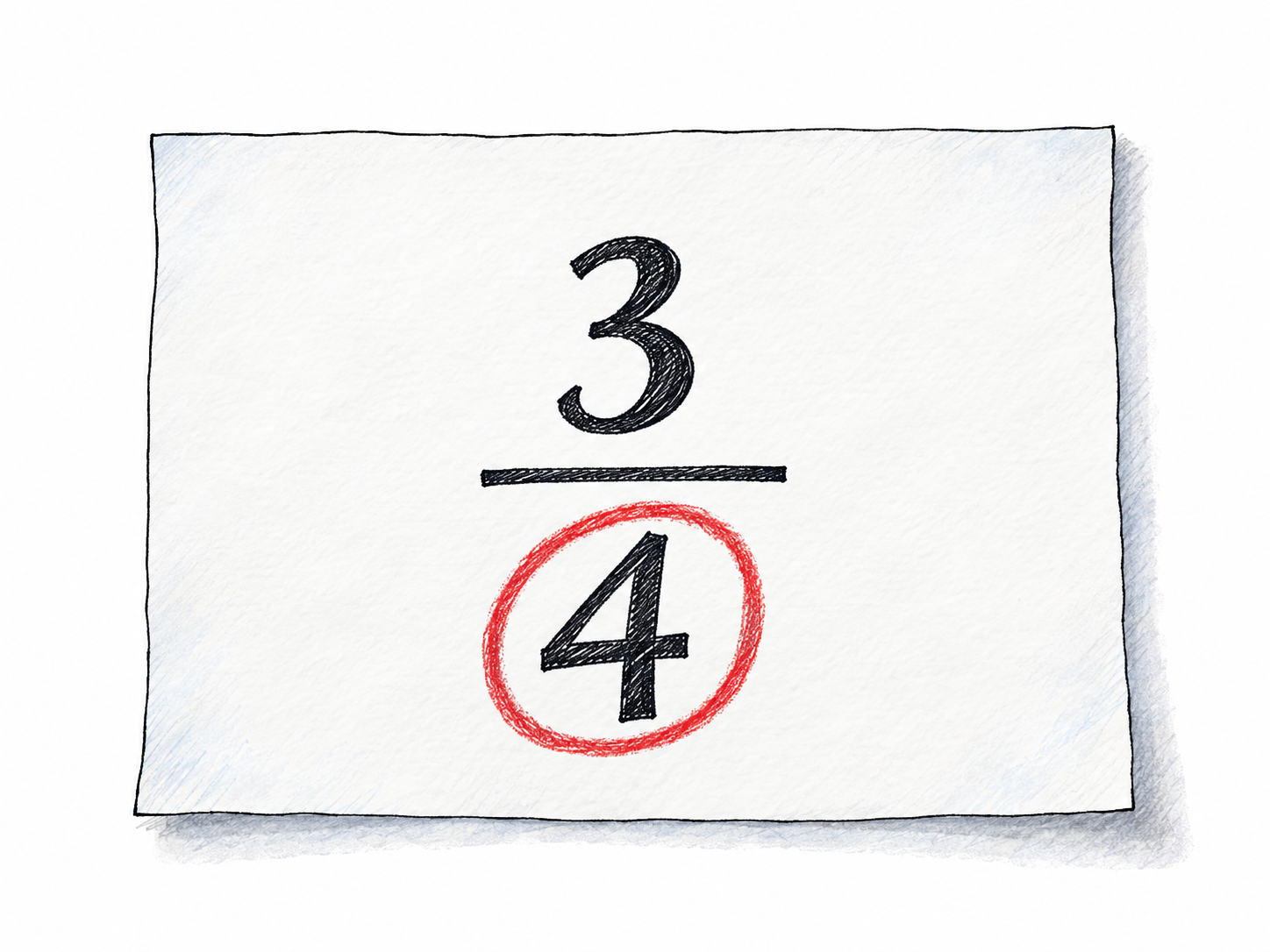
The lower number of a fraction specifying its unit of division.
The denominator tells us how many equal parts make a whole.
Etymology
The pieces make the denominator a “namer”: it identifies the fractional unit rather than counting those units. In three fifths, the bottom number names the units as fifths.
In context
r squared in the denominator so we got x squared plus y squared down here
More examples
- In the fraction 3/4, the denominator is 4.
- We find a common denominator before adding these fractions.
- Dividing the numerator and denominator by two simplifies the fraction.
Forms
denominator · denominators
Similar words
- divisor
- The number you divide by, not necessarily written in a fraction.