verb
deplore
di-PLOR/dɪˈplɔːr/
To express deep distress or disapproval about something.
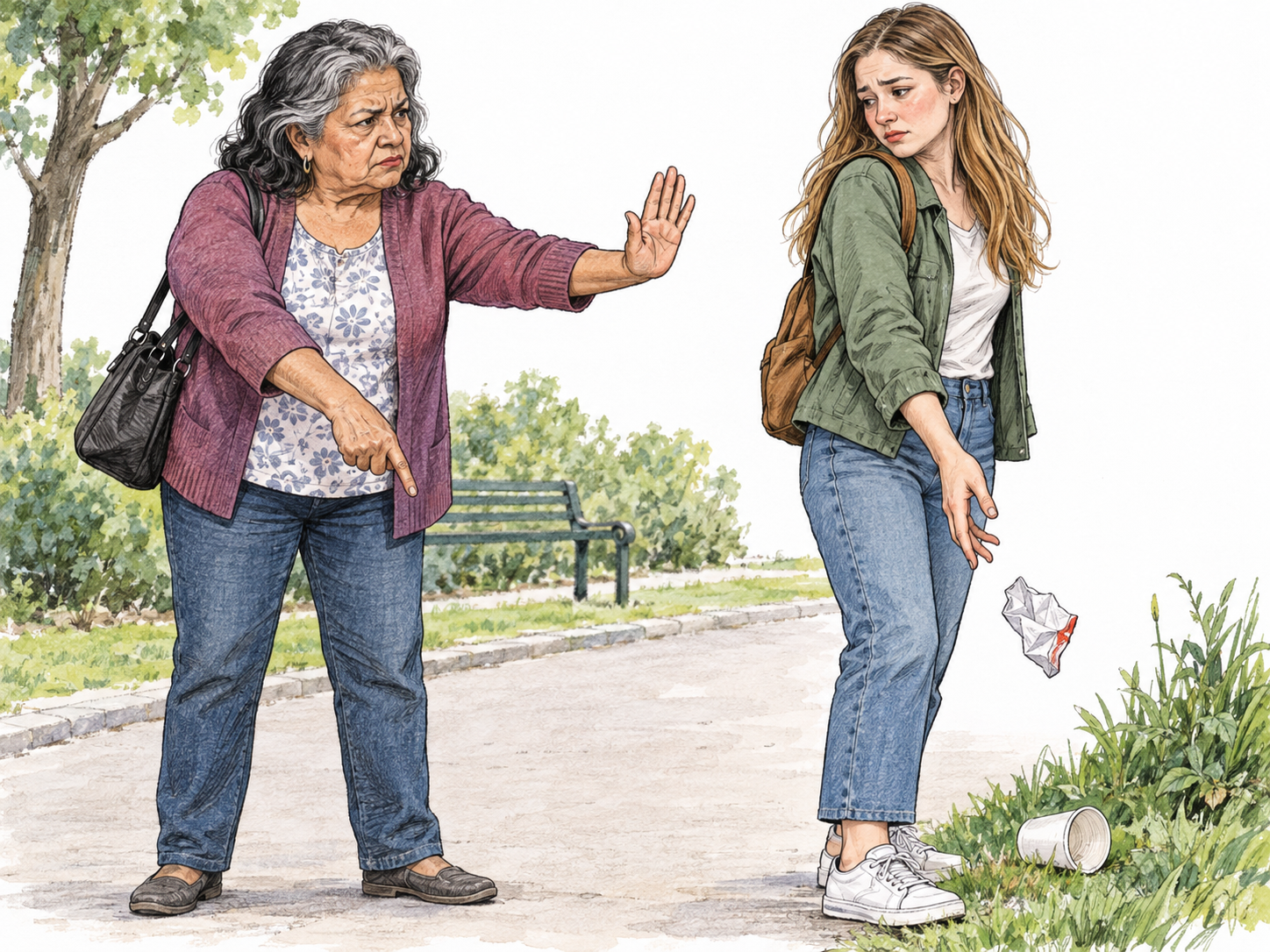
The older woman deplores the littering and points at the trash.
Etymology
Here de- strengthens “weep” rather than reversing it: the original image is wholehearted lamentation. That sense of bewailing something connects the word to deep regret and strong disapproval.
In context
it's one thing to deplore Eugenics on ideological political moral grounds it's quite another to conclude that it wouldn't work in practice
More examples
- We deplore the needless loss of life.
- Residents deplore the city's decision to close the library.
- She publicly deplored the cruel treatment of the workers.
Forms
deplore · deplores · deplored · deploring
deplorable adjective — Deserving strong disapproval or deep regret.