verb
depreciate
dih-PREE-shee-ayt/dɪˈpriːʃieɪt/
To reduce the value attributed to something.
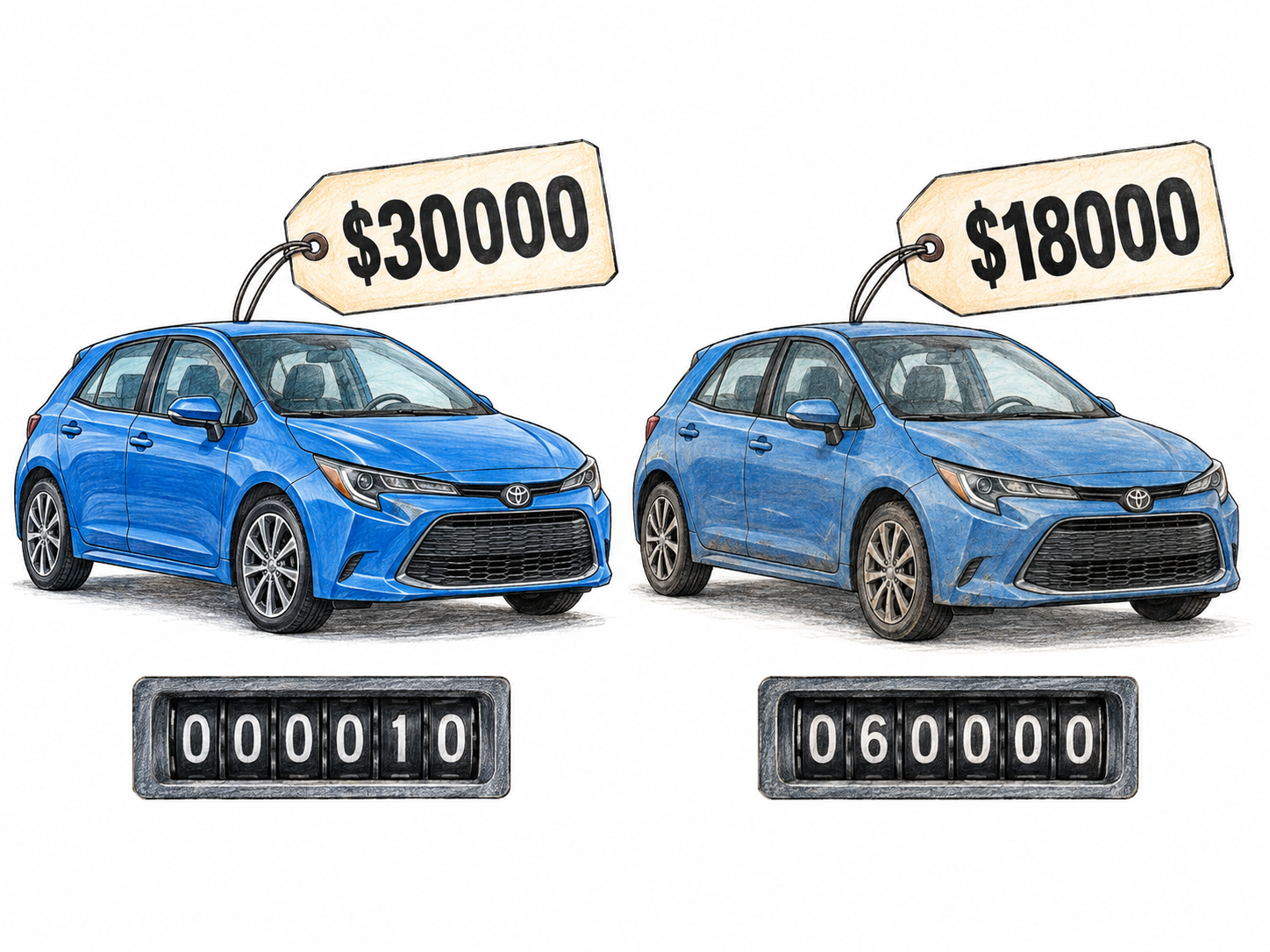
New cars depreciate quickly during their first few years.
Etymology
The pieces express bringing a price down. The word first meant undervaluing something, then actually lowering its value, and eventually falling in value—the sense used for assets that lose worth over time.
In context
India devalued the rupee. Adopted economic liberalization, moving to a market-determined exchange rate by 1993. [music] And so growth improved as a result. The rupee, however, continued to depreciate, touching about 43 rupees by the late 1990s.
More examples
- The company depreciates its equipment over five years.
- Heavy wear has depreciated the truck's resale value.
- She refuses to depreciate the contributions of her younger colleagues.
Forms
depreciate · depreciates · depreciated · depreciating
depreciation noun — A decrease in monetary or assessed value.
Similar words
- devalue
- Often suggests deliberately reducing value rather than gradual financial decline.
- belittle
- Focuses on dismissing someone's importance or achievements, not financial value.