verb
desist
dih-ZIST/dɪˈzɪst/
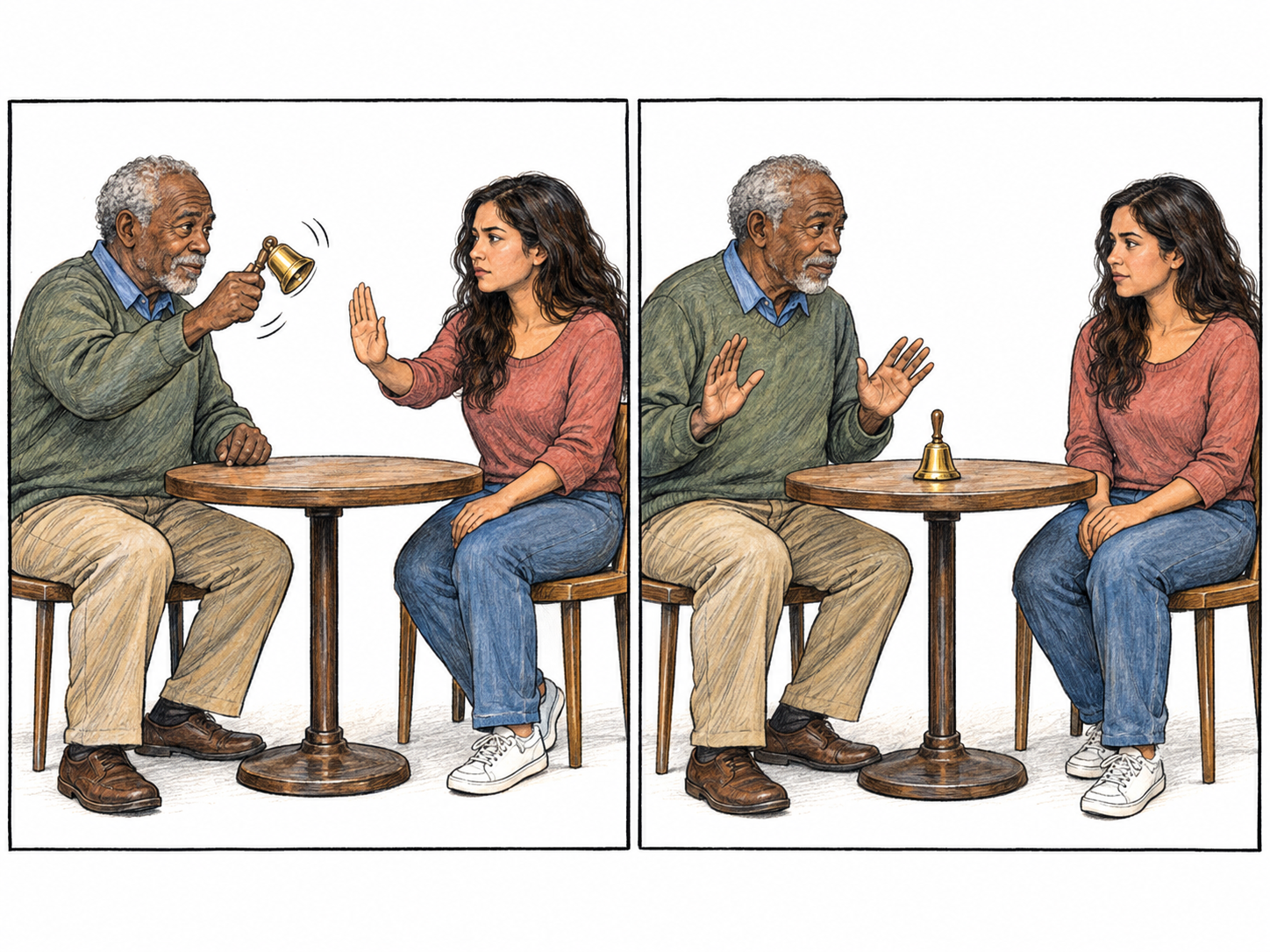
To stop doing something.
The man desists from ringing the bell and sets it down.
Etymology
“Off” combined with “come to a stand” gave the sense “stand aside” or “leave off.” That withdrawal from an action is preserved in today’s meaning, “stop doing something.”
In context
he sent notices to daily fantasy sports sites DraftKings and FanDuel ordering them to cease and desist concluding that their contests are neither harmless nor victimless
More examples
- Despite repeated requests, he refuses to desist.
- The company agrees to cease and desist from using our logo.
- She finally desists when she realizes the joke is upsetting him.
Forms
desist · desists · desisted · desisting