noun
dharma
DAR-muh/ˈdɑːrmə/
Religious or moral principles guiding right living.
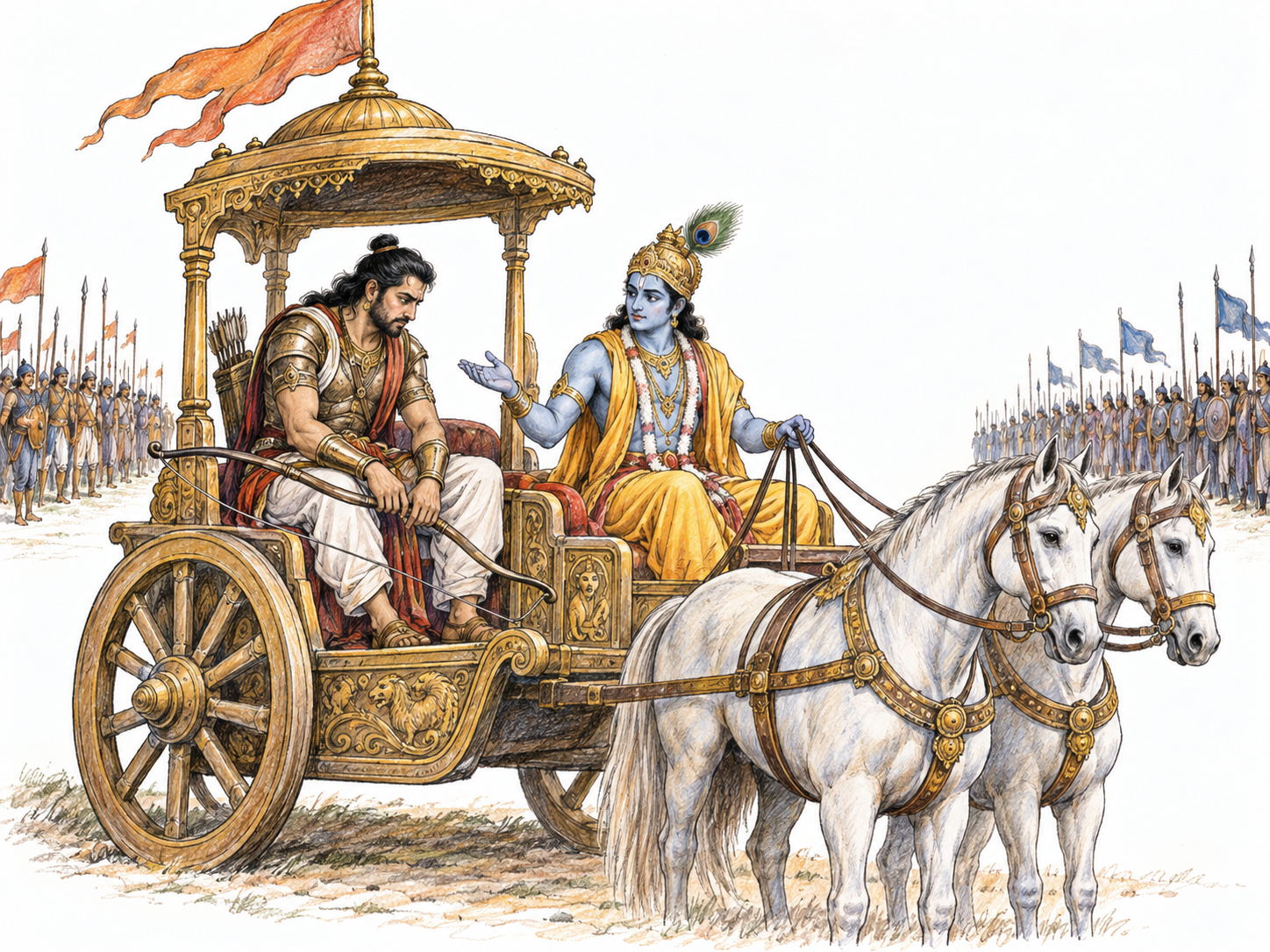
Krishna counsels Arjuna about dharma as the warrior hesitates between the opposing armies.
Etymology
Sanskrit dharma means law, right, or justice and is explained etymologically as “that which is established firmly.” That image connects moral duty with an established order.
In context
In turn they help the dharma flourish. Offering also inculcates the act of detachment to let go, to give and to grow in compassion. While communities support the monks, monks bless them and maintain righteousness in the society.
More examples
- The teacher explains how dharma guides our choices.
- He studies dharma to better understand his moral responsibilities.
- For her, practicing dharma includes speaking honestly and helping others.
Forms
dharmic adjective — Relating to religious or moral law.