noun
digression
dye-GRESH-un/daɪˈɡreʃn/
A temporary departure from the main subject or course.
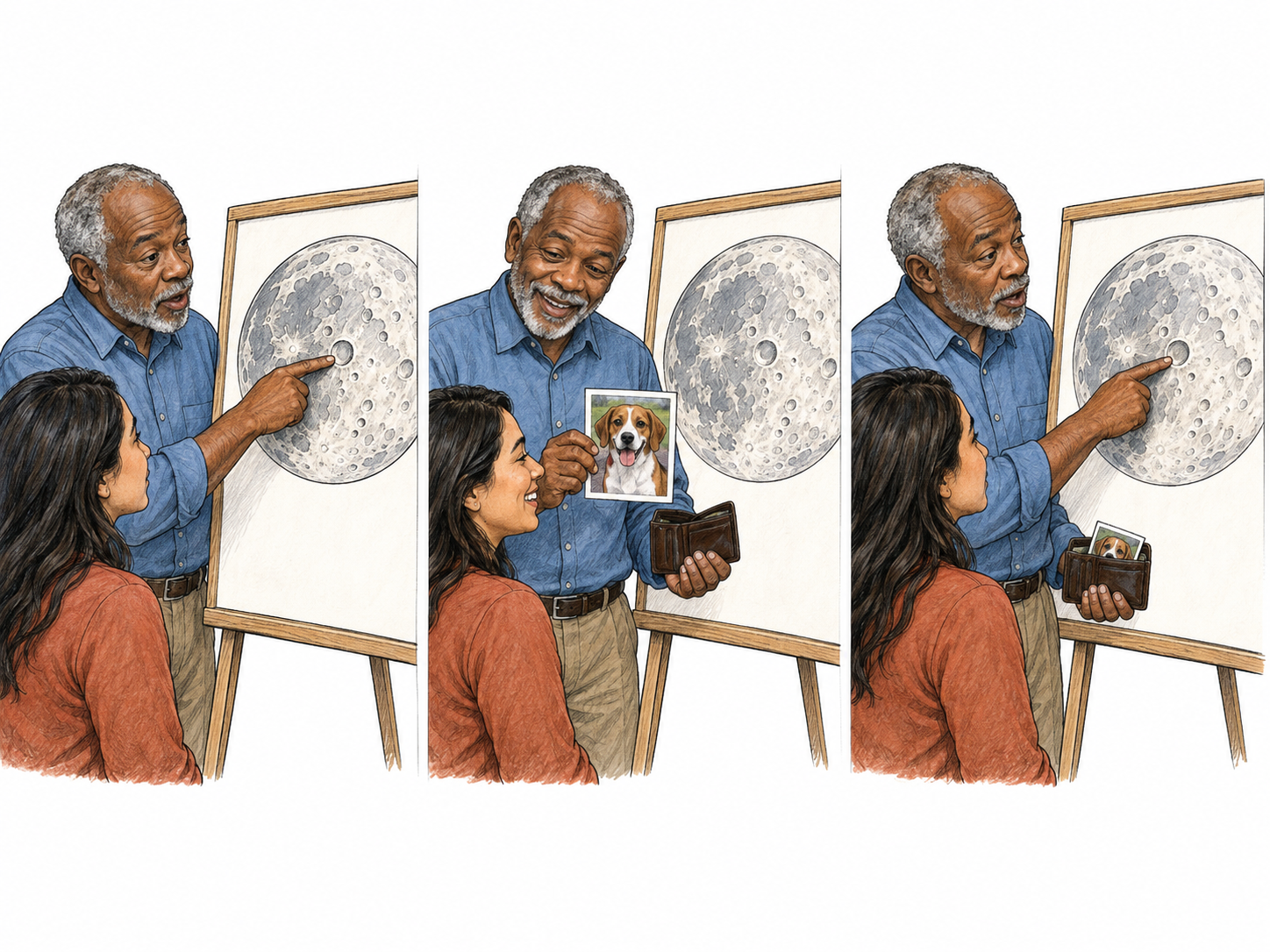
The speaker's brief digression about a dog interrupts the lecture on the Moon.
Etymology
A digression is literally an act of “stepping aside.” The Latin sense of going away becomes a departure from the main subject, treating speech or writing as a course one follows.
In context
so anyway that's just digression right there so you know the other thing is antibiotics
More examples
- After a short digression, he returns to the budget proposal.
- The book's frequent digressions make the main argument hard to follow.
- Please forgive this digression, but your story reminds me of something.
Forms
digression · digressions
digress verb — To depart temporarily from the main subject.
digressive adjective — Tending to wander from the main subject.