verb
disbelieve
dis-bih-LEEV/ˌdɪsbɪˈliːv/
To refuse or fail to accept something as true.
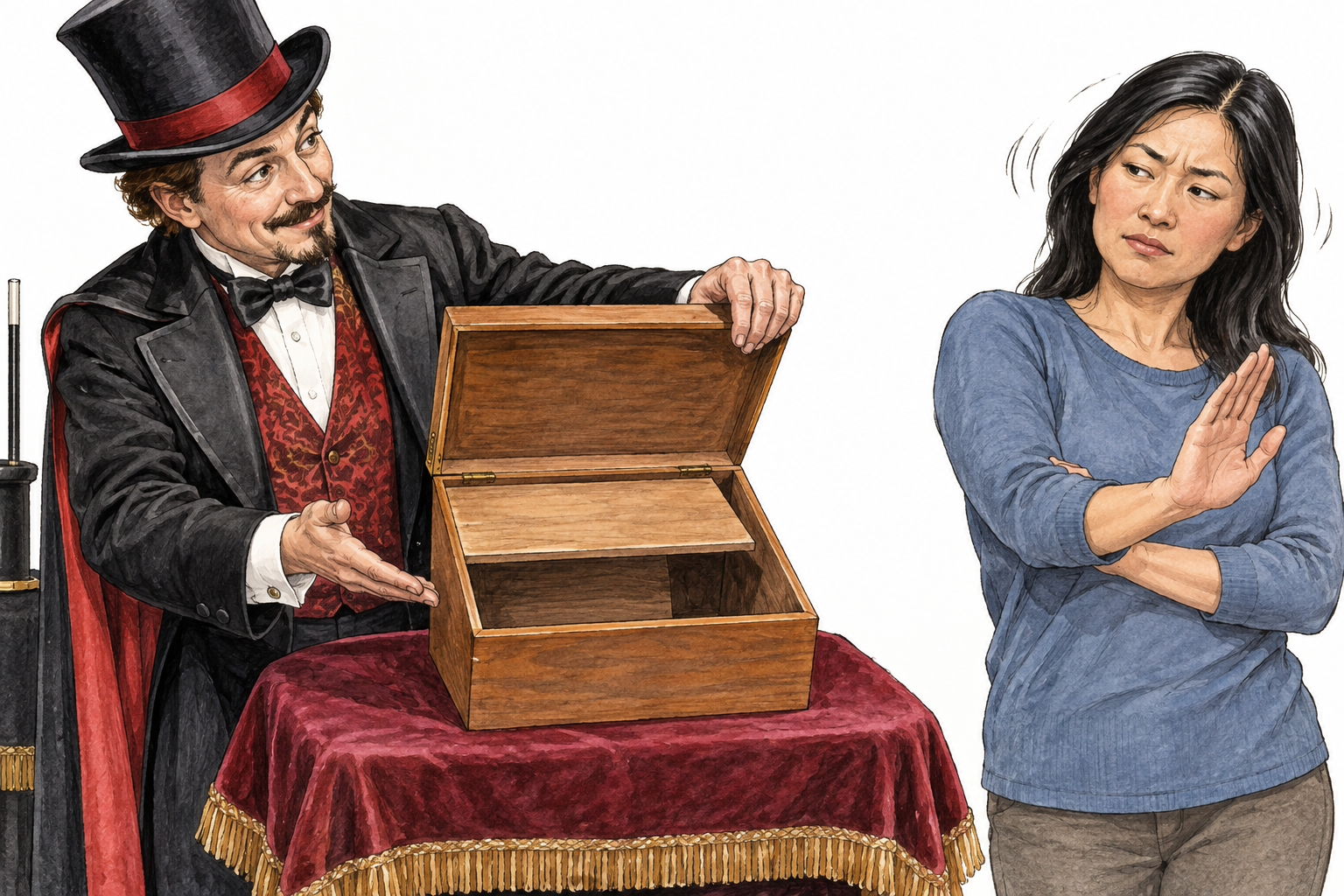
The skeptical adult disbelieves the illusion after seeing the box's false bottom.
Etymology
Believe moved from having confidence in a person to accepting a claim as true. Dis- reverses that acceptance, making disbelieve mean rejecting the truth or reality of what is asserted.
In context
You really, you really can't be a believer in the modern LDS church and disbelieve the words I'm about to read. Emma approved, at least for a time, of four of Joseph Smith's plural marriages in Nauvoo
More examples
- I find it hard to disbelieve her honest account.
- They disbelieved his warning until the river flooded.
- Disbelieving the results, he asks the lab to repeat the test.
Forms
disbelieve · disbelieves · disbelieved · disbelieving
disbelief noun — Failure or refusal to believe something.
Similar words
- doubt
- Suggests uncertainty rather than outright refusal to believe.
- distrust
- Questions someone's reliability rather than a particular statement's truth.