verb
discourage
dis-KER-ij/dɪsˈkɜːrɪdʒ/
To make someone less willing or confident about doing something.
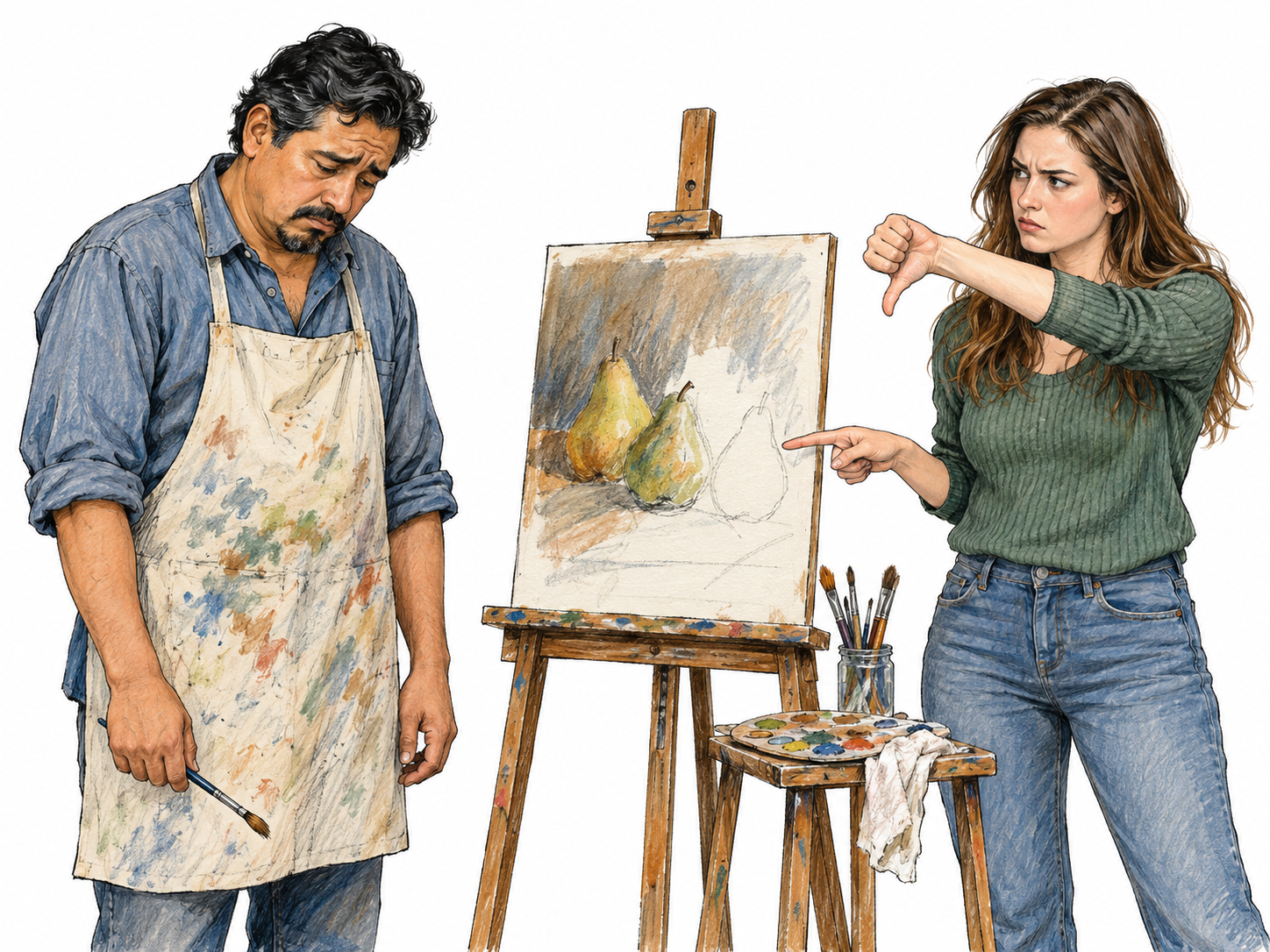
The visitor's dismissive gesture discourages the painter, who lowers his brush.
Etymology
Courage connects spirit and confidence with the heart as the seat of inner strength. To discourage people is to take that spirit away—to dishearten them and weaken their willingness to act.
In context
Conditions in the workhouses were deliberately [music] harsh and degrading in order to discourage the poor from relying on parish relief.
More examples
- The high cost discourages many students from studying abroad.
- His harsh comments discouraged me from sharing my ideas.
- Don't let one mistake discourage you from trying again.
Forms
discourage · discourages · discouraged · discouraging
discouragement noun — A loss of confidence or willingness.