verb
dislocate
DIS-loh-kayt/ˈdɪsləʊkeɪt/
To disrupt by forcing something out of its normal place.
A hard fall can dislocate your shoulder and cause severe pain.
Etymology
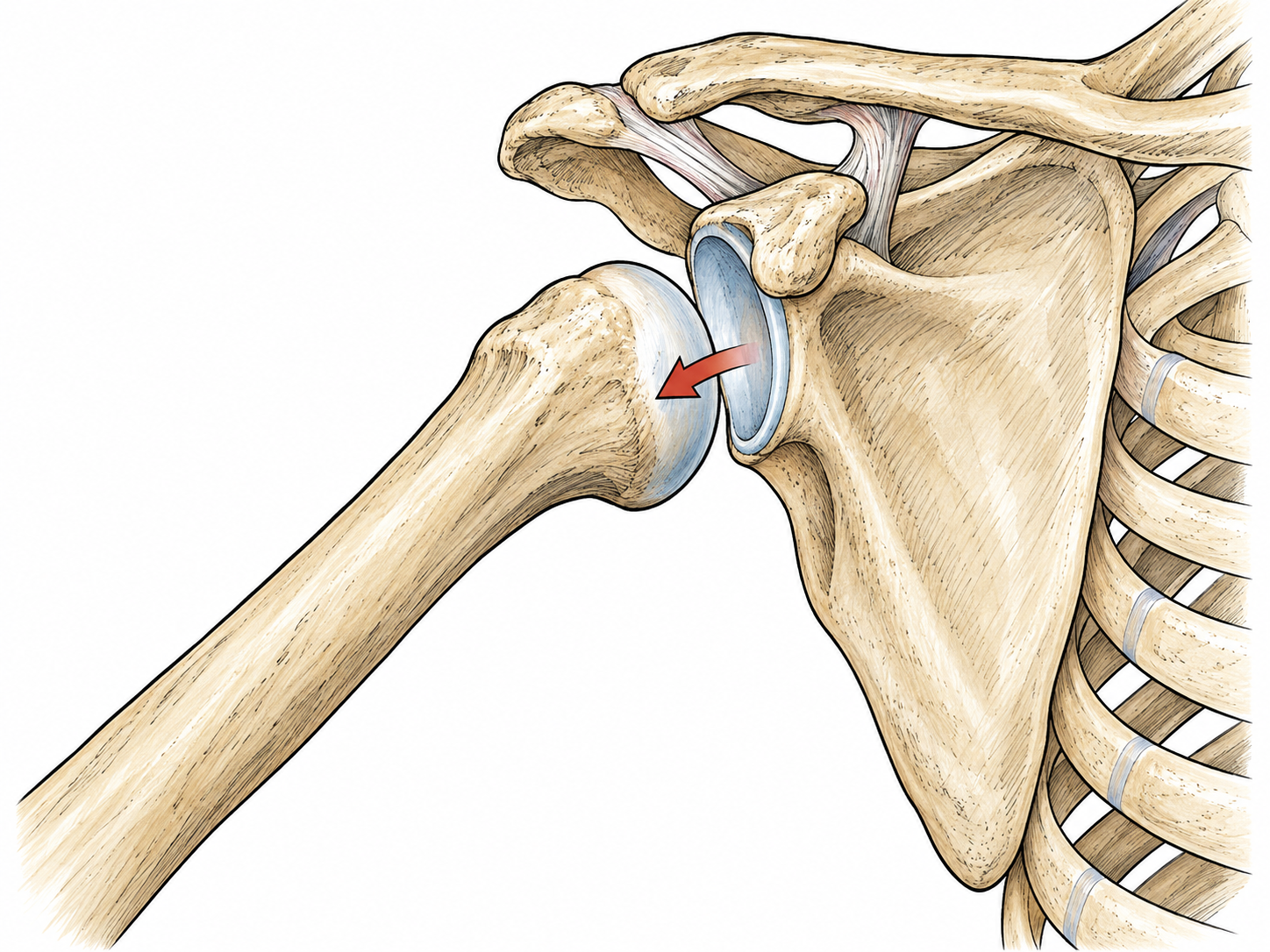
With dis- meaning “away,” placing becomes putting something out of place. In the medical sense, that displaced thing is a bone forced out of its normal position in a joint.
In context
that shoulder becomes mechanically easier to dislocate. Not because you're weaker, not because you've healed wrong, but there's less bone there to hold the joint in place.
More examples
- A sudden twist dislocated her kneecap.
- The doctor checks whether the finger is dislocated.
- The earthquake dislocated the region's transportation network.
Forms
dislocate · dislocates · dislocated · dislocating
dislocation noun — Displacement from a normal position or arrangement.