verb
divert
dye-VURT/daɪˈvɜːrt/
To direct attention or movement onto another course.
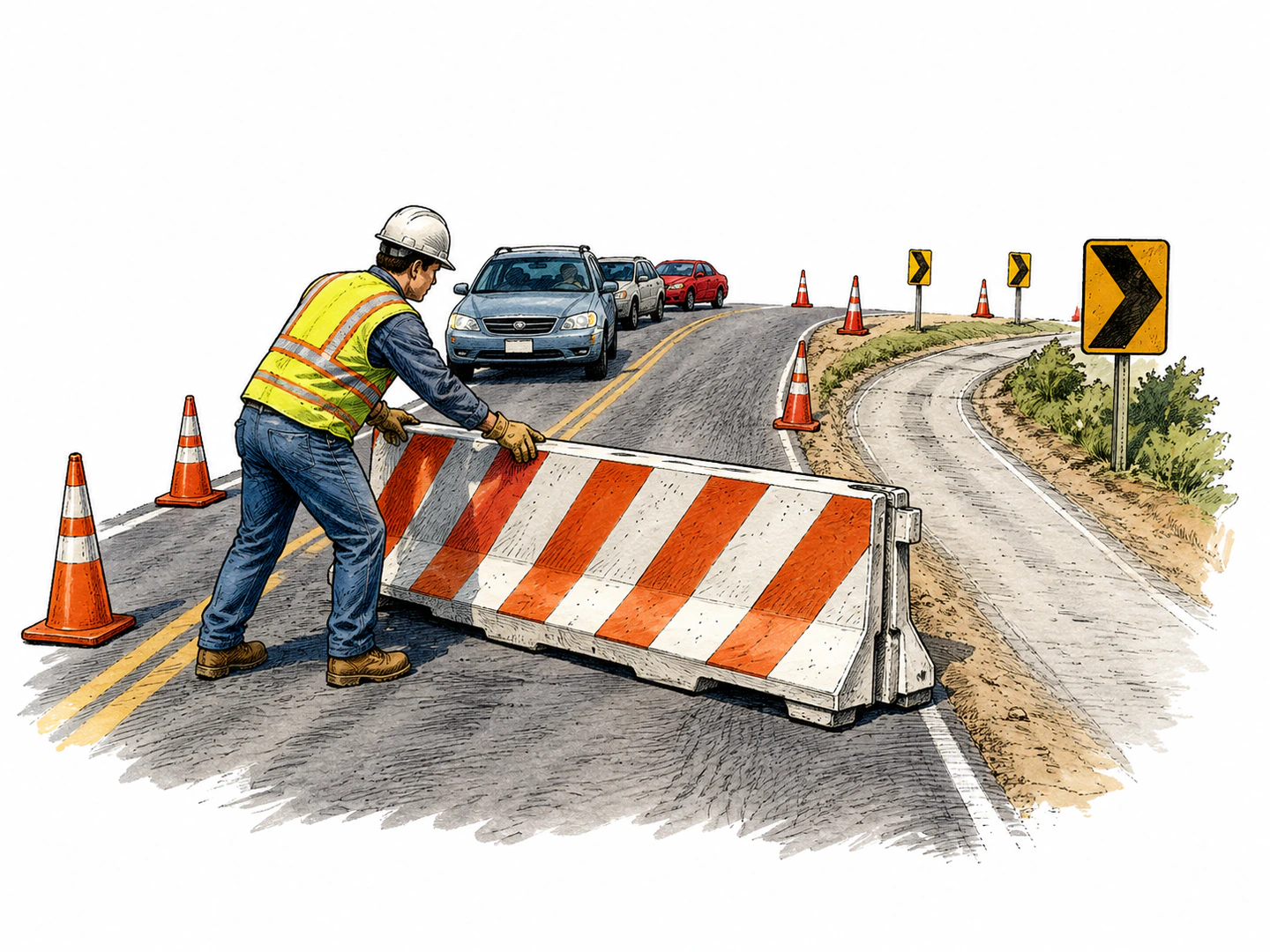
The worker's barrier diverts traffic from its usual course onto a side route.
Etymology
The pieces express “turn aside,” an image retained directly in this sense. Diverting something changes its direction, whether it follows a physical course or a particular aim.
In context
to divert more than two million pounds of edible food from landfills
I don't know but I'm gonna divert attention by recommending other booktubers to you
More examples
- A sudden noise diverts her attention from the screen.
- The channel diverts rainwater away from the house.
- The city diverted funds from road repairs to emergency housing.
Forms
divert · diverts · diverted · diverting
diversion noun — An act of redirecting movement or attention.
Similar words
- redirect
- Broadly describes sending something toward a different destination or purpose.
- reroute
- Specifically describes changing the path taken by something traveling.
- distract
- Focuses on drawing attention away, often interrupting concentration.