adjective
dour
DOOR/dʊr/
Stern, gloomy, or unfriendly in manner or appearance.
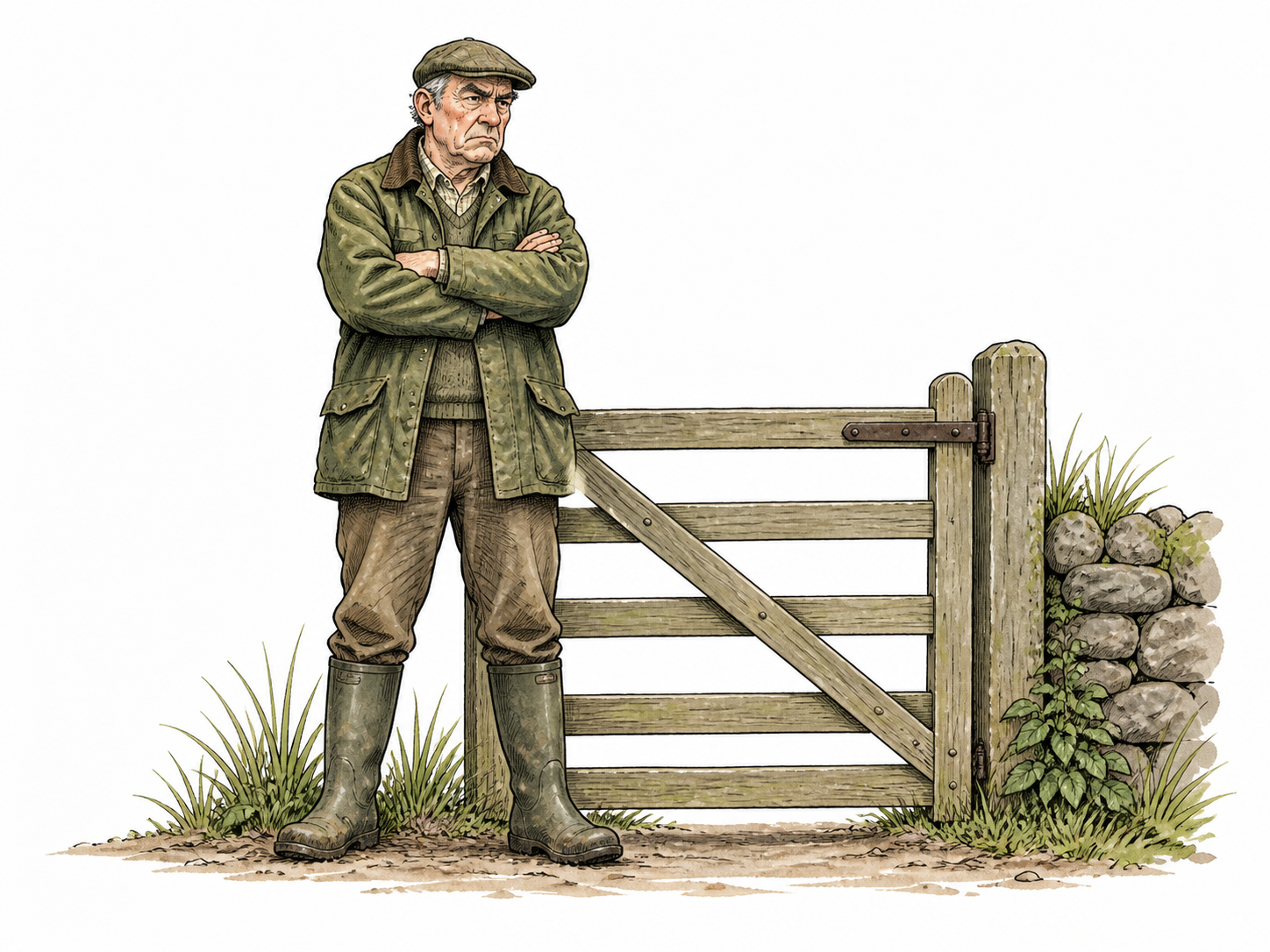
The dour caretaker stands by the gate with folded arms and a downturned mouth.
Etymology
Dour probably comes from Latin durus, “hard.” Applied to people, that hardness describes a stern, fierce manner, which developed into the sense “gloomy, sullen.”
In context
from dour Expressions to Broad smiles and this tradition is still to this day is carried on by Grassroots political campaigns
More examples
- Despite his dour manner, he is generous with his time.
- She looks increasingly dour as the meeting drags on.
- His dour face brightens when his grandchildren arrive.
Forms
dour · dourer · dourest
dourly adverb — In a stern, gloomy, or unfriendly way.
dourness noun — The quality of appearing stern or gloomy.