verb / noun
drag
DRAG/dræɡ/
To pull along against resistance.
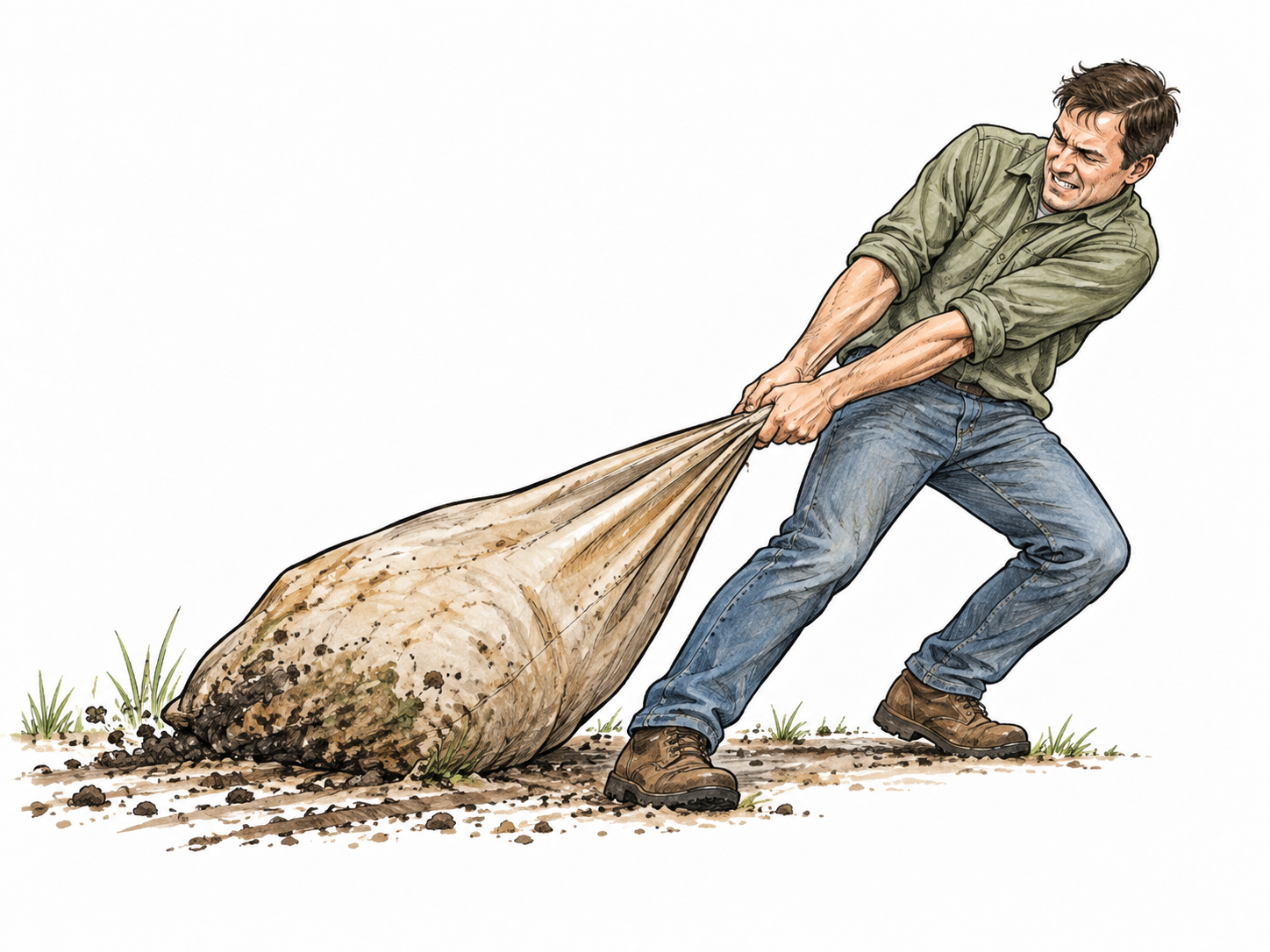
An adult leans back and drags a heavy garden sack across the ground.
Etymology
Old Norse draga, “to draw,” is one possible source; Old English dragan is another. Early English drag described pulling a grapnel along a riverbed, then pulling something away by force—the connection to hauling with effort.
In context
ropes and winches are used to drag the blubber from the body blubber is the layer of fat just under the skin using fencing knives the men help the winch to pull away the blubber
More examples
- The project drags on as new problems arise.
- The streamlined shape reduces drag as the boat moves through water.
- Doing all this paperwork is a drag.
- Click and hold the file, then drag it into the folder.
Forms
drag · drags · dragged · dragging