adjective / verb
dull
DUHL/dʌl/
Lacking or losing sharpness or intensity.
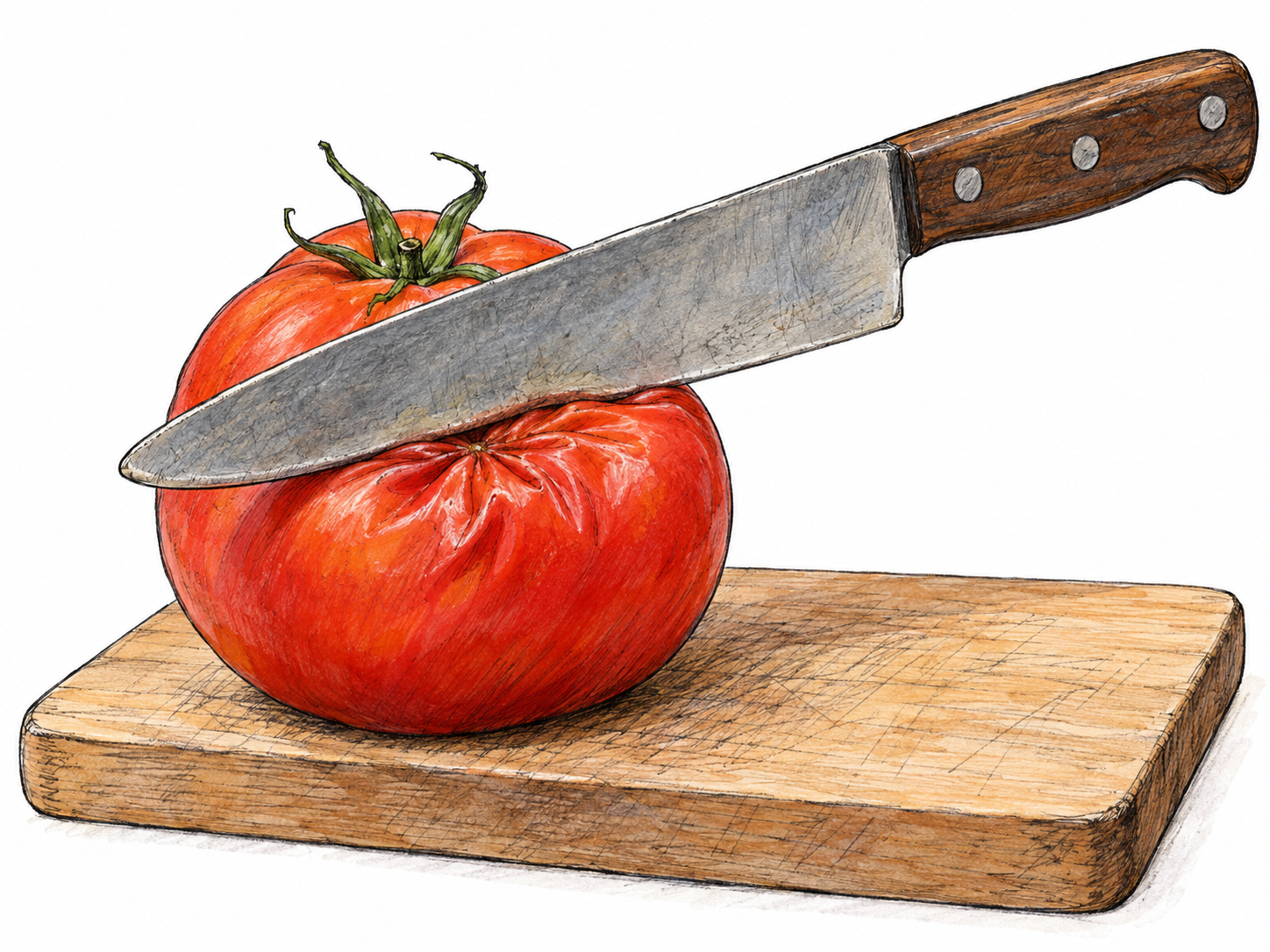
This dull knife crushes the tomato instead of slicing it.
Etymology
Dull may come from Old English dol, an unrecorded parallel word, or Middle Low German dul, 'foolish, reckless.' Its early senses paired slow understanding with blunt edges, later extending to dim color and tedious experience.
In context
if victory is long and coming then men's weapons will grow dull and their ardor will be damped
More examples
- The lecture is so dull that I struggle to stay awake.
- Years of sunlight dull the paint on the door.
- The medicine dulls the pain in my shoulder.
Forms
dull · duller · dullest · dulls · dulled · dulling
dullness noun — Lack of sharpness, brightness, or liveliness.
dully adverb — In a way lacking brightness or liveliness.