noun / verb
eclipse
ih-KLIPS/ɪˈklɪps/
The obscuring of one celestial body by another.
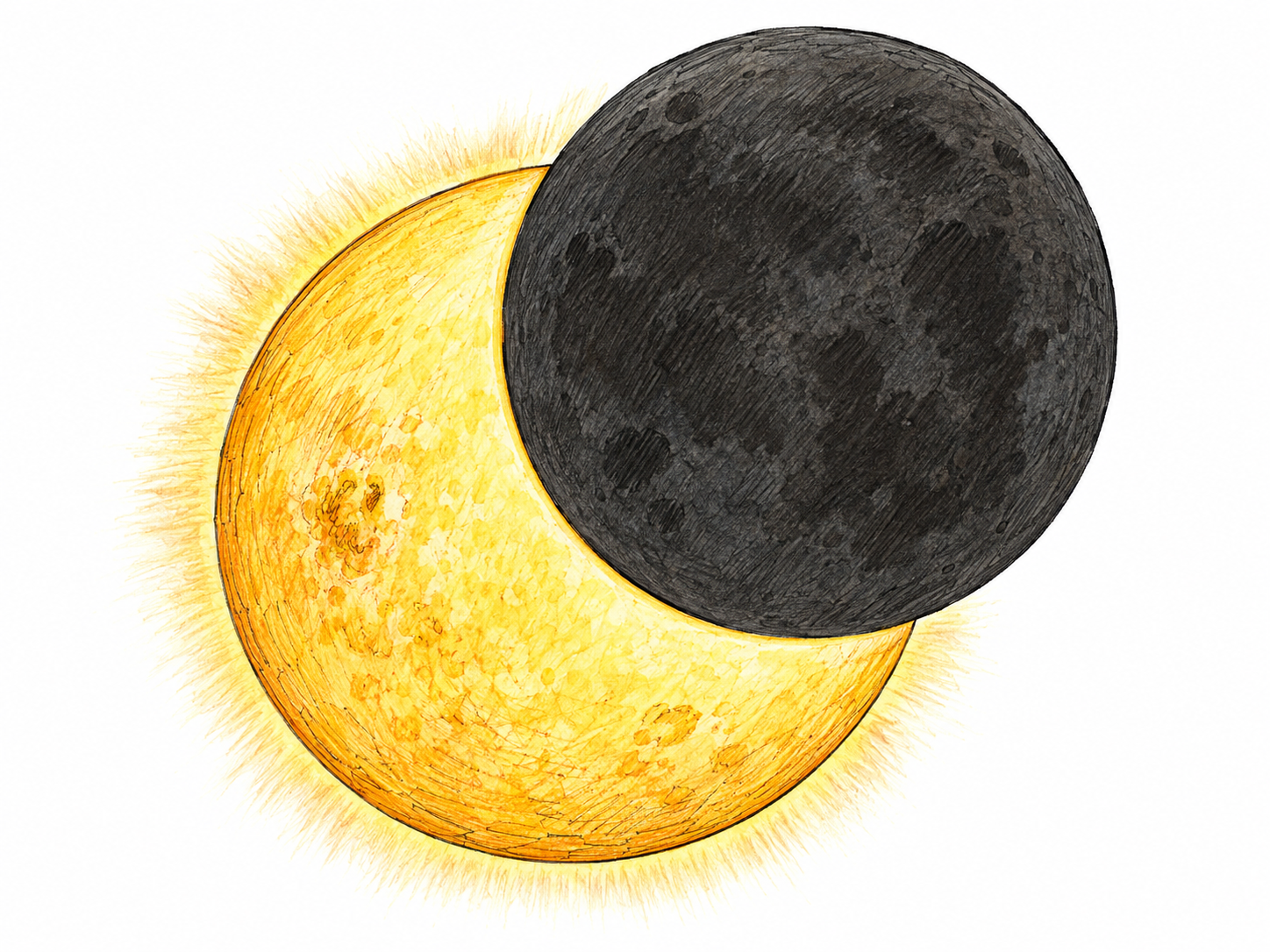
The Moon covers most of the Sun during this partial eclipse.
Etymology
The Greek combination meant forsaking a usual place or failing to appear. An eclipse describes that apparent failure of a celestial body to appear when another body obscures it.
In context
An eclipse is a generic term in astronomy for when one object passes into the shadow of another object, darkening or blocking it.
More examples
- Earth's shadow darkens the Moon during a lunar eclipse.
- The Moon briefly eclipses the Sun.
- Solar eclipses are visible only from certain parts of Earth.
Forms
eclipse · eclipses · eclipsed · eclipsing
Similar words
- occultation
- Usually describes a nearby body hiding a more distant object.
- obscuration
- A broader term for blocked light, including clouds or dust.