noun
economics
ee-kuh-NAH-miks/ˌiːkəˈnɑːmɪks/
The study of production, exchange, and use of resources.
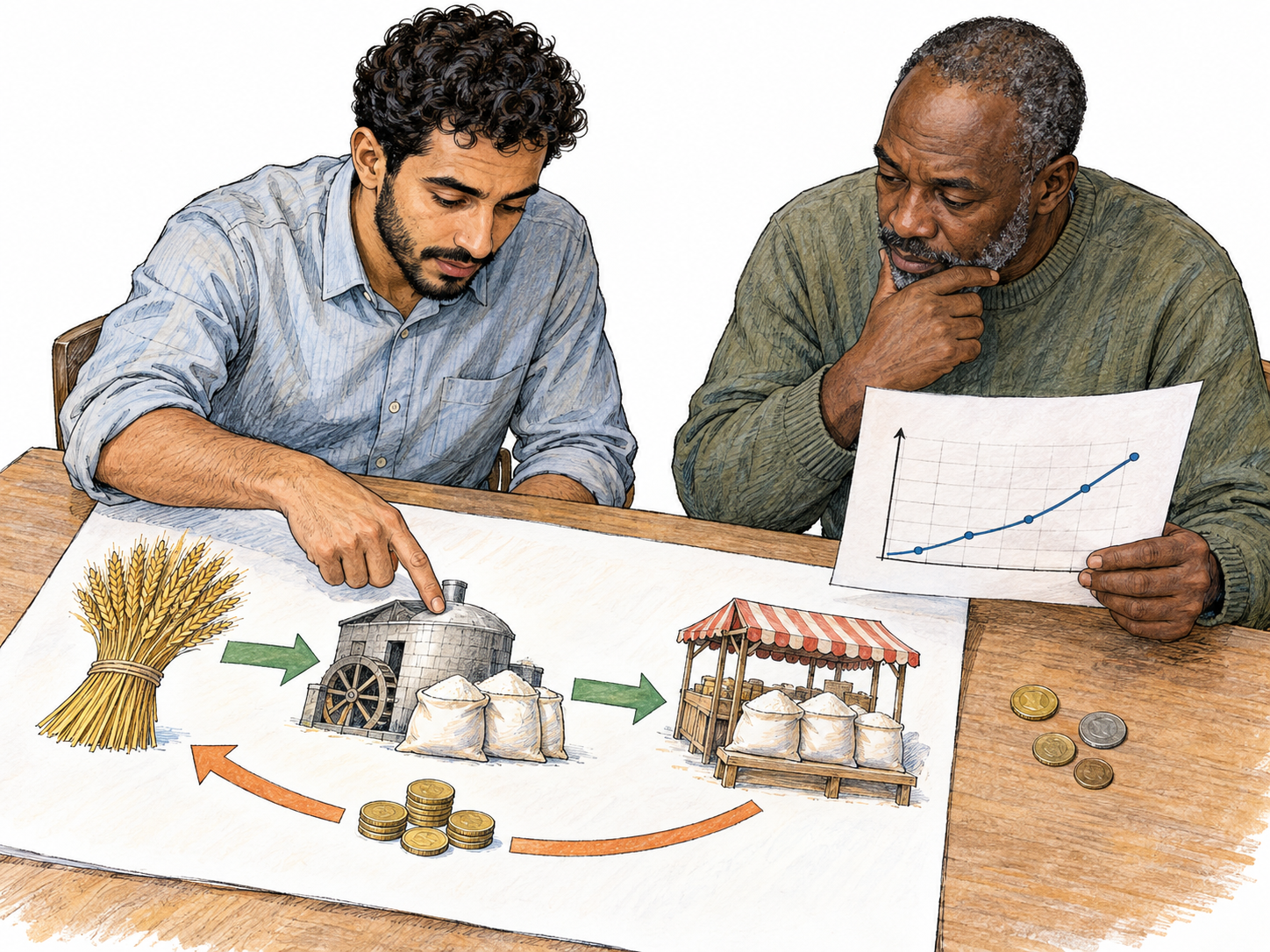
Two researchers study economics using a flow diagram and plotted data.
Etymology
The household-management base gives economics its original focus: managing a household's resources. With the discipline ending -ics, the word expanded to the science of wealth and the broader study of production, trade, and resource use.
In context
is a fundamental difference between consumption and production. And I'm not going to get into that a lot cuz that's more a a topic for for Dr. Bickner, more an economics topic than a finance topic
More examples
- Economics helps explain how people make choices with limited resources.
- Our economics class examines how wages influence workers' choices.
- Rising fuel costs change the economics of home delivery.
Forms
economics
economist noun — A person who studies or practices economics.
economic adjective — Relating to economics or the economy.
Similar words
- political economy
- Emphasizes how political institutions shape production, distribution, and resource use.