noun
electrolysis
ih-lek-TRAH-luh-sis/ɪˌlekˈtrɑːləsɪs/
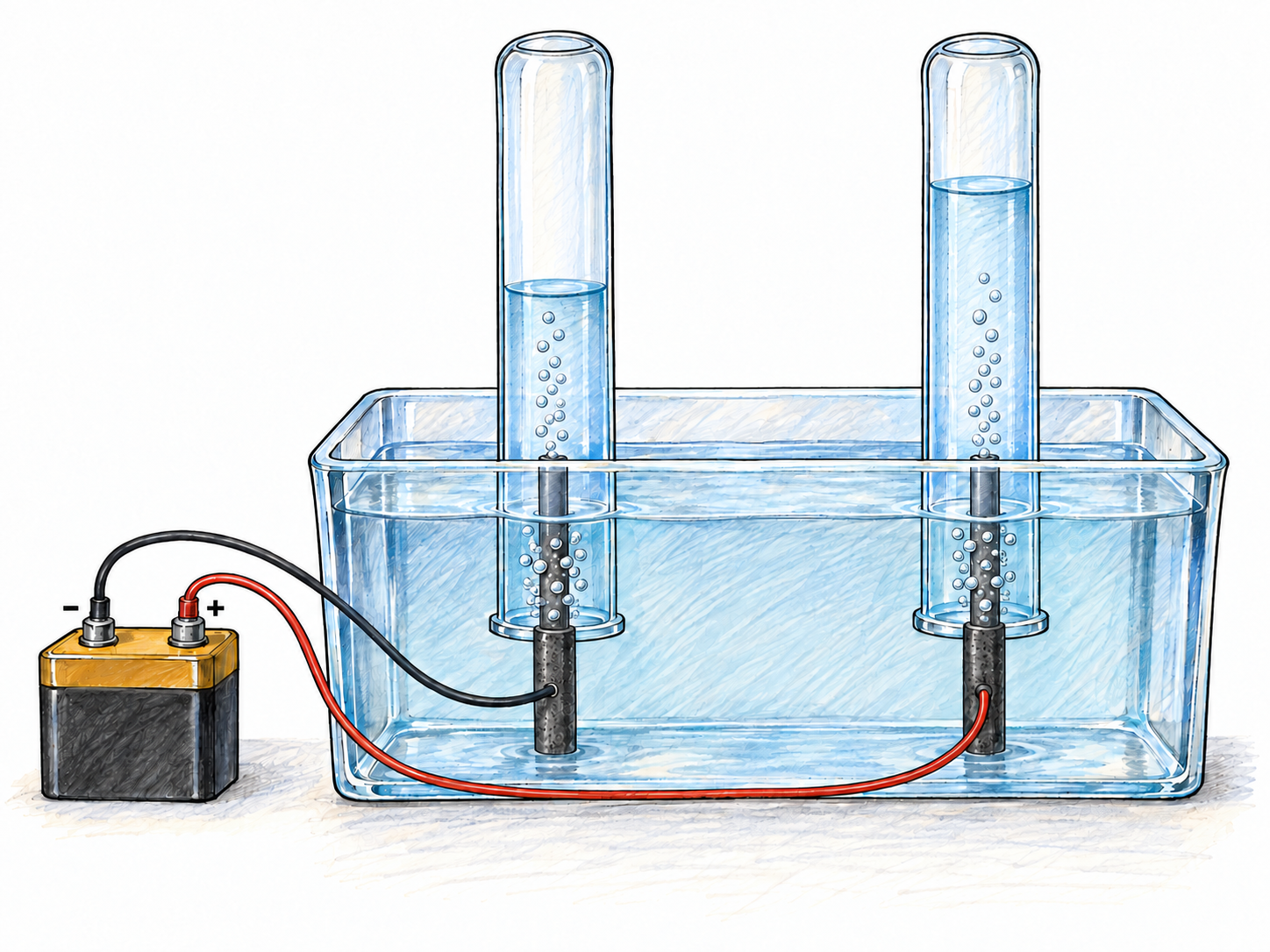
The use of electric current to cause a chemical change.
Electric current drives the electrolysis of water into hydrogen and oxygen.
Etymology
The pieces express a loosening by electricity. Here, loosening means chemical decomposition: an electric current breaks a substance apart into constituent parts.
In context
One way to make Hydrogen is via electrolysis, a process which uses an electric current to split water into hydrogen and oxygen.
More examples
- The plant extracts aluminum from molten aluminum oxide by electrolysis.
- During electrolysis, copper builds up on one of the electrodes.
- Electrolysis requires a power source and a substance that conducts electricity.
Forms
electrolytic adjective — Relating to chemical changes caused by electricity.
electrolyze verb — To cause chemical change using electric current.
Similar words
- decomposition
- Specifically means breaking substances apart, without requiring electric current.