verb
embarrass
im-BAR-us/ɪmˈbærəs/
To make someone feel awkward, self-conscious, or ashamed.
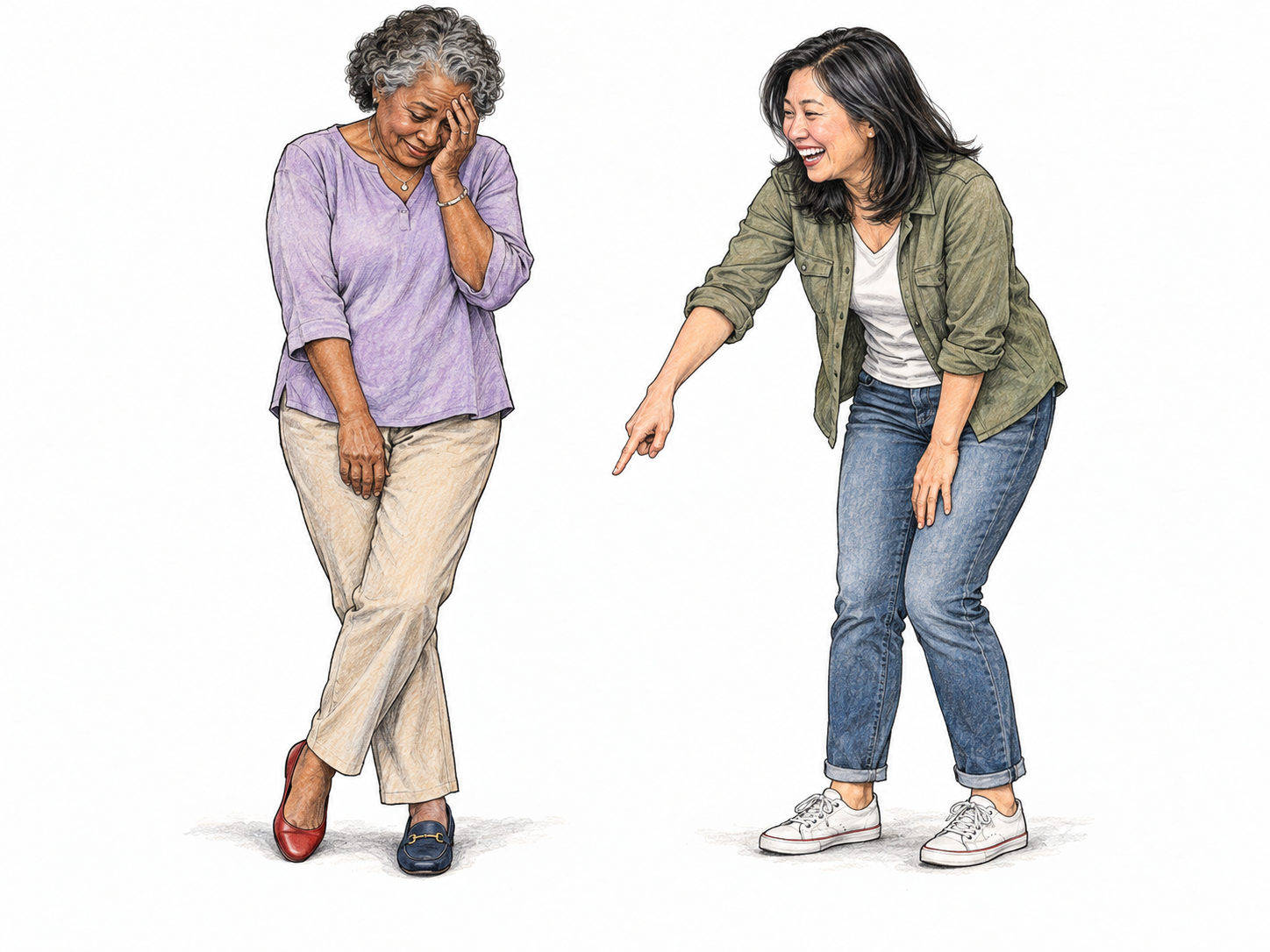
The woman's laughter embarrasses the person trying to hide her mismatched shoes.
Etymology
French embarrasser literally meant to block. English uses such as perplexing or hindering someone bridge that obstructive sense and the later meaning of making someone feel awkward or self-conscious.
In context
I think Vance was the guy who was supposed to slap Zelenskyy around, and he did. And to humiliate him and embarrass him, and to badger him the way that they did.
More examples
- I don't want to embarrass you in front of everyone.
- My loud ringtone embarrassed me during the meeting.
- Please stop embarrassing your brother about his crush.
Forms
embarrass · embarrasses · embarrassed · embarrassing
embarrassment noun — The feeling of being awkward or ashamed.