noun / verb
end
END/end/
The boundary where something stops or reaches its limit.
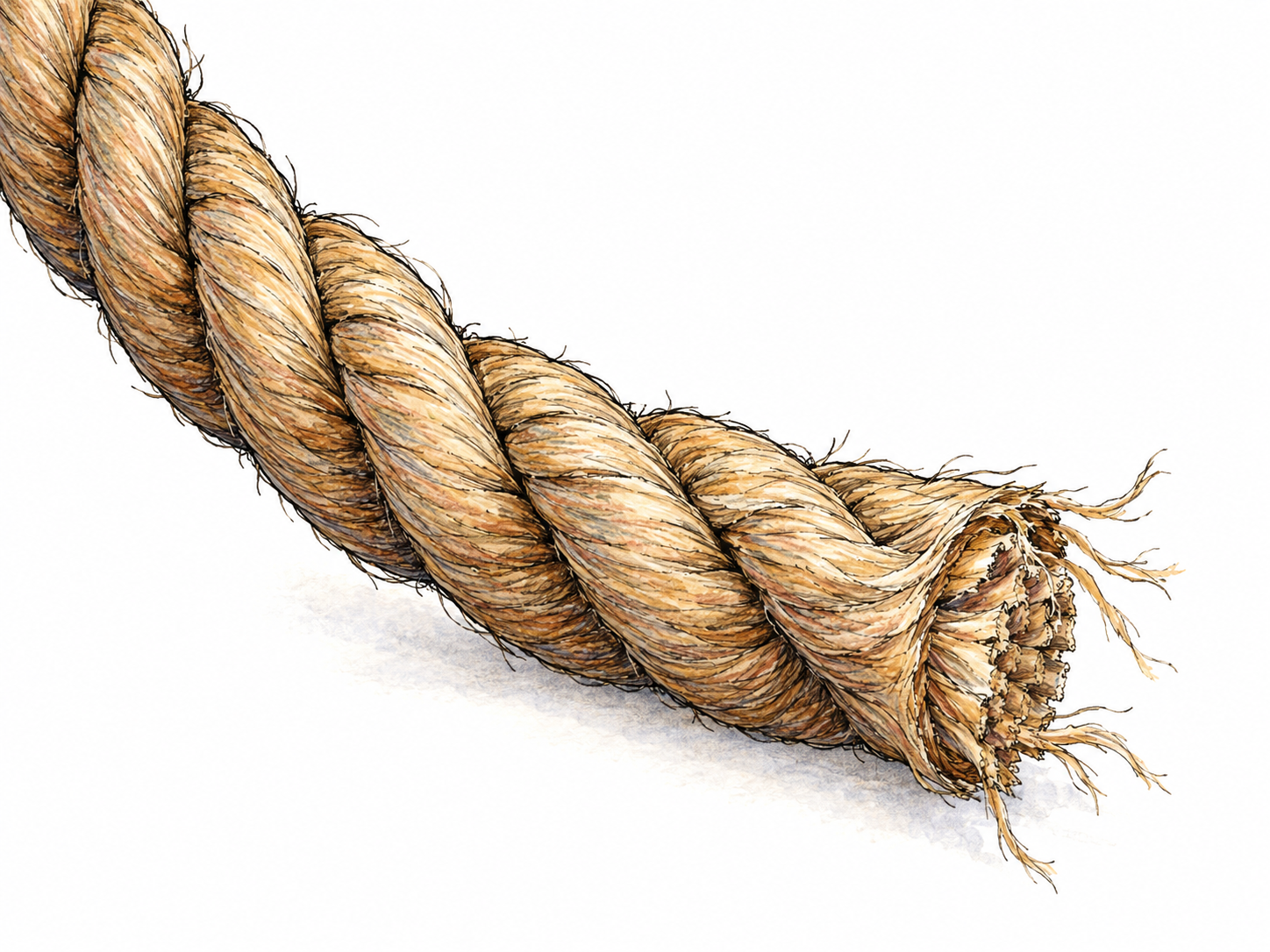
A few loose fibers stick out from the rope's end.
Etymology
Old English ende covered both a boundary and a conclusion. These meanings connect the limit of a physical space with the final point of an event or sequence.
In context
Do not keep that action sequence until the beginning of a chapter. No, no, no, no. Put it in the end and the reader will want to read the next chapter.
More examples
- The road ends at the river.
- We leave at the end of the movie.
- She ends the meeting with a quick summary.
Forms
end · ends · ended · ending
ending noun — The final part of something.
endless adjective — Having no end or limit.
Similar words
- edge
- An outer boundary, not necessarily where something finishes.
- limit
- Emphasizes the furthest allowable or possible point.
- conclusion
- The close of an event or process, not a physical boundary.