adjective
errant
AIR-uhnt/ˈerənt/
Wandering away from a fixed or proper course.
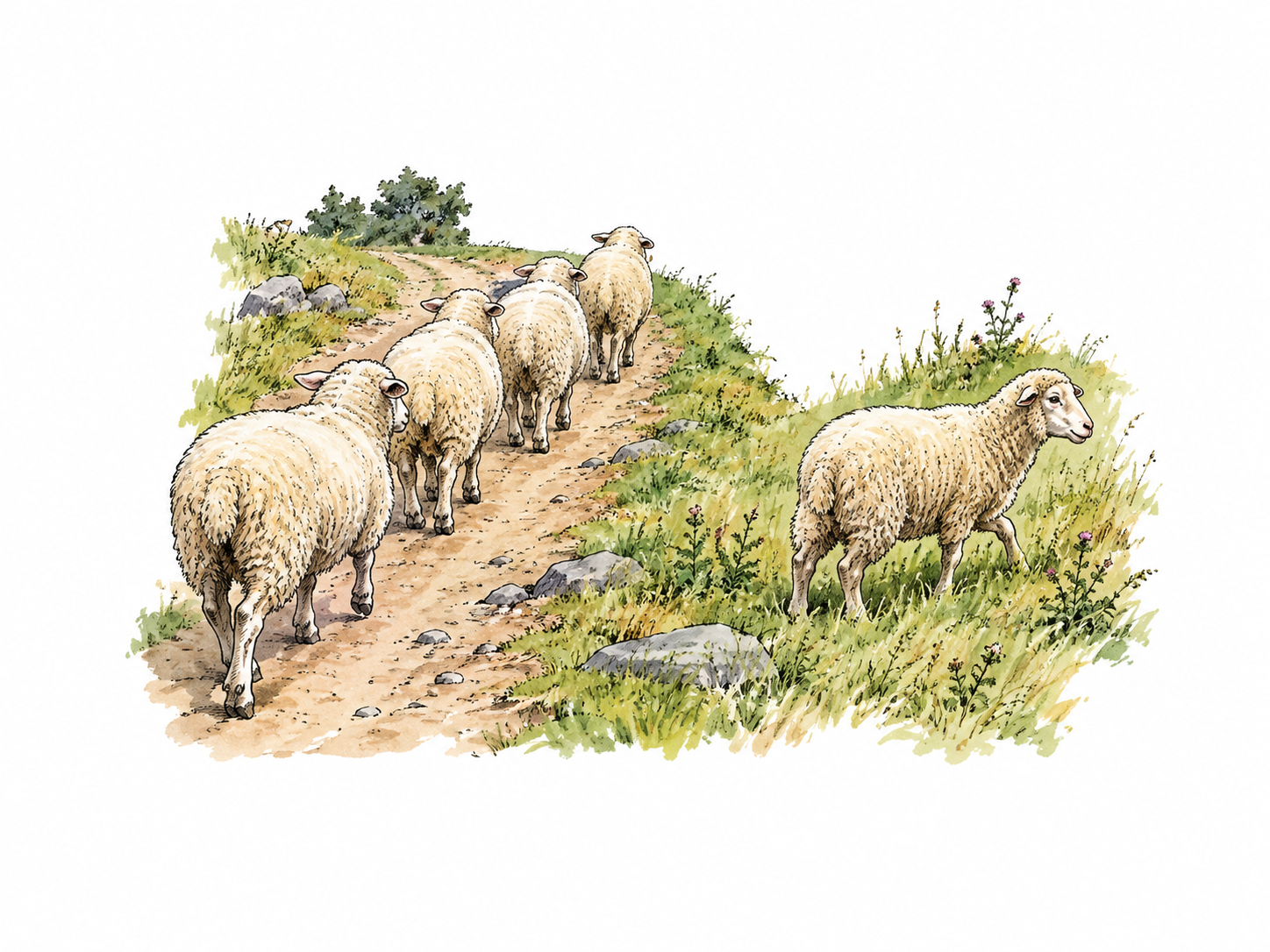
The errant sheep strays away from the route followed by the flock.
Etymology
Erraunt brought together literal wandering and going astray or making a mistake. The selected meaning carries that image beyond travel: someone departs from proper conduct or an expected standard rather than from a physical path.
In context
how a camera might be errant. And there is a kind of power in being able to wander.
More examples
- She tucks an errant strand of hair behind her ear.
- The dog guides an errant sheep back to the flock.
- His errant pass sails out of bounds.
Similar words
- stray
- Often describes something separated from its expected place or group.
- wayward
- Often suggests disobedience or unpredictability rather than accidental deviation.