noun
euphemism
YOO-fuh-miz-um/ˈjuːfəmɪzəm/
A mild expression used instead of one considered harsh, blunt, or taboo.
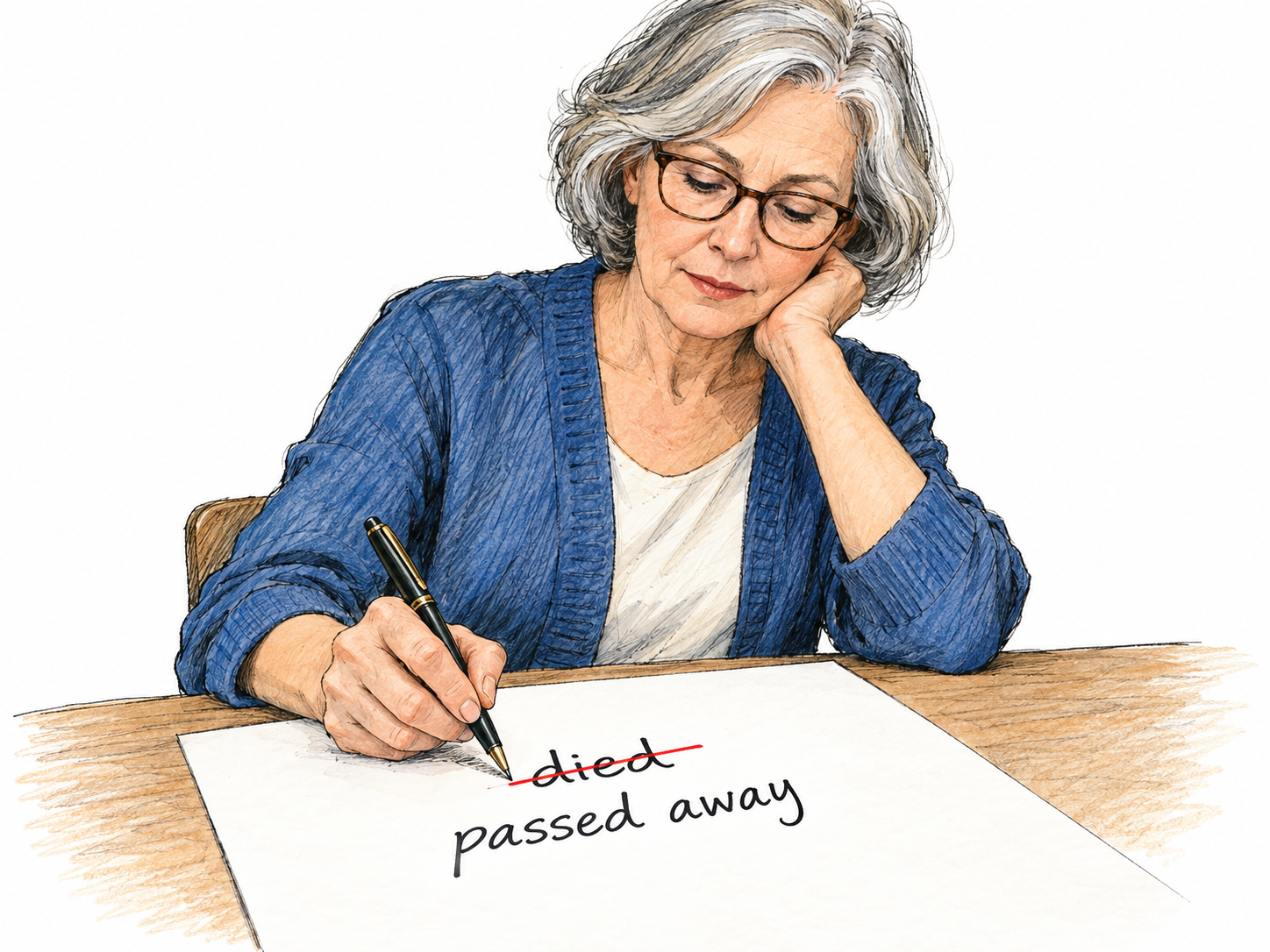
"Passed away" is a common euphemism for "died."
Etymology
“Good speech” originally meant using favorable words instead of words thought to bring ill omen, especially in religious ceremonies. The idea broadened to replacing harsh or distasteful expressions with milder ones.
In context
sometimes choice is a euphemism for blah. Like I have no strategy. I have no opinion. It's just pick whatever you want and assemble it.
More examples
- The company uses "downsizing" as a euphemism for layoffs.
- He asks for a direct answer without euphemisms.
- She uses the euphemism "between jobs" instead of saying "unemployed."
Forms
euphemism · euphemisms
euphemistic adjective — Using mild expressions instead of harsh ones.
Similar words
- polite expression
- May show courtesy without replacing a harsh or taboo term.
- circumlocution
- Uses roundabout wording, not necessarily to soften something unpleasant.