noun / verb
exile
EK-syle/ˈeksaɪl/
Forced absence from one's home or country.
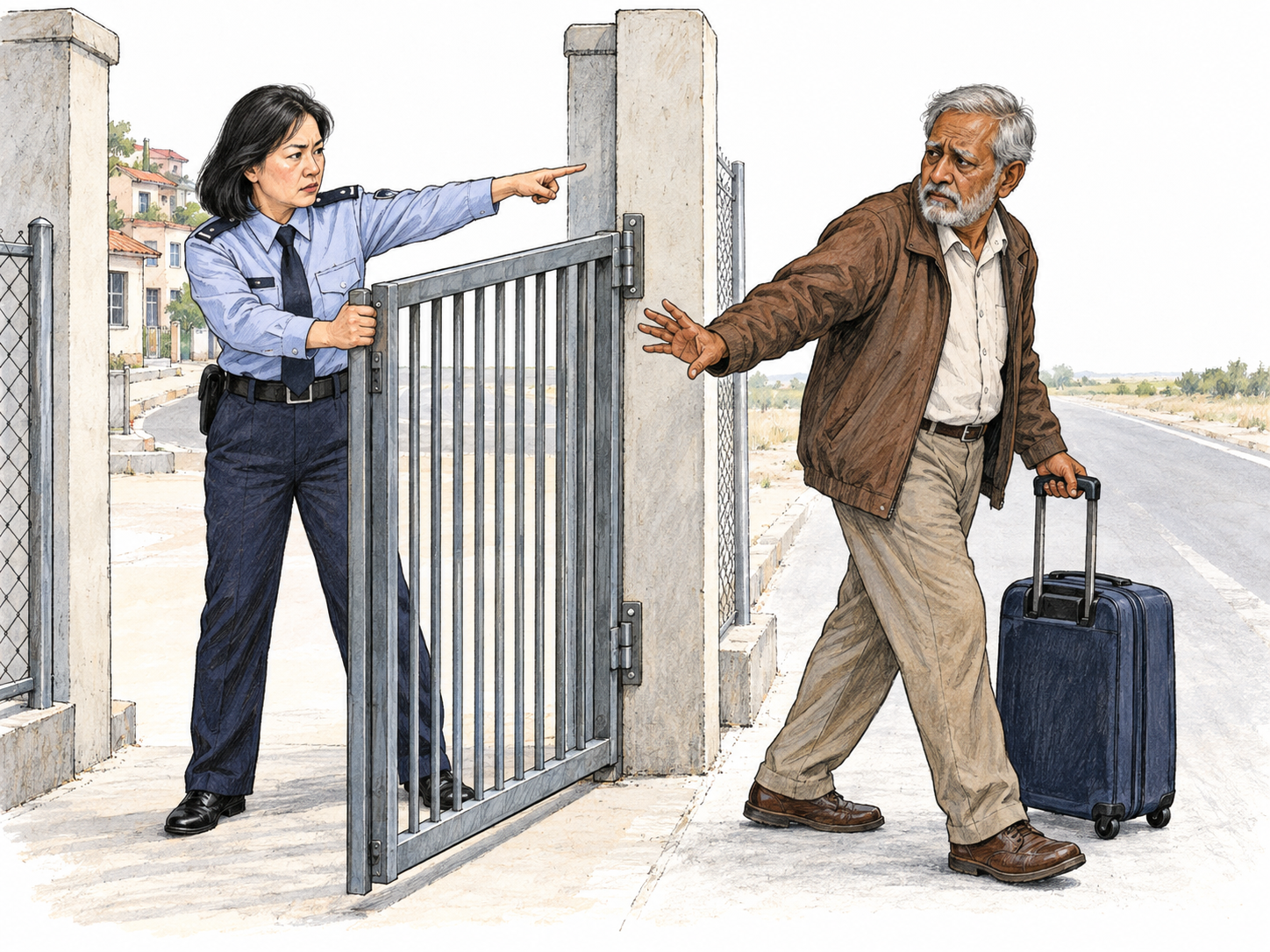
The traveler begins his exile as the officer closes the gate.
Etymology
Latin exilium covered both banishment and a place of banishment, connecting removal with the destination imposed on the banished person. The English sense preserves the meaning of forced removal.
In context
Napoleon was sent into exile once more, this time to the remote South Atlantic island of St. Helena. No longer an emperor, but a private citizen and prisoner.
More examples
- She spends twenty years in exile before returning home.
- The government exiled him for criticizing the president.
- The exiles gather to share news from their homeland.
Forms
exile · exiles · exiled · exiling
Similar words
- banishment
- Emphasizes the official act of forcing someone to leave.
- expulsion
- Means being forced out, not necessarily from one's home or country.