noun
fistula
FIS-chuh-luh/ˈfɪstʃələ/
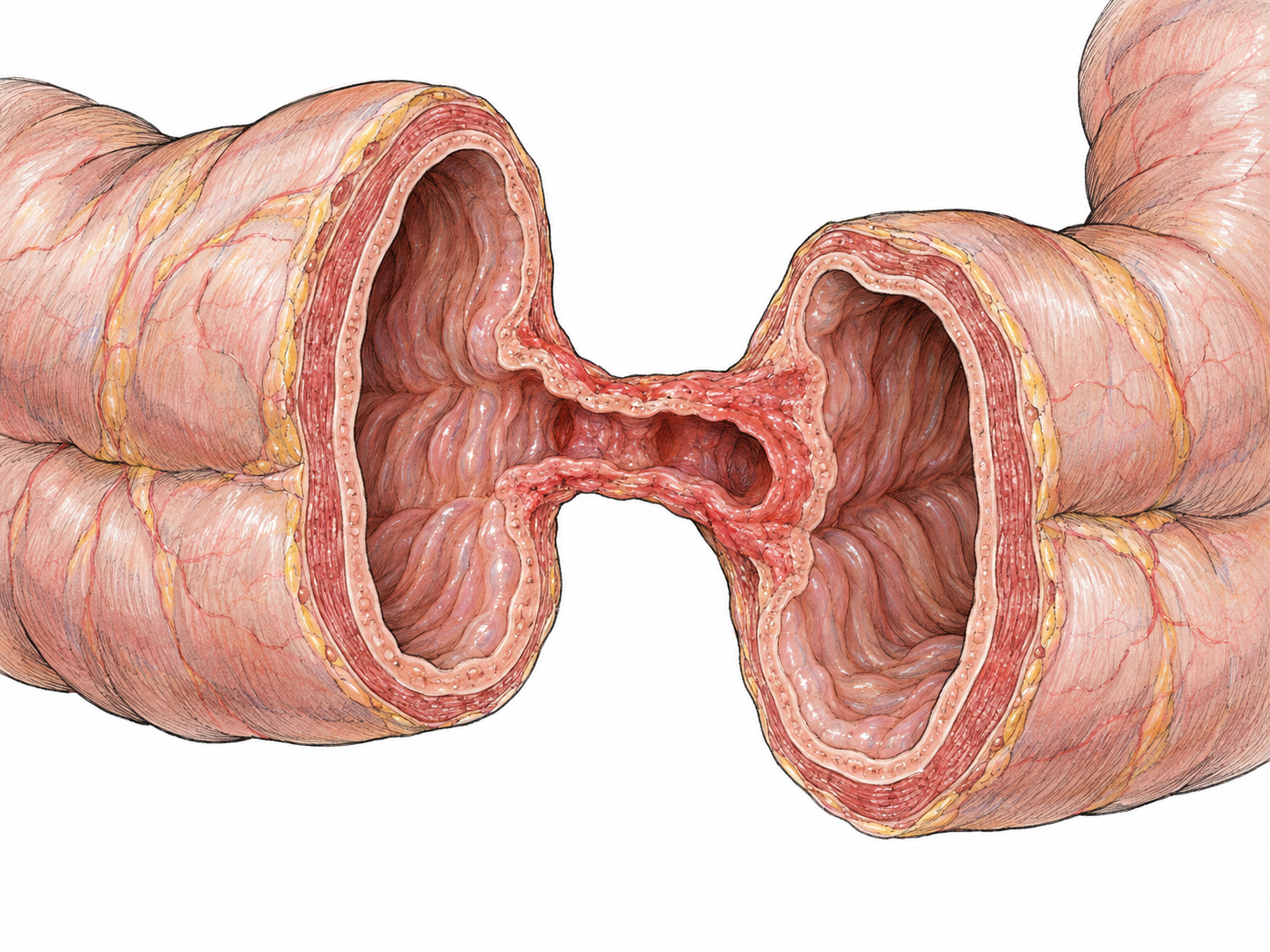
An abnormal passage between organs or from an organ to the body's surface.
A fistula forms an abnormal tunnel between two loops of intestine.
Etymology
Latin fistula meant both a pipe and an ulcer, supplying a tubular image for the abnormal bodily passage. English first used it for a long, narrow ulcer; the Latin word's deeper origin is uncertain.
In context
The mortality associated with the GI fistula has decreased from 40 to 60% in the past to the recent 15 to 20%
More examples
- The scan reveals a fistula connecting the intestine to the bladder.
- Fluid leaks through a fistula onto the surrounding skin.
- Some intestinal fistulas develop as a complication of Crohn's disease.
Forms
fistula · fistulas · fistulae
fistulous adjective — Having or relating to an abnormal passage.