noun
friction
FRIK-shuhn/ˈfrɪkʃn/
Resistance caused by surfaces rubbing against each other.
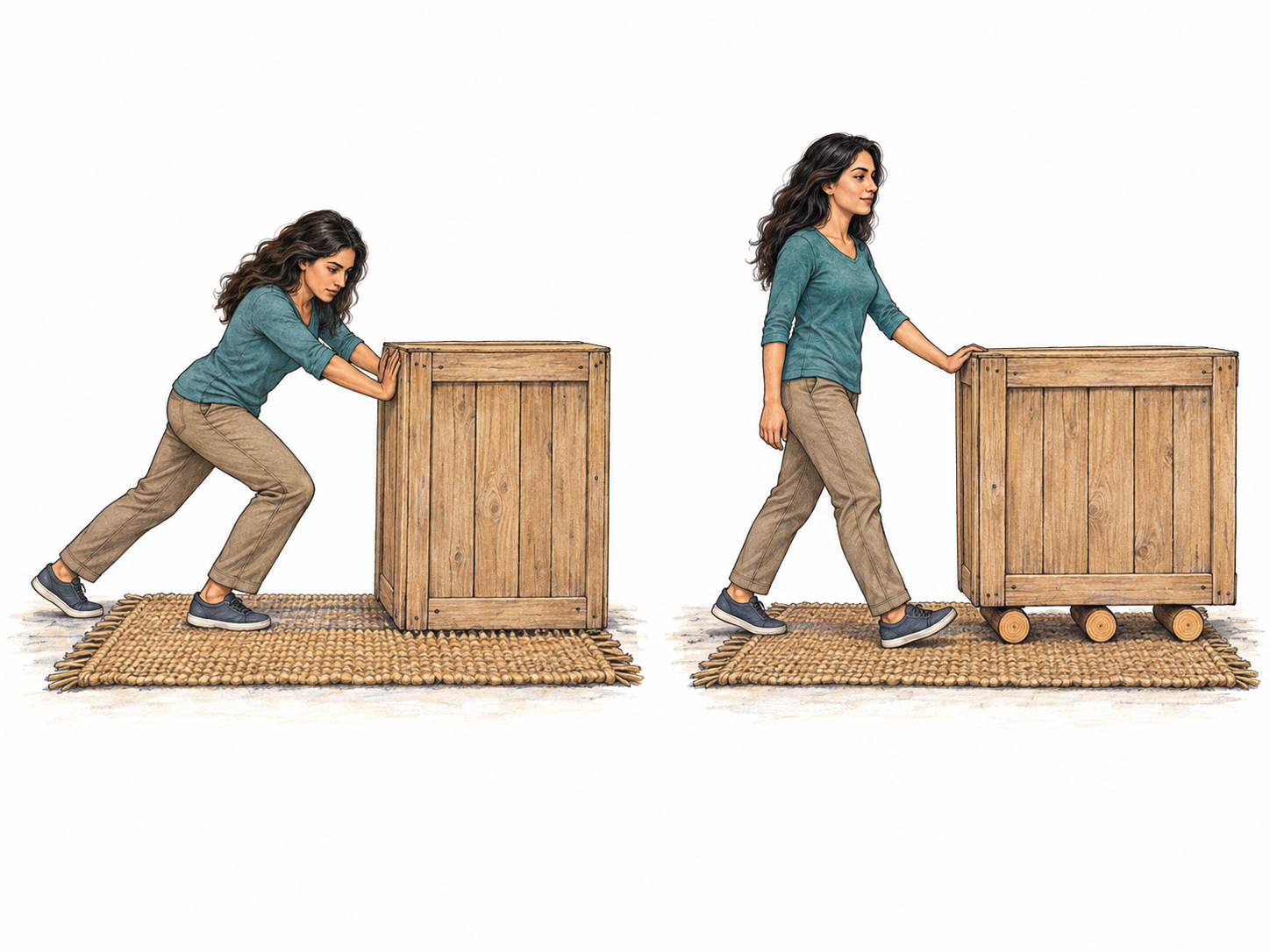
The rough rug creates friction that makes the crate harder to slide.
Etymology
The pieces first meant the action of rubbing. The meaning later shifted from rubbing itself to the resistance to motion that occurs when surfaces rub against one another.
In context
… friction force depends directly on the normal force - the force that presses the two contacting surfaces against each other.
More examples
- Oil reduces friction between the machine's moving parts.
- Rubbing your palms together produces heat through friction.
- Friction makes the heavy crate difficult to slide.
Forms
frictional adjective — Relating to resistance between rubbing surfaces.
Similar words
- resistance
- Resistance includes opposition to motion from forces other than rubbing.
- drag
- Drag usually describes resistance to movement through air or water.