noun
geology
jee-AH-luh-jee/dʒiˈɑːlədʒi/
The study of a world's rocks and physical development.
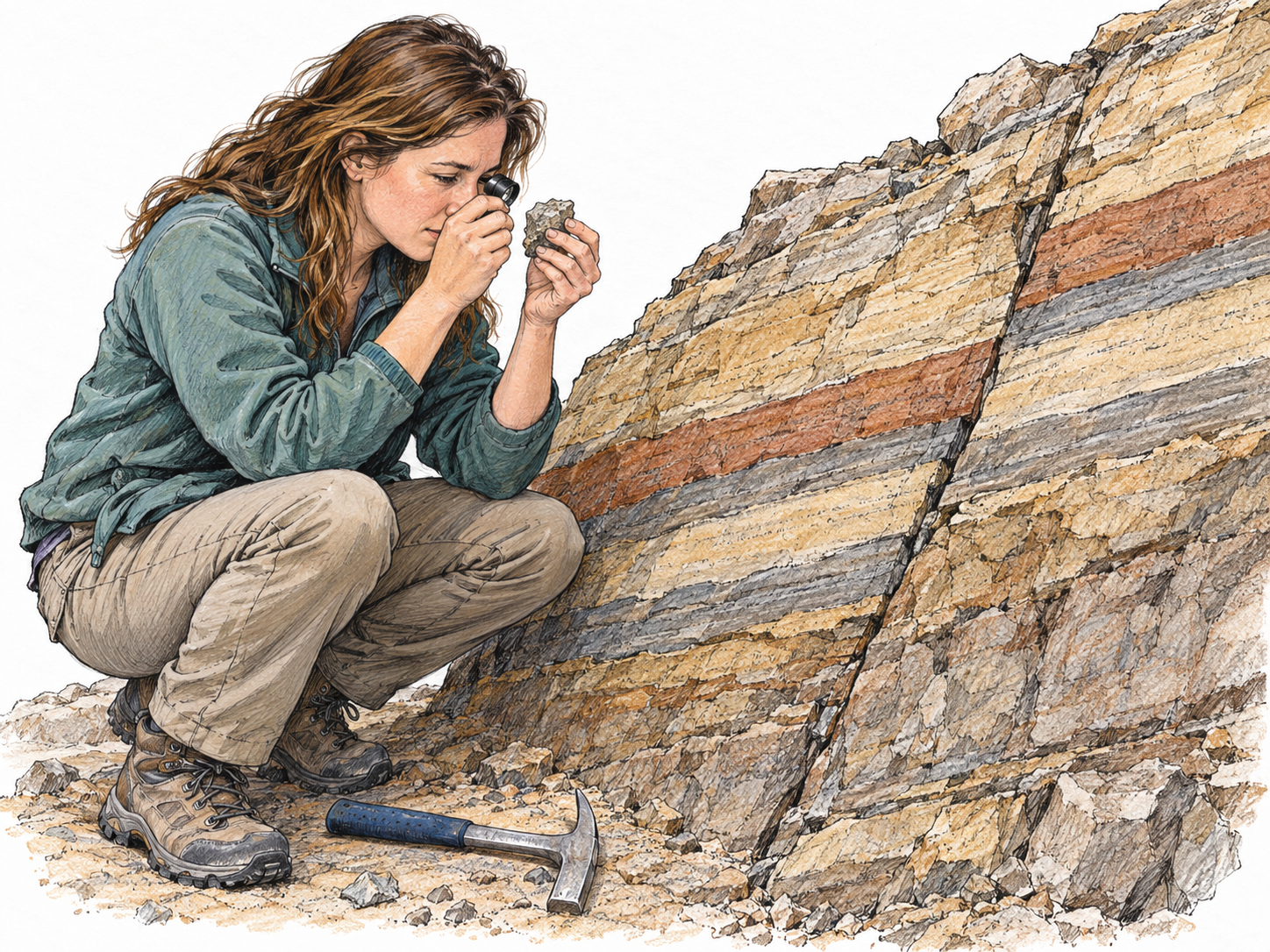
She studies geology to understand how mountains and valleys form.
Etymology
The pieces combine “earth” with an ending for discourse or systematic study. In geology, that broad idea became the science of the Earth’s crust, including its past and present condition.
In context
geology is the study of the earth's system as a whole
More examples
- Our geology class examines rocks collected along the river.
- Robotic missions help scientists understand the geology of Mars.
- The area's geology makes it difficult to build tunnels.
Forms
geologist noun — A scientist who studies rocks and planetary development.
geological adjective — Relating to rocks, planetary structure, or physical development.
Similar words
- earth science
- Broader field that also includes oceans and the atmosphere.
- geophysics
- Focuses on Earth's physical properties and processes using physics.